


Ottoman Style Table
An ottoman style table brings distinct regional character to a room, combining rich timber construction with intricate surface decoration.
Ottoman Style Table
When you search for an ottoman style table, you encounter pieces that bridge several distinct furnishing traditions, including Moorish, Middle Eastern, and Syrian designs alongside British and European revival forms.
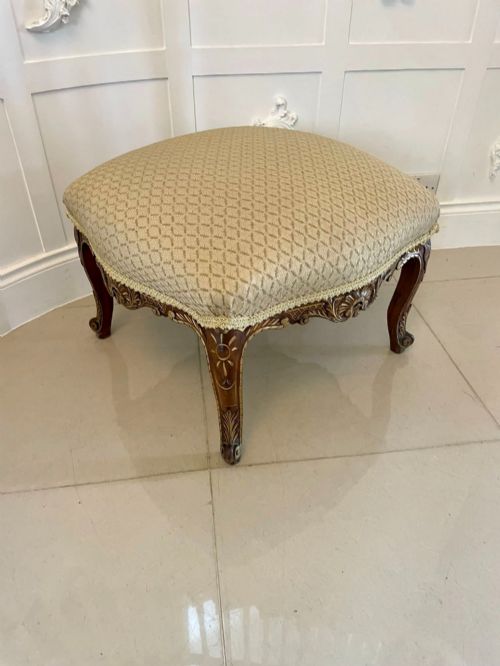
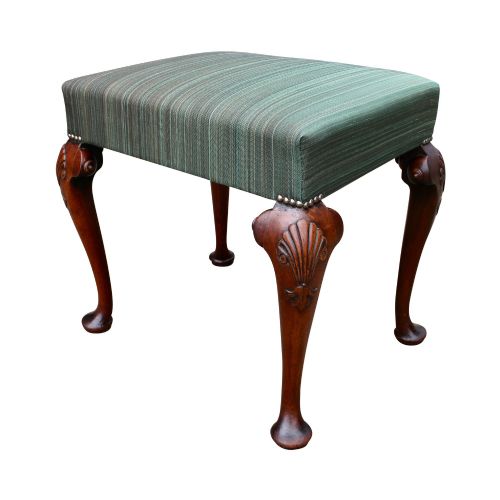
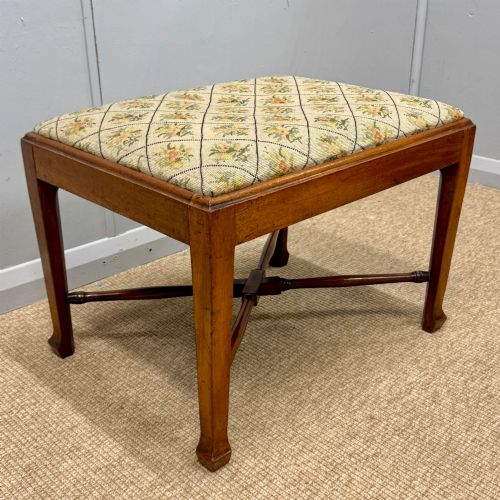
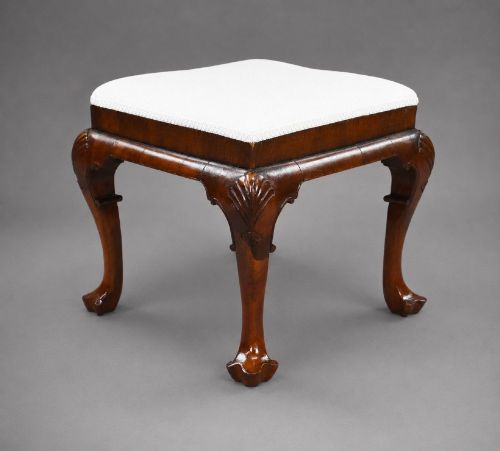
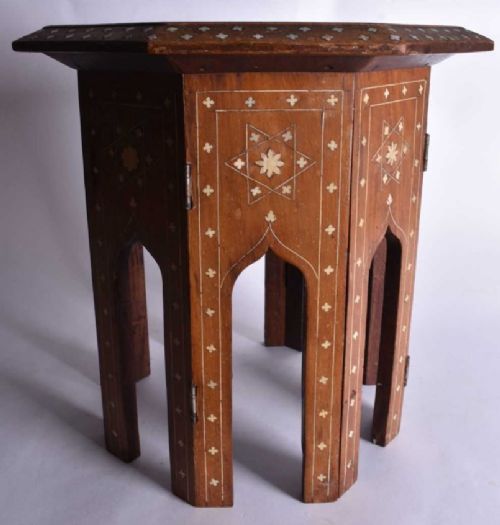
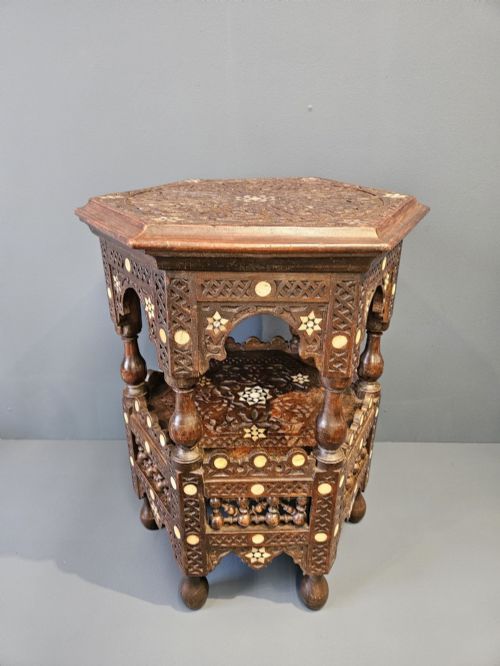
The objects listed under this description frequently take the form of octagonal or hexagonal occasional tables, lamp tables, and folding Damascus tables alongside low stools and footstools.
These items span periods from the mid nineteenth century through the early twentieth century, incorporating styles such as Victorian, Moorish Revival, and various continental influences.
Materials and Construction
The construction relies on hardwoods such as mahogany, walnut, and oak, often paired with softer timbers for internal framing.
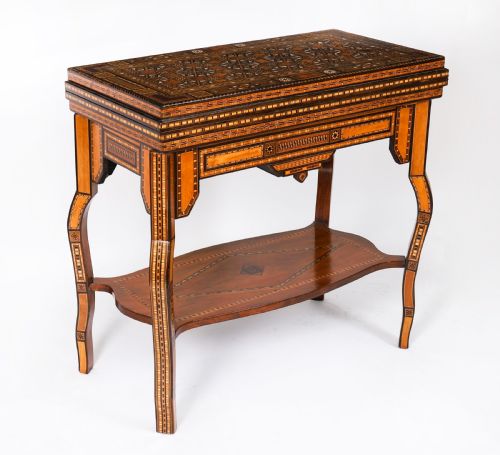
Surface ornamentation defines the distinct aesthetic, utilising mother of pearl inlay, bone, and nacre-shell geometric patterns set into carved wooden panels.
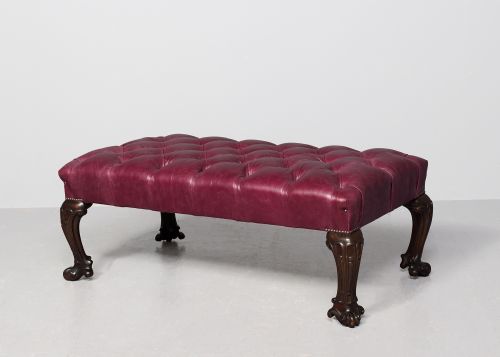
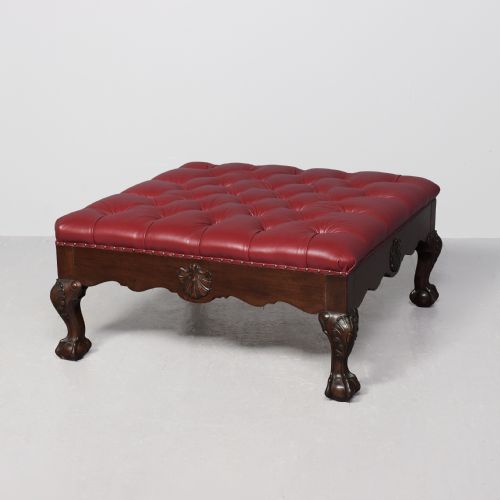
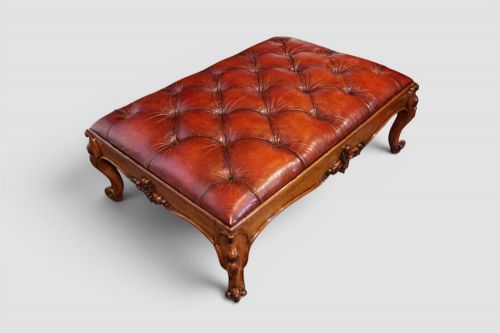
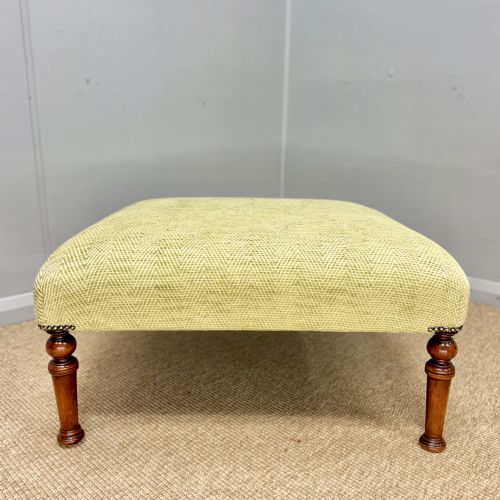
Upholstered variations incorporate buttoned leather, red hide, fabric, and hand-dyed English leather fixed to solid timber frames.
Several folding tables hide clever hinges that allow an octagonal surface to collapse completely flat.
Assessing Craftsmanship
Quality rests upon the precision of the woodwork and the intricacy of the inlay work, where tight joints and complete mosaic patterns separate finer examples from simpler ones.
The condition of the surface materials, from the depth of the hand-dyed leather to the secure setting of mother of pearl pieces, dictates the overall integrity of the piece.
The Ottoman Style Table Glossary
- Nacre
- A smooth iridescent substance forming the inner layer of shell, frequently utilised for intricate geometric inlay on tables.
- Octagonal
- Having eight sides and eight angles, forming the characteristic footprint of many Near Eastern occasional tables.
- Cabriole
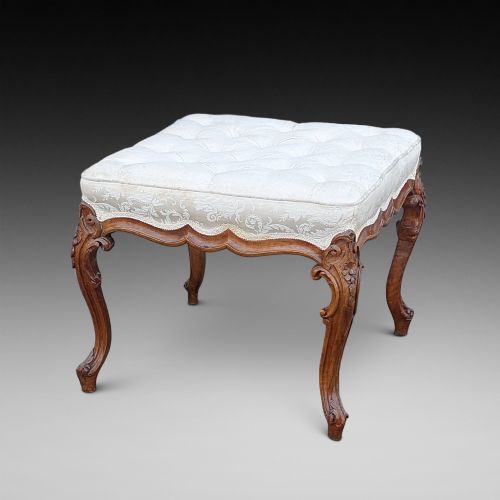
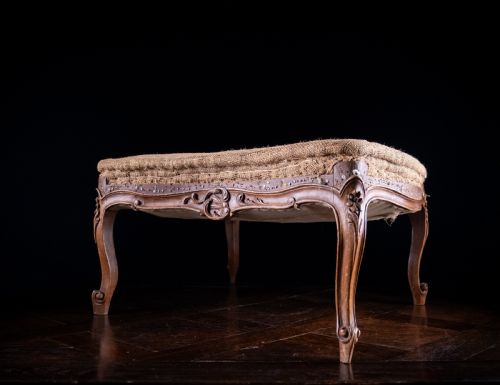
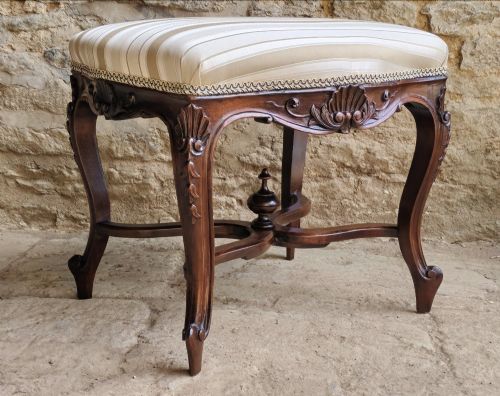
- Alegged furniture form featuring a double curve, moving outward at the knee and inward at the ankle, seen on various period stools.
- Caned
- Woven from plant material such as rattan to create a porous panel surface on seating furniture.
- Buttoned
- An upholstery technique where depressions are formed across a padded surface using tightly secured tufting buttons.
Ottoman Style Table: Frequently Asked Questions
Where should I place an octagonal table?
These occasional tables suit smaller reception spaces or corners where their distinct geometric profile can be appreciated from multiple angles.
They function effectively as lamp tables or low display surfaces alongside seating furniture.
How do I care for inlaid wooden furniture?
Maintain the timber surfaces using traditional beeswax polishes applied sparingly with a soft cloth.
Protect the delicate mother of pearl and bone inlay from excessive moisture and direct sunlight.
What defines Moorish revival design?
This style draws inspiration from Islamic architecture and decorative arts, reinterpreted by nineteenth century makers.
It is characterised by geometric lattice work, dense surface inlay, and multijointed folding forms.
Are these tables sturdy enough for daily use?
Solid timber frames and traditional joinery provide sufficient structural stability for everyday placement of lamps and decorative objects.
Folding variations require careful handling along the hinge mechanisms to preserve the alignment of the panels.