

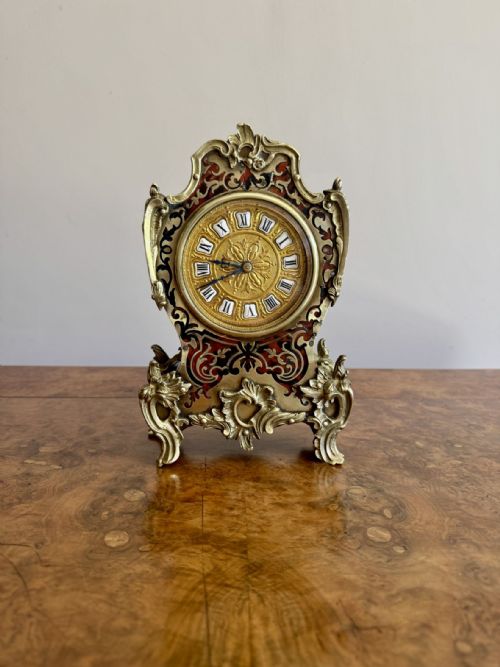


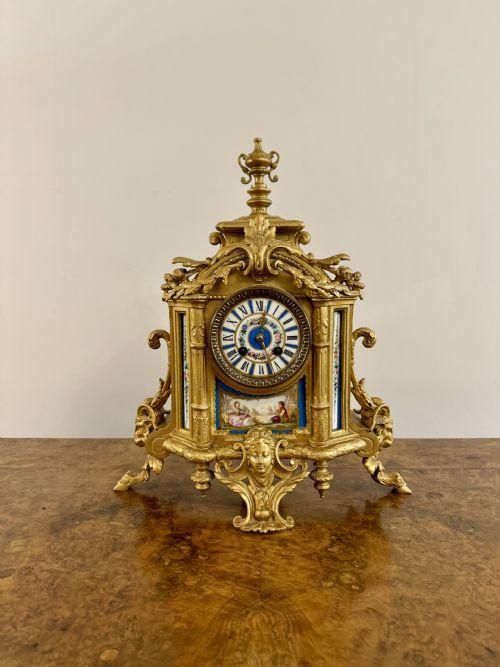


Ornate Victorian Clock
When you look for an ornate victorian clock, you find striking nineteenth-century timepieces shaped by French influence, heavy gilding, and intricate metalwork.
Ornate Victorian Clock
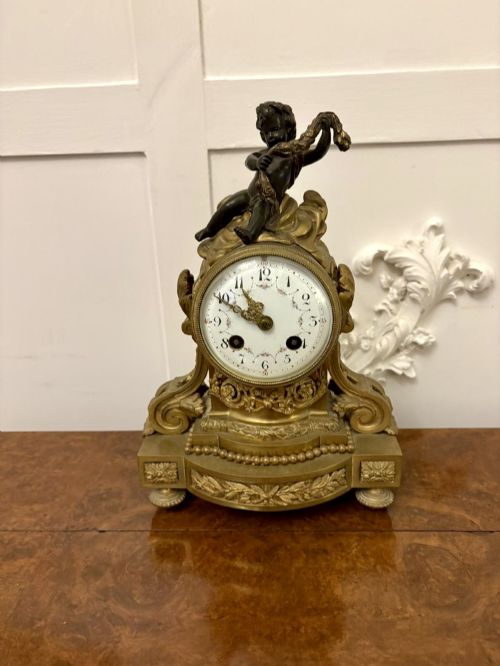
An ornate victorian clock brings together domestic timekeeping and elaborate decorative arts from the nineteenth century. These pieces range from substantial mantel clocks and clock garnitures to portable carriage clocks and smaller desk clocks.
The selections on this page lean heavily towards French-influenced designs, including Rococo Revival styles and champleve enamelling. Buyers encounter works housed in marble, bronze, and gilt brass, often accompanied by matching side pieces.
Materials and Construction
Gilt brass, ormolu, and bronze form the structural core of many examples, providing a reflective surface for intricate chasing and casting. Marble and porcelain add weight and colour contrast to the larger mantel pieces.
Dial faces frequently incorporate enamel and glass panels, protecting delicate painted markers while allowing glimpses of the mechanical movements within. Makers combined cast metal components with fitted glass sides to create layered visual depth.
Listed items span from the mid-Victorian era through to the turn of the twentieth century.
Judging the Standard
Quality rests in the crispness of the cast ornamentation and the depth of the gilding or bronze work. Superior examples display sharply defined scrollwork, intact enamel dials, and substantial weights in their marble or metal housings.
The distinction between standard production and finer output also lies in the complexity of the movement, such as repeater mechanisms or signed escapements, alongside the completeness of matching garniture sets.
Howell And James·Brunelot·Gontard And Bolviller·William Payne·Samuel Marti·Japy Freres·Thomas Cole·James Cole·Hunt And Roskell·A D Mougin·Seth Thomas
The Ornate Victorian Clock Glossary
- Garniture
- A set consisting of a central clock flanked by matching decorative objects such as urns or vases. These decorative groups were designed to sit symmetrically on a mantelpiece.
- Ormolu
- Finely ground high-carat gold mercury-gilded to a bronze or brass object. This technique produces a warm, durable metallic sheen characteristic of nineteenth-century decorative items.
- Repeater
- A mechanical complication that sounds the hours and quarters when a lever or button is pressed. Such movements require high precision to construct.
- Escapement
- The mechanism inside a clock that controls the release of power from the spring or weight. Fine versions maintain consistent force to ensure accurate timekeeping.
- Champleve
- An enamelling technique where troughs are dug into the metal surface and filled with vitreous paste before firing. This creates colourful decorative patterns across the casing.
Ornate Victorian Clock: Frequently Asked Questions
Where should I place a mantel clock?
These timepieces require a sturdy, level surface away from direct heat sources and dampness. Mantel shelves or large sideboards provide adequate support for their considerable weight.
Ensure there is sufficient clearance for doors to open during winding and for any pendulum to swing freely without obstruction.
What is a clock garniture set?
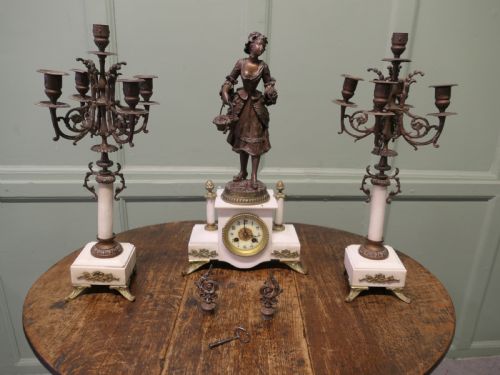
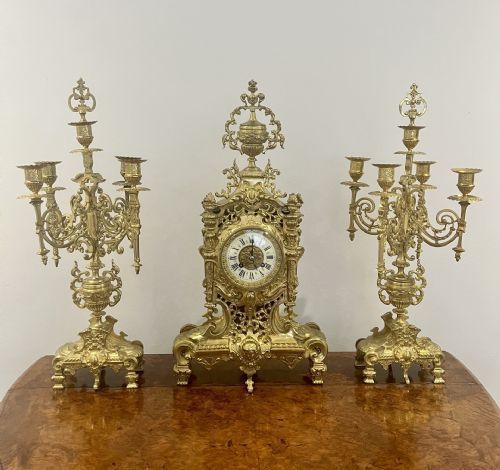
A garniture comprises a main clock accompanied by matching decorative pieces, typically two vases or urns designed in the same material and style. They create a balanced display across a fireplace opening.
The matching items share the brass, marble, or porcelain characteristics of the central clock.
How do I identify a carriage clock?
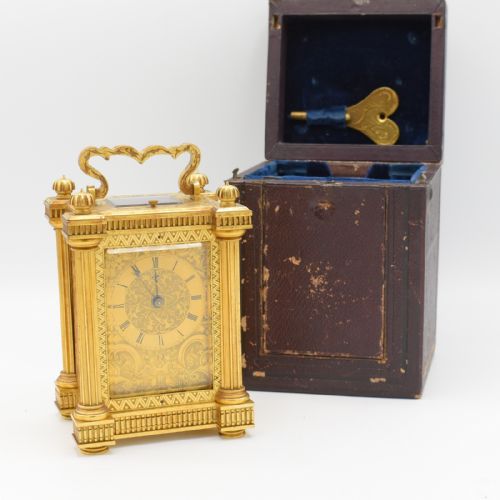
Carriage clocks are portable timepieces featuring flat glass panels on all sides and a small carrying handle on top. They were originally designed for travel during the nineteenth century.
Inside, they rely on a platform escapement rather than a hanging pendulum, allowing them to keep time while moved.