



Ornate Gilt Side Table
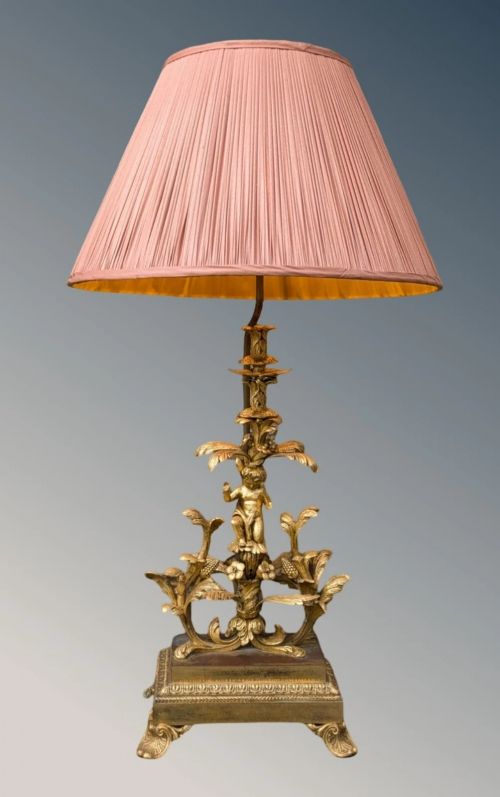
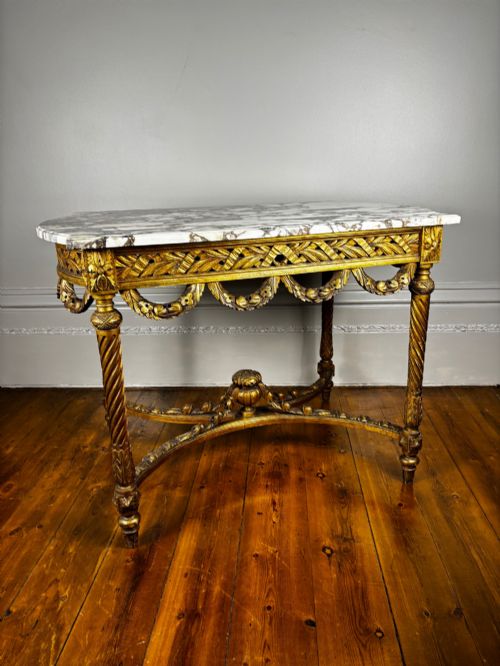
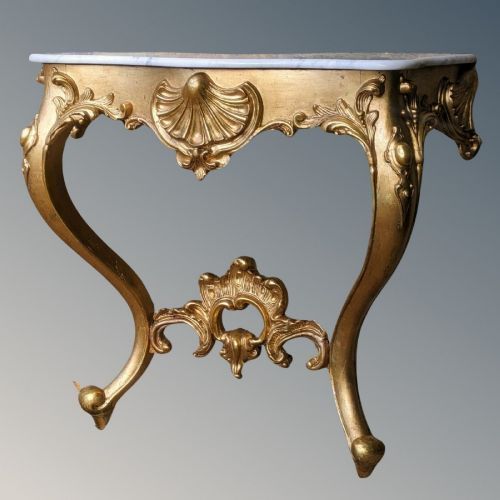
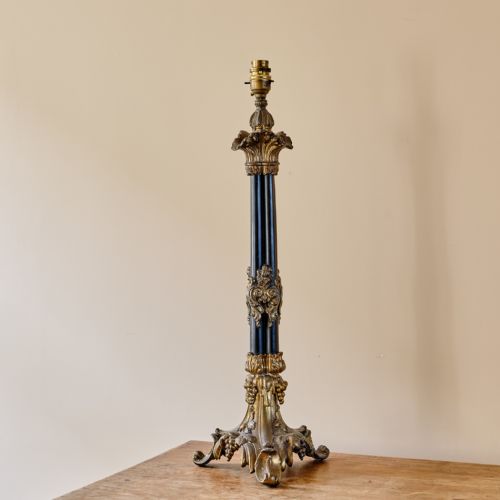
An ornate gilt side table brings substantial presence to a room through carved timber, shimmering leaf and heavy stone.

Ornate Gilt Side Table
An ornate gilt side table is typically encountered as a console table, centre table or occasional table designed for formal interiors. The selection spans pieces from the eighteenth century through the Victorian era and into the early twentieth century, drawing heavily on French and Italian design traditions.
Console tables frequently feature carved giltwood frames paired with marble tops in white Carrara or Sienna. Buyers also encounter gueridons, pedestal tables and lamp tables utilising similar materials and ornate decorative vocabularies.
The dominant stylistic influences include Rococo Revival and Louis XV Revival, expressed through elaborate carving, gilt bronze mounts and shaped marble surfaces.
How they were made
Maker's workshops employed seasoned timber such as walnut, mahogany and satinwood as the structural foundation for intricate carved gesso and applied gold leaf. Gilt bronze and ormolu mounts were cast and chased to add metallic brilliance alongside the wood structures.
Stone tabletops, particularly marble varieties, were cut and polished to fit precise surface dimensions, resting upon heavy timber bases or secured to console frames. Surface decoration frequently incorporated gesso build-up beneath the gilding to sharpen the carved detail.
Carved wooden dolphins and cheerful putti occasionally peer out from beneath heavy marble slabs, guarding the corners of these tables.
What varies in quality
Quality separates in the crispness of the wood carving and the depth of the gesso preparation beneath the gold leaf. Superior examples display sharply defined scrollwork, putti or floral motifs rather than soft, rounded moulding.
The choice of tabletop material and its finishing also mark differences across the range. Heavy, finely figured marble slabs and securely fitted gilt bronze or ormolu mounts indicate higher workshop standards.
The Ornate Gilt Side Table Glossary
- Giltwood
- Timber that has been coated with gold leaf or powder over a prepared gesso ground. This technique creates a luminous, reflective surface characteristic of formal period furniture.
- Console table
- A table designed to stand against a wall, frequently secured to it with brackets or resting on carved front legs. These pieces often feature decorative marble tops.
- Ormolu
- Finely chased and gilt bronze ornamentation applied to furniture and clock cases. The method involves mercury gilding on bronze alloy substrates.
- Gueridon
- A small circular table supported by one or more central columns or figures. Originating in the seventeenth century, these forms persisted across later Revival periods.
- Sienna marble
- A decorative yellow marble with deep purple and brown veins originating from Italy. It provides a striking surface for high-status console and side tables.
Ornate Gilt Side Table: Frequently Asked Questions
Where should I place a console table?
A console table fits naturally against a flat wall in a hallway, reception room or dining space. Because many historical examples were designed to anchor against architecture, pairing them with a matching mirror creates a balanced focal point.
Sufficient floor space allows the carved wooden frame and marble top to catch the light without obstructing household movement.
How do I care for antique giltwood?
Giltwood surfaces require gentle dusting with a soft, dry brush to protect the delicate gold leaf layer. Moisture and chemical polishes damage the original gesso and metallic finish.
Keeping the table away from direct heat sources and strong sunlight preserves the stability of both the timber base and the gilt application.
What is the difference between a console and a centre table?
A console table is built to stand flat against a wall, often featuring finished carving primarily on the front and sides with a flat rear edge. A centre table is finished on all four sides to sit freestanding in the middle of a room.
Both forms utilise similar decorative vocabulary, including carved giltwood frames and marble tops.
How do I identify a revival piece?
Revival furniture draws inspiration from earlier historical movements such as Louis XV or Baroque design, using nineteenth and early twentieth-century construction methods. Examining the underside, joint construction and material ageing helps determine the manufacturing period.
Stylistic cues like Rococo Revival carving often reappear with crisp detailing characteristic of later Victorian or Edwardian workshops.