



Ornate Gilt Planter
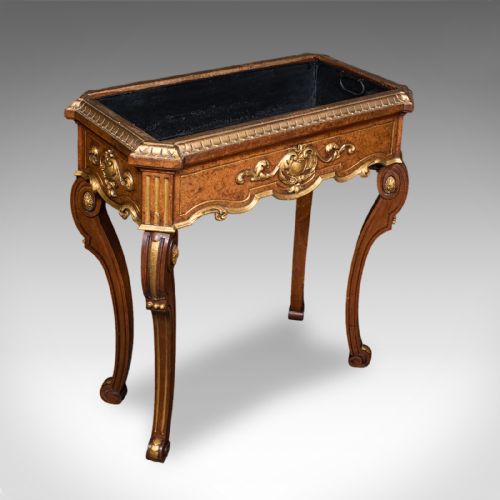
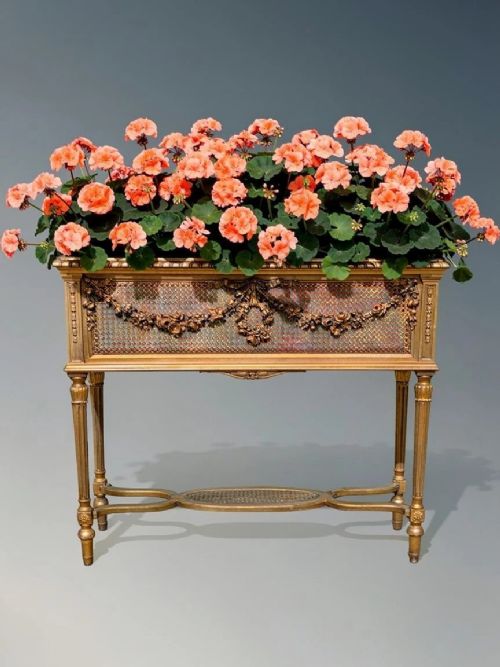
An ornate gilt planter brings heavy French decorative style into a room, usually appearing as a gilded jardiniere or urn from the nineteenth century.
Ornate Gilt Planter
When you search for an ornate gilt planter, you find decorative vessels designed to hold plants or flowers within formal interiors. The examples available on this page span the nineteenth century, including Regency pieces, Louis XVI styles, and French Belle Epoque designs.
You are most likely to meet jardinieres, urns, and decorative bowls formed from ormolu, gilt bronze, giltwood, and porcelain. These items often adopt French Rococo Revival, Baroque, or neoclassical forms, sometimes incorporating cane, walnut, or enamel elements.
How they were made
The makers of these planters utilised cast metals such as ormolu and gilt bronze, finishing them with detailed chased decoration and fire gilding. Other pieces combine carved giltwood with woven cane panels or feature hand-painted porcelain bodies mounted in metal frames.
The construction relies on joining sturdy internal frames of walnut or base metals with decorative exterior mounts. Craftspeople applied gold leaf or gilding to wood and bronze surfaces to achieve a bright, reflective finish suitable for grand nineteenth-century reception rooms.
Ornate Gilt Planter Retail Price Guide 2026
Typical asking prices for ornate gilt planter among the pieces listed under this phrase on Sellingantiques today, from the lower quarter to the upper quarter. They describe what is for sale here now, not the wider market.
Some nineteenth-century French makers disguised heavy metal urns as delicate garden baskets, tricking guests into expecting wicker.
What varies in quality
The standard of a gilt planter depends heavily on the crispness of the metal chasing and the depth of the gilding. Finer pieces display sharply defined scrollwork, foliage, and figural mounts, whereas simpler items rely on smoother, less detailed surfaces.
The choice of primary material also dictates the character of the object, with solid gilt bronze and heavy ormolu mounts sitting at the higher end of the range compared to lighter wooden or composite structures. Hand-painted ceramic elements and intricate cloisonné enamel work add layers of artistic execution that elevate the piece.
Barbedienne
The Ornate Gilt Planter Glossary
- Jardiniere
- An ornamental pot or stand designed to hold flowers or plants, typically manufactured from ceramic, metal, or wood. These vessels often sit on low feet or dedicated tables within a room.
- Ormolu
- Gilded bronze, produced by applying a mercury and gold amalgam to a bronze base and heating it until the mercury vaporised. This technique creates a durable, rich golden finish characteristic of French decorative metalwork.
- Giltwood
- Timber, commonly carved wood, treated with gold leaf or gold paint across its surface. It provides the decorative appearance of solid gold while utilising a lighter structural core.
- Cloisonne
- An ancient technique for decorating metal object surfaces, using wire to create compartments that are filled with enamel paste and fired. This method produces vibrant, patterned colour across vases and planters.
- Rococo Revival
- A nineteenth-century design movement that imitates the asymmetrical curves, C-scrolls, and naturalistic ornamentation of the eighteenth-century French Rococo period. It dominates many of the gilt metal and wooden planter forms seen here.
Ornate Gilt Planter: Frequently Asked Questions
What is an ornate gilt planter used for?
These pieces function primarily as decorative containers for indoor plants, ferns, or floral arrangements in reception rooms and drawing rooms. They sit upon tables, pedestals, or directly on the floor depending on their size.
Historically, they allowed wealthy households to bring nature indoors while matching the gilded furniture and heavy upholstery of the period. Today, they serve a similar aesthetic purpose, often displayed empty as sculptural objects.
How do I date a nineteenth-century jardiniere?
Dating relies on identifying the prevailing design style, such as Regency, Louis XVI, or French Rococo Revival, alongside the manufacturing techniques used on the metal or wood. Examining the base materials, fixing screws, and hand-finishing marks helps narrow down the decade.
Makers' marks or stamps on bronze and porcelain elements also point to specific workshops active during the nineteenth century. Stylistic crossover between Japanese motifs and French forms can indicate late nineteenth-century Japonisme influences.
Where should I place a giltwood planter?
A giltwood and cane planter looks best in rooms with traditional architecture, where the reflective gold surface can catch natural light. They suit placement beneath large mirrors or on side tables.
Because wood and cane are sensitive to moisture, using a protective inner liner is essential if you intend to hold live plants with soil. Many owners prefer to use them for dried arrangements or simply as decorative ornaments.
What is the difference between ormolu and gilt bronze?
Ormolu specifically refers to gilt bronze produced using the historical mercury gilding process, which yields a deep, lasting golden lustre. Gilt bronze is a broader term that can include various modern or traditional methods of applying gold colour to a bronze substrate.
Both terms describe heavy, cast metal objects that resist tarnish better than plated brass. In nineteenth-century pieces, these materials provide substantial weight and durability.