

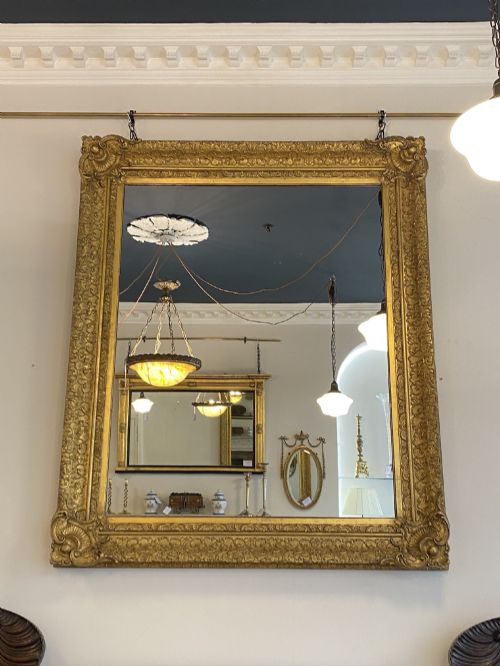
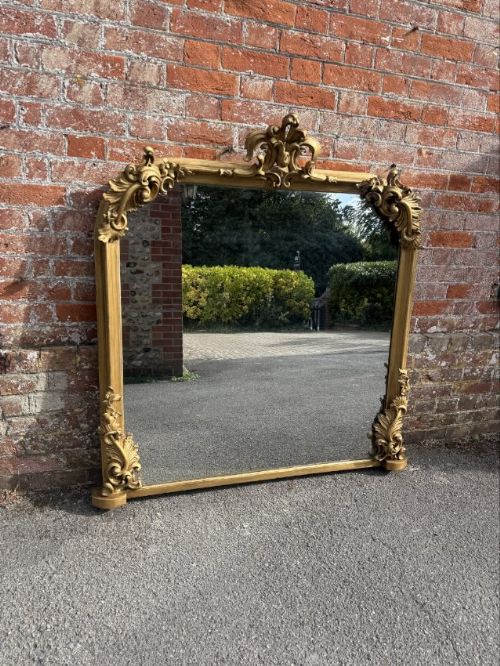
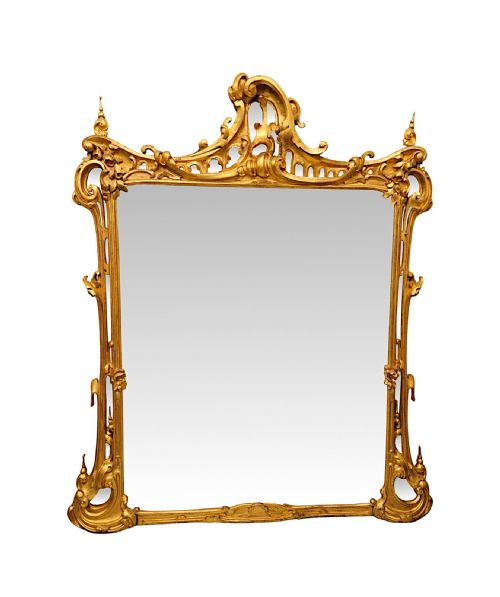
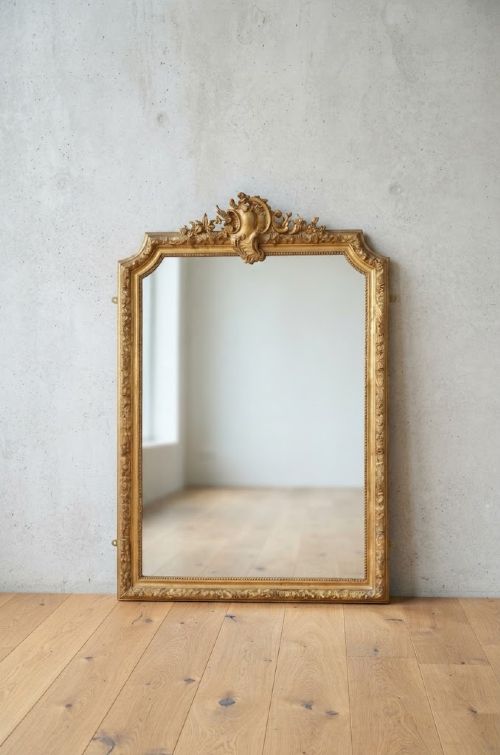
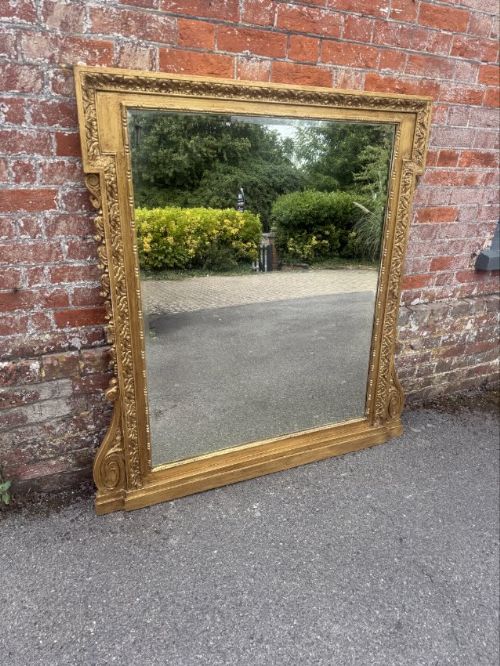
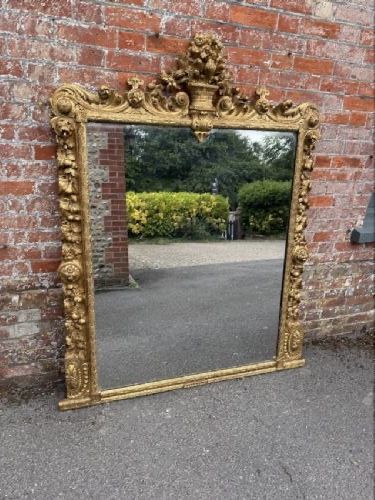
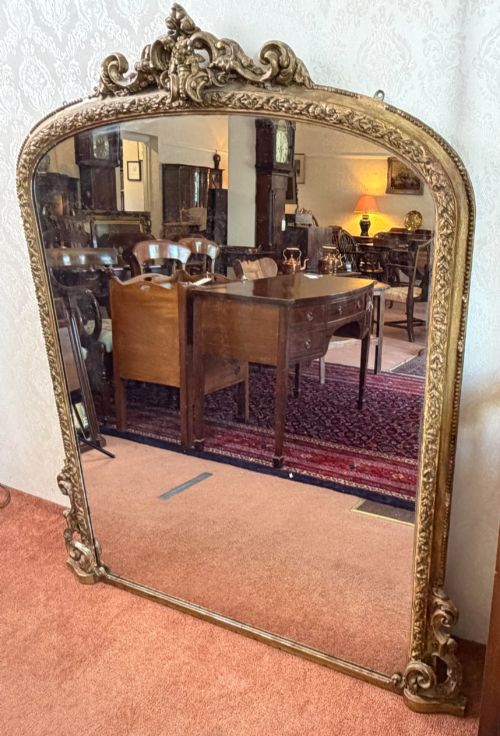
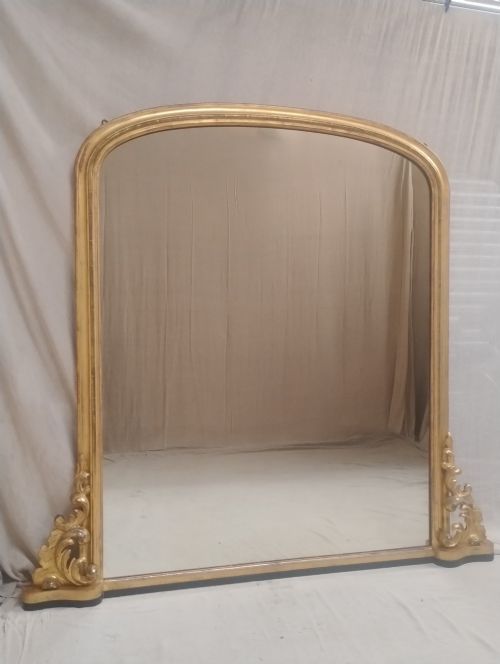
Ornate Gilded Mantel Mirror
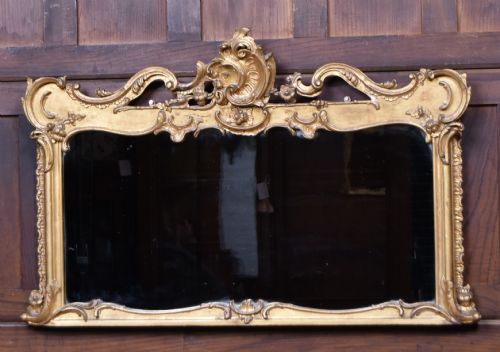
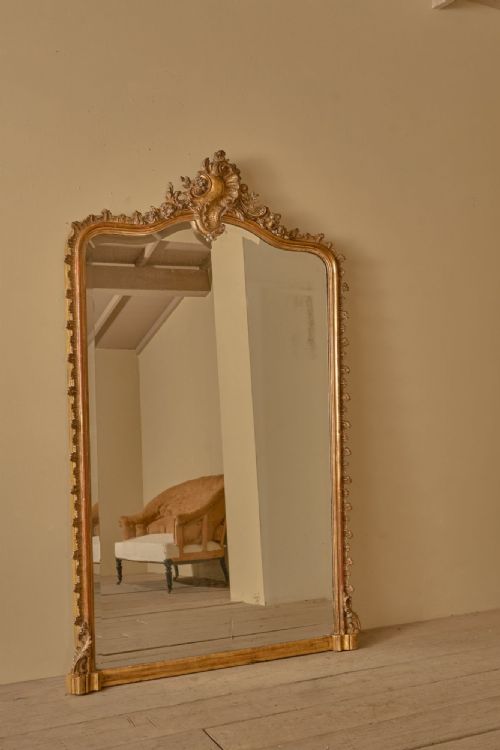
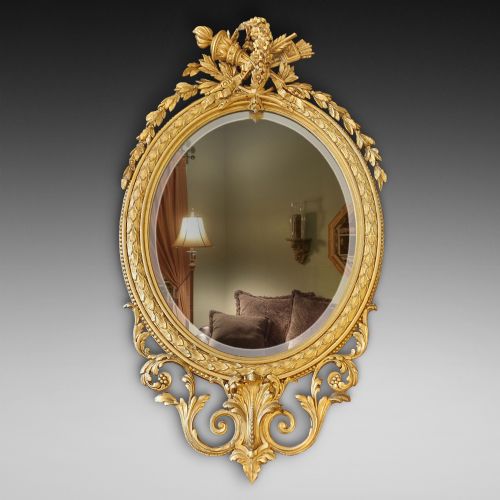
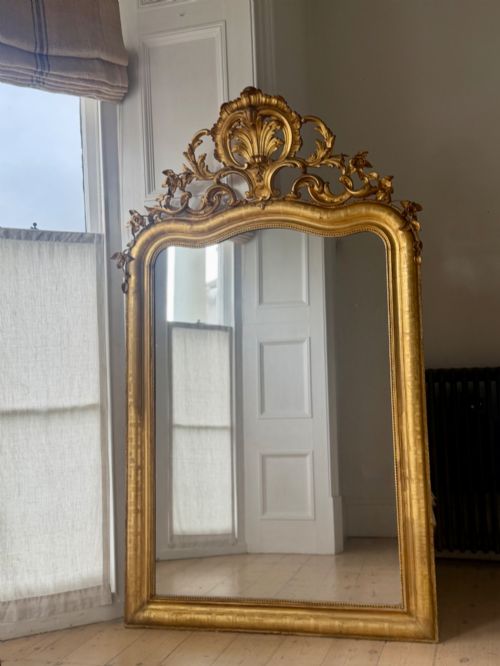
An ornate gilded mantel mirror brings genuine presence to a room, offering grand scale and reflective depth built for period interiors.
Ornate Gilded Mantel Mirror
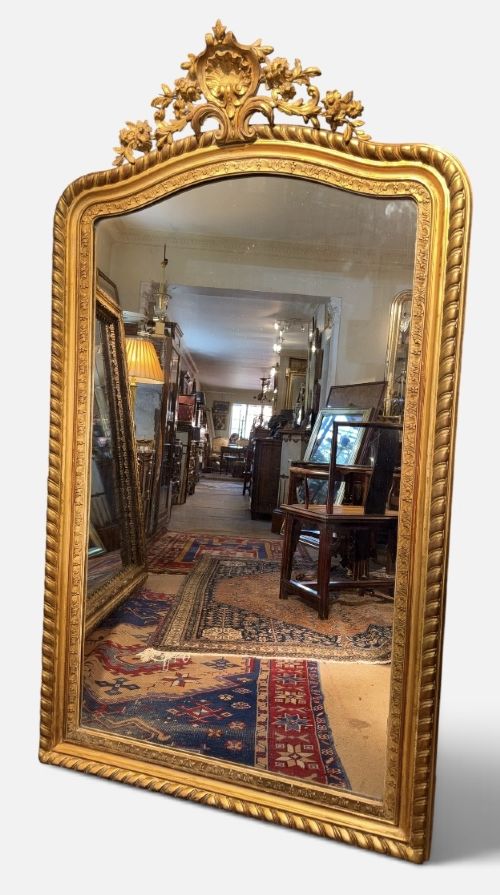
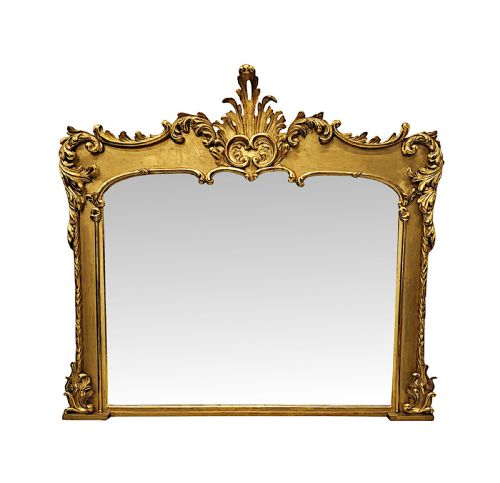
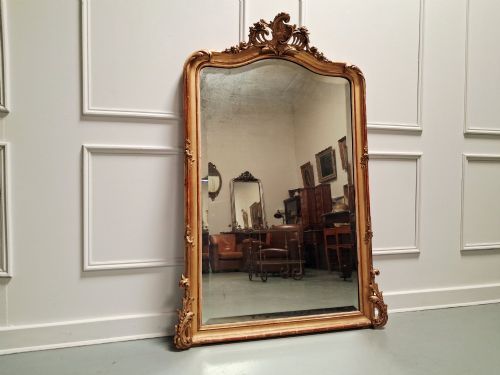
When you search for an ornate gilded mantel mirror, you encounter large architectural frames designed to sit above a fireplace or dominate a principal wall. The examples on this page span the 18th century, the Georgian era, the Regency period, and the 19th century, with a strong representation of Victorian and French designs.
The dominant forms you will meet are overmantel mirrors and wall mirrors, frequently featuring expansive dimensions intended to bounce light around high-ceilinged rooms. French Chateau, Rococo Revival, Louis Philippe, and Chinese Chippendale styles shape the selection, offering everything from restrained classical rectangles to lavishly curved crests.
English country house pieces sit alongside continental French models, showing how mirrors served as the focal point of a formal interior. Whether you select an arched top, a rectangular frame, or an oval panel, each item reflects the decorative priorities of its original period.
How they were made
Makers built these frames using carved wood and gesso, applying gold leaf or oil gilt to create a brilliant metallic surface. Giltwood and composition mouldings provided the base for intricate foliate crests and sculptural scrolls.
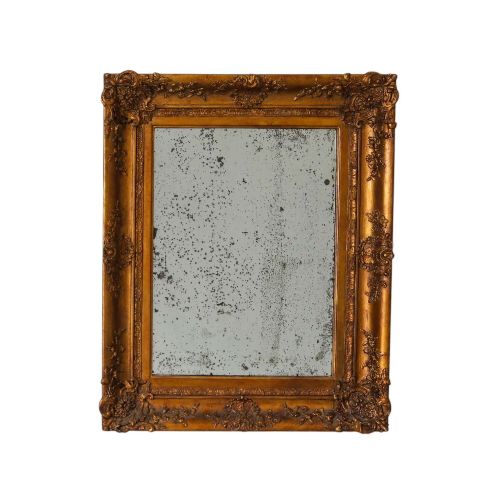
Mirror glass of the period often shows characteristic ageing, such as foxing, which reveals the chemical shifts in the reflective plate over centuries. Joinery techniques combined solid timber framing with applied ornamentation to support the substantial weight of the glass.
Ornate Gilded Mantel Mirror Retail Price Guide 2026
Typical asking prices for ornate gilded mantel mirror among the pieces listed under this phrase on Sellingantiques today, from the lower quarter to the upper quarter. They describe what is for sale here now, not the wider market.
Listings feature pieces spanning the 18th, 19th, and early 20th centuries, executed in giltwood, gesso, and carved wood.
What varies in quality
The depth and crispness of the carved detail distinguish a superior frame from a simpler moulding, as hand-carved wood allows for sharper undercut foliage than moulded composition alone. The integrity of the original gilding matters immensely, with untouched gold leaf holding a warmer, deeper lustre than later repainting.
The condition of the mirror plate itself influences desirability, where surviving antique glass with natural foxing retains authentic character. Structural solidity in the wooden carcass ensures the heavy frame hangs securely without warping over time.
The Ornate Gilded Mantel Mirror Glossary
- Giltwood
- Timber covered with a thin layer of gold leaf. It forms the primary golden finish on high-status antique frames.
- Gesso
- A plaster-like mixture applied to wood frames to create a smooth base for gilding. It allows for intricate relief moulding.
- Foxing
- Age-related spots and discolouration within the mirror glass plate. This chemical oxidation appears as dark speckles across the reflection.
- Overmantel mirror
- A large mirror specifically proportioned to hang above a mantelpiece. These pieces often anchor the decorative scheme of a historic room.
- Rococo Revival
- A 19th-century design movement inspired by 18th-century French rococo. It uses asymmetrical scrolls, shell motifs, and elaborate organic curves.
Ornate Gilded Mantel Mirror: Frequently Asked Questions
What is foxed glass?
Foxed glass refers to the natural ageing of the reflective silver backing inside the mirror plate. Over decades, atmospheric exposure causes small dark patches to form.
Collectors prize genuine foxing because it proves the glass is original to the antique period rather than a modern replacement.
How do I clean an antique gilt mirror?
Dust the carved frame gently with a soft, dry brush to protect the delicate gold leaf or gesso surface. Avoid all chemical cleaning sprays and moisture near the gilded areas.
Clean the glass plate sparingly with a mild glass cleaner applied to a cloth rather than sprayed directly onto the mirror.
How do I date a gilded mirror?
Examine the construction of the wooden frame, the style of the carving, and the composition of the gesso base. Victorian and Georgian pieces display distinct joinery and ornament styles.
The characteristics of the mirror plate and the type of gilding also provide clear clues to the decade of manufacture.