



Ornate Gilded Mantel Clock
An ornate gilded mantel clock brings nineteenth-century French and Victorian grandeur into a room through heavy cast bronze, porcelain, and glass.
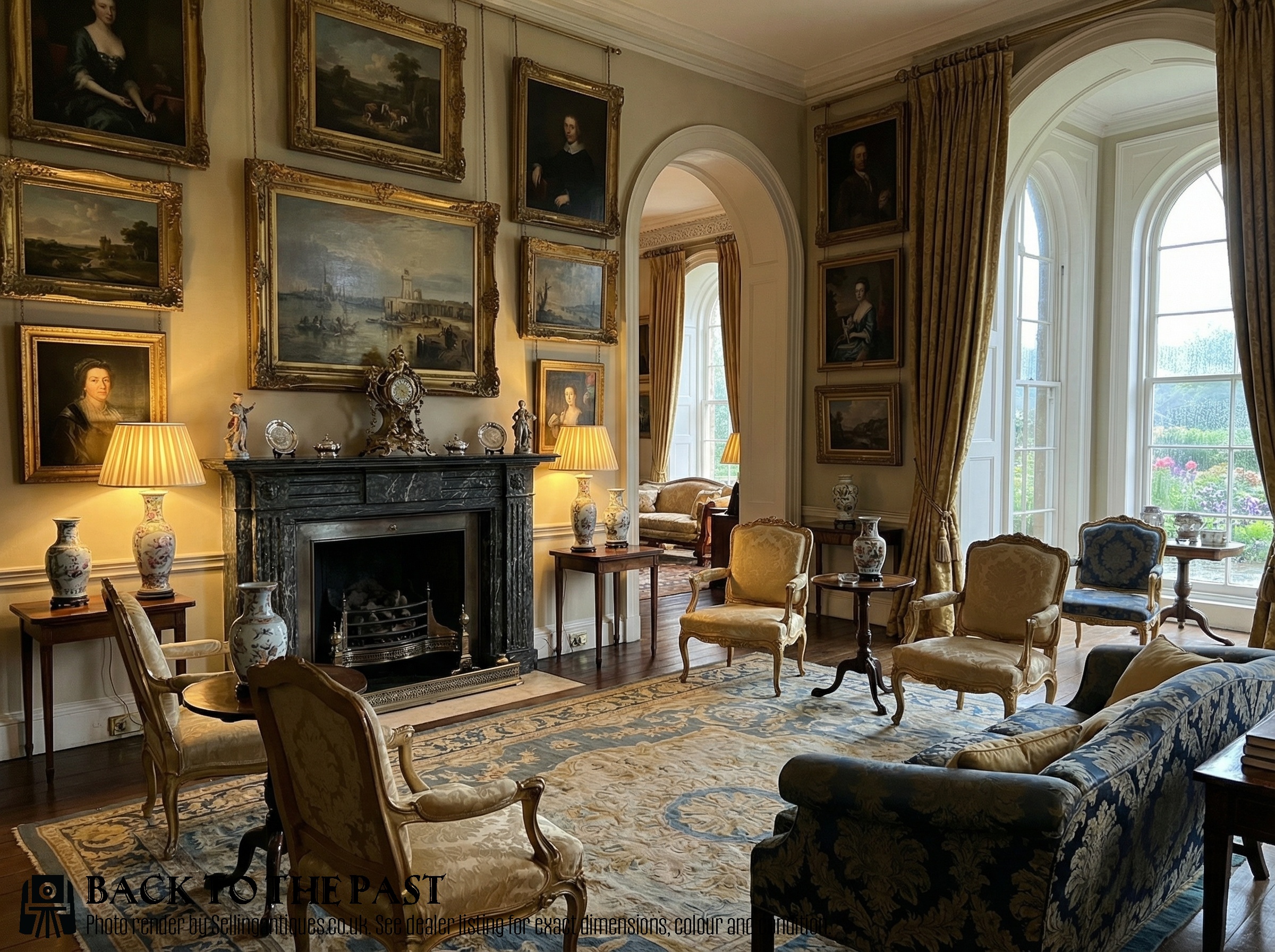
Ornate Gilded Mantel Clock
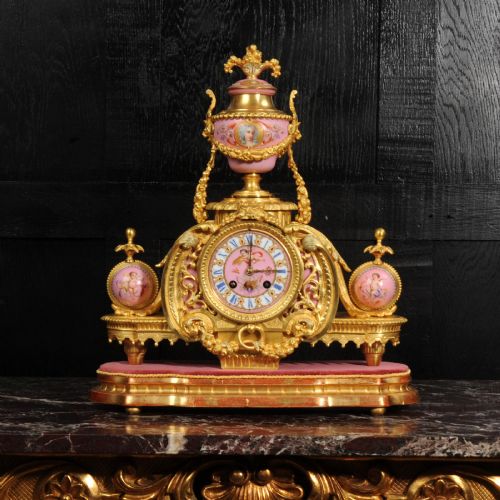
An ornate gilded mantel clock is a striking domestic timekeeper designed to sit prominently on a fireplace shelf or table. The examples seen here belong predominantly to the nineteenth century, encompassing Victorian and Edwardian periods alongside French revivals.
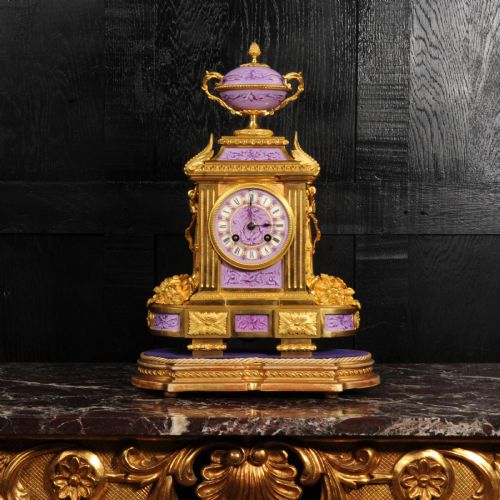
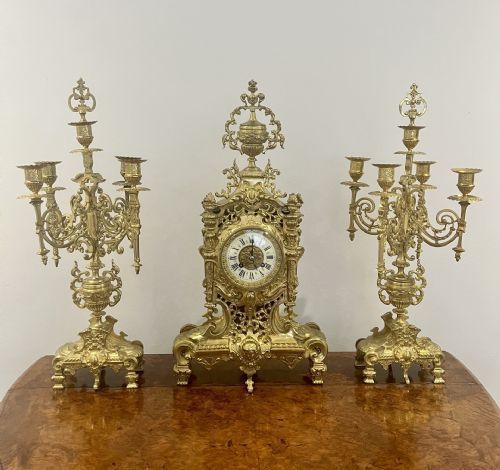
Buyers encounter diverse forms, from substantial ormolu and Sèvres porcelain garniture sets to delicate carriage clocks and crystal regulators with glass sides. The French Rococo Revival and Louis XVI styles dominate the selection, bringing exuberant scrollwork and classical motifs.
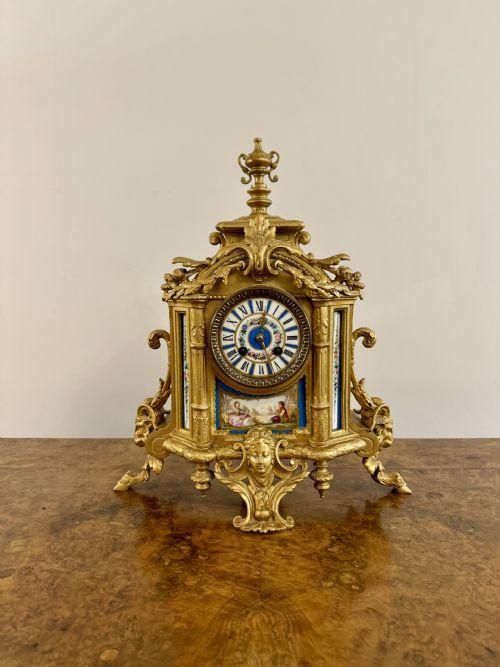
Many of these pieces integrate intricate enamel dials and painted ceramic panels alongside the central movement. They function as both decorative objects of status and working mechanical clocks.
Materials and construction methods
Makers utilised cast bronze, brass, and gilt metal, frequently applying an ormolu finish through mercury gilding or electroplating to achieve a brilliant golden surface. These heavy metal housings were often combined with polished red or green marble and four glass panels.
Porcelain elements, notably Sèvres panels and hand-painted enamel dials, were integrated into the metal frames to provide contrasting colour and fine detail. Clockmakers also employed complex brass gear trains, some supporting eight-day striking movements and platform escapements.
Listings feature nineteenth-century French and Victorian periods, utilising materials such as ormolu, marble, Sèvres porcelain, and gilt bronze.
What separates the finest examples
Quality rests upon the crispness of the bronze chasing and the depth of the gilding across the ornate surface. Superior pieces exhibit hand-finished cast ornamentation where every scroll and floral motif remains sharp and well-defined.
The integration of materials dictates the standing of a piece, particularly when high-grade porcelain panels or flawless glass crystal regulators are paired with signed mechanical movements from notable makers.
Achille Brocot·John Barwise of London·Henri Jacot·Leroy & Fils·Dehné of Paris·Thomas Cole·Howell, James & Co.
The Ornate Gilded Mantel Clock Glossary
- Ormolu
- A method of applying finely ground high-carat gold to a bronze object. It provides a warm, durable metallic finish characteristic of French decorative arts.
- Garniture
- A set consisting of a central clock flanked by matching decorative objects such as urns or vases. These symmetrical arrangements were designed for mantelpieces.
- Crystal Regulator
- A mantel clock housed in a brass frame with four glass panels that reveal the internal movement. They became popular during the later nineteenth century.
- Champlevé
- An enamelwork technique where troughs are dug into a metal surface and filled with vitreous enamel before firing. It frequently appears on luxury carriage and table clocks.
- Fusee
- A conical pulley used in mechanical clocks to maintain even tension on the gear train as the mainspring unwinds. This mechanism improves timekeeping accuracy.
Ornate Gilded Mantel Clock: Frequently Asked Questions
How do I wind an antique mantel clock?
Most mechanical clocks utilise a dedicated key inserted into specific winding holes on the enamel dial. Turning the key clockwise tensions the mainspring.
Care must be taken not to overwind the movement, stopping immediately when resistance is felt to protect the internal brass gears.
What is a clock garniture set?
A garniture set comprises a main clock accompanied by two matching side ornaments, typically shaped as urns or vases. These pieces were designed to create a balanced display across a fireplace mantel.
The matching items repeat the materials and decorative motifs of the central clock, such as ormolu mounts and porcelain panels.
Where should I place a crystal regulator?
Crystal regulators require a stable, level surface away from direct sunlight and heavy vibrations. Because glass panels enclose the mechanism on all sides, a secure mantelpiece or enclosed cabinet is ideal.
Positioning the clock away from damp exterior walls protects the delicate internal brass components and painted enamel dials.