

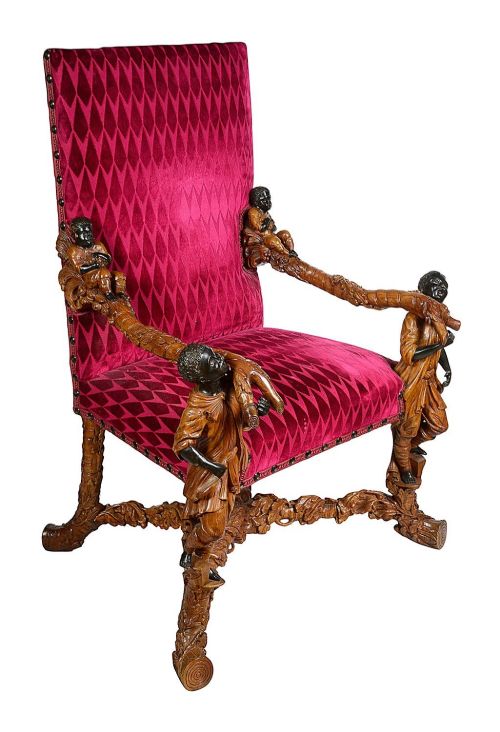
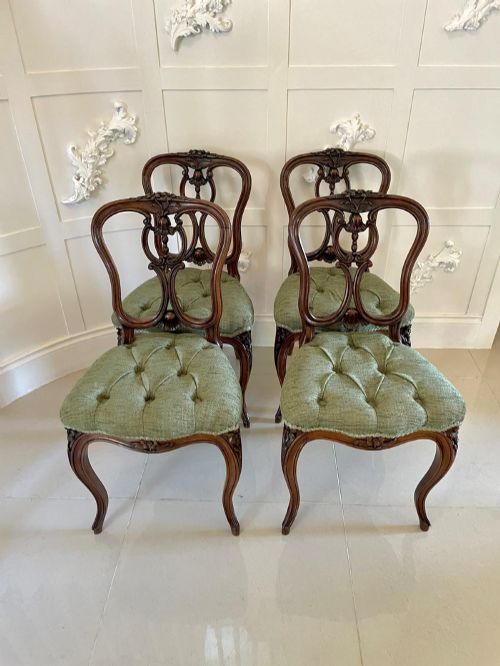
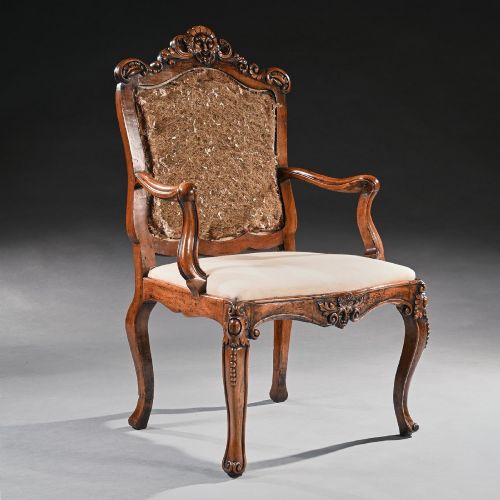
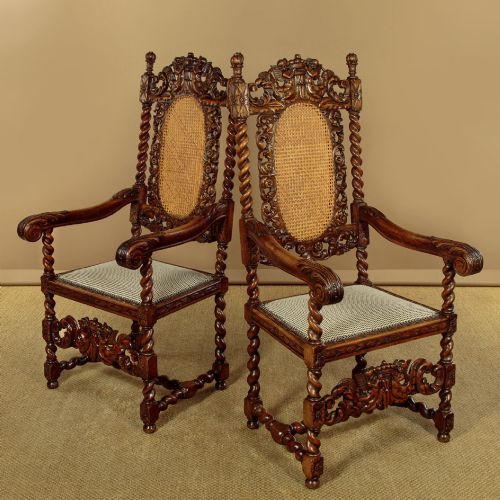




Ornate Carved Walnut Chairs
These ornate carved walnut chairs combine dramatic nineteenth-century historicism with dense timber work to anchor a room.
Ornate Carved Walnut Chairs
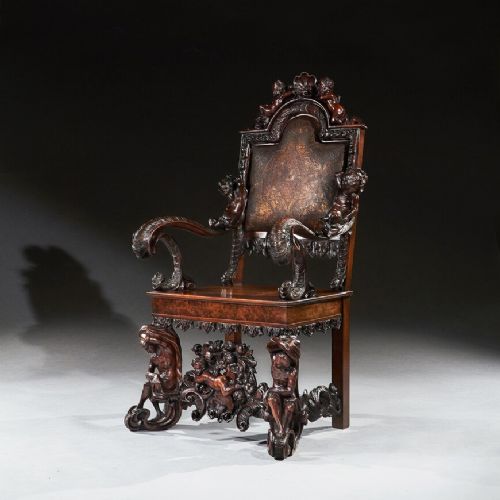
Ornate carved walnut chairs encompass armchairs, side chairs, hall chairs, and benches created primarily across the nineteenth century, drawing heavily on earlier Renaissance, Baroque, and Rococo forms. Buyers seeking this phrase encounter sturdy seating heavily worked with figural carving, scrolls, and pierced splats.
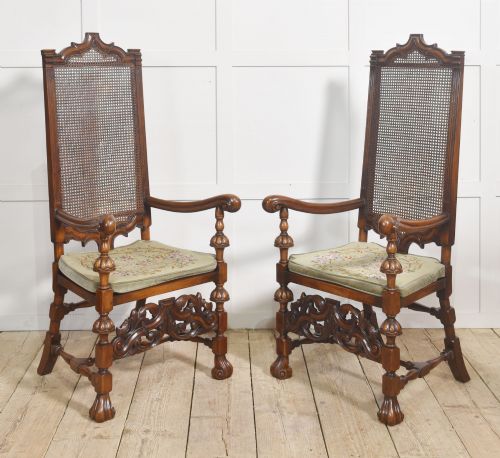
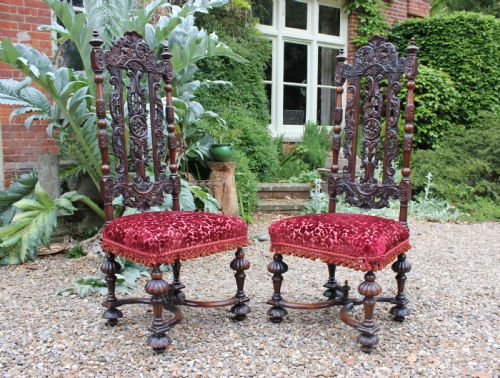
The material across these examples is walnut, frequently paired with cane, leather, velvet, tapestry, and various upholstery fabrics. Pieces span Continental workshops, British Victorian output, and specific revival idioms such as Italian Baroque and Carolean styles.
The selection ranges from exhibition-quality armchairs after Andrea Brustolon to simpler side chairs and hall benches. Most pieces date from the mid to late nineteenth century, alongside earlier eighteenth-century baroque iterations.
Materials and construction methods
Makers utilised solid walnut for its dense grain, which supported deep, crisp chiselling without splintering. This timber allowed craftsmen to execute high-relief foliage, crests, and sculptural arm supports.
Upholstery and secondary materials completed the forms, incorporating hand-woven tapestry, stamped velvet, supple leather, and woven cane seats. Bone inlay and marquetry occasionally enriched the walnut surfaces on Continental pieces.
Ornate Carved Walnut Chairs Retail Price Guide 2026
Typical asking prices for ornate carved walnut chairs among the pieces listed under this phrase on Sellingantiques today, from the lower quarter to the upper quarter. They describe what is for sale here now, not the wider market.
The current selection spans walnut furniture from the eighteenth century to nineteen-hundred, featuring both British Victorian and Continental revival aesthetics.
Factors that separate the grades
Depth and crispness of the carving distinguish standard production from exhibition work, where carvers undercut the walnut to create three-dimensional movement. Secondary details like bone inlay or marquetry panels elevate specific Continental pieces above plain timber frames.
Structural integrity of the joints and the preservation of the original walnut surface determine longevity. Pieces retaining their early textiles, tapestries, or leather hold greater integrity than later re-coverings.
Andrea Brustolon
The Ornate Carved Walnut Chairs Glossary
- Walnut
- A hard, dark timber favoured for furniture due to its rich grain and suitability for intricate carving. It forms the primary structural material for these historic chairs.
- Renaissance Revival
- A nineteenth-century design movement mimicking sixteenth-century motifs including strapwork, caryatids, and heavy scrolling. This style dominates many large armchairs and hall benches.
- Sgabello
- A light wooden chair originating in the Italian Renaissance, characterised by a polygonal seat and trestle supports. The form appears in nineteenth-century decorative iterations.
- Marquetry
- The art of applying pieces of veneer to a structure to form decorative patterns. Swiss and Continental makers utilised this technique on chair backs and seats.
- Baroque
- An ornate European style from the seventeenth and early eighteenth centuries defined by drama, exuberant curves, and monumental scale. Revival versions emulate this intensity in walnut.
Ornate Carved Walnut Chairs: Frequently Asked Questions
How do I identify a nineteenth-century revival chair?
Examine the timber colour and the mechanical precision of the joints beneath the upholstery. Nineteenth-century makers often combined historicist motifs with machine-assisted cutting techniques while retaining hand-chiselled surface details.
Compare the overall proportion and weight of the walnut frame against known period exemplars. Revivals typically display heavier timber sections and distinctive nineteenth-century upholstery foundations.
Where should I place an ornate walnut armchair?
Position these substantial armchairs as focal points in studies, hallways, or formal reception rooms where their carved backs are visible. Their heavy visual weight pairs well with panelled walls and traditional architectural details.
Keep them away from direct heat sources and strong sunlight to protect the walnut timber and antique fabric upholstery from drying and fading.
What is the difference between an armchair and a hall chair?
Armchairs feature upholstered seats and supportive arms designed for prolonged sitting in drawing rooms or libraries. They prioritise comfort alongside decorative presence.
Hall chairs utilise rigid wooden seats and high backs intended for transit spaces and entrance halls. Their decoration focuses on carved crests and heraldic motifs rather than cushioning.
How do I care for antique walnut and upholstery?
Dust the carved walnut regularly with a dry, soft cloth to prevent grime settling into the recesses of the relief work. Feed the dry timber sparingly with appropriate conservation wax when necessary.
Protect delicate fabrics and tapestries by avoiding direct sunlight and professional cleaning when stains occur. Consult a specialist restorer for fragile cane or leather elements.