
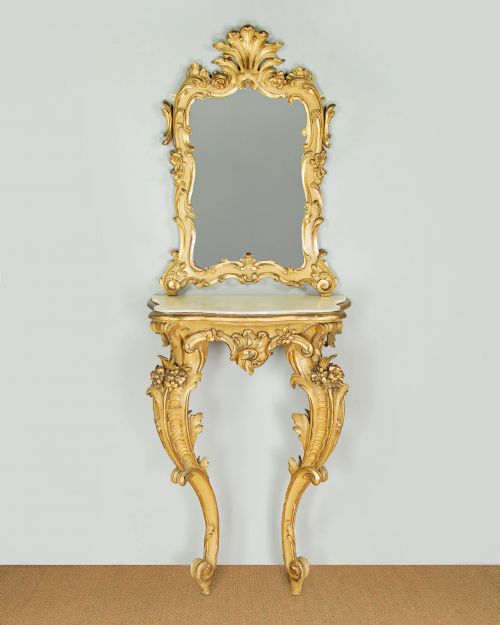


Ornate Carved Wall Table
An ornate carved wall table brings dramatic architectural presence to a hallway or principal reception room through elaborate giltwood and marble construction.
Ornate Carved Wall Table
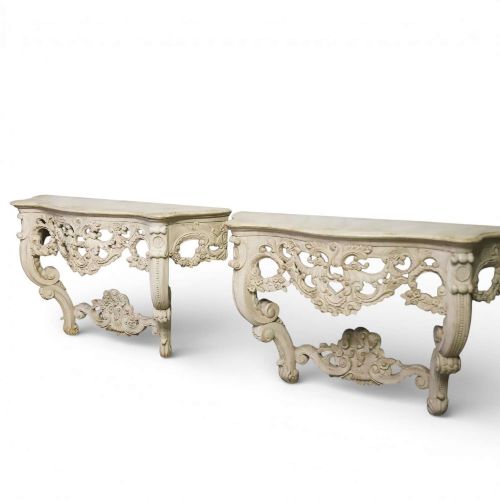
When searching for an ornate carved wall table, buyers encounter console tables, side tables, and paired console table and mirror sets designed to anchor against a vertical surface. These pieces emerge predominantly from nineteenth century and eighteenth century periods, drawing on French Rococo, Baroque, and Italian revivals.
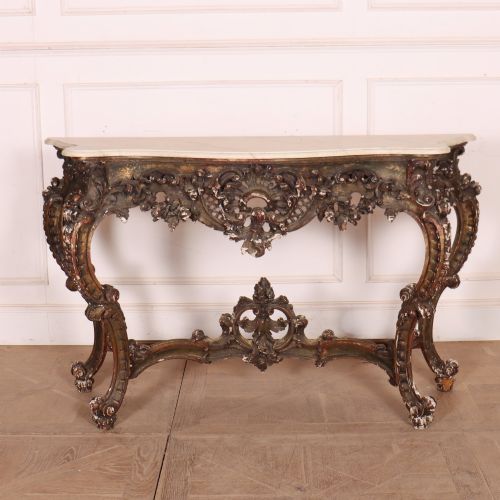
The physical format relies on wall attachment or bracket support rather than four independent legs, reflecting their original purpose as decorative piers beneath wall mirrors. Surviving examples frequently combine carved timber frames with inset marble slabs, ranging from intimate entrance pieces to monumental nineteenth century specimens.
Materials and Techniques
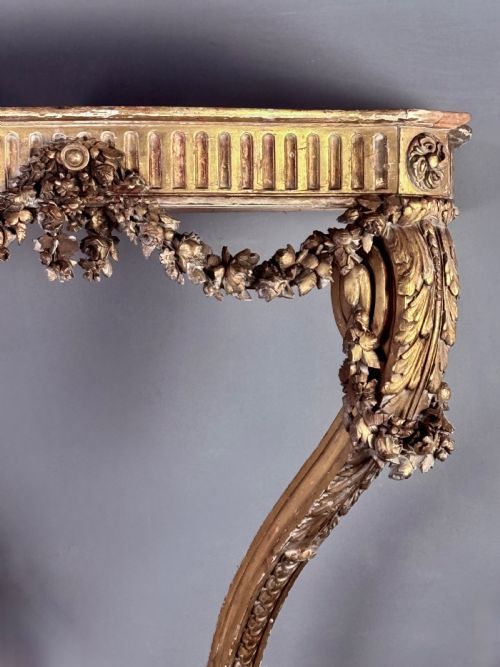
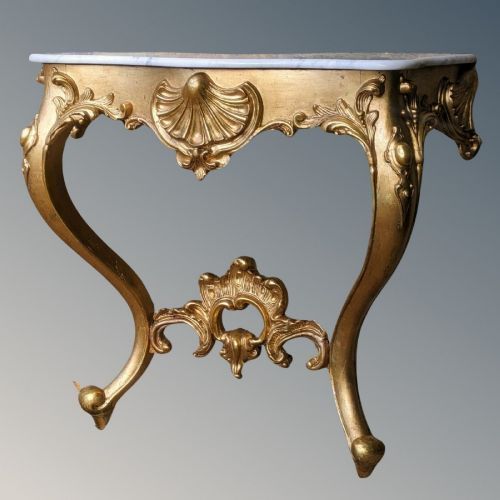
Construction centres on carved wood, gesso, and gold leaf, utilising hand-carved timber frameworks finished with applied metallic leaf or paint. Giltwood surfaces combine delicate gesso grounds with thin gold leaf layers to catch ambient light in formal interiors.
Heavy marble tops, including white Carrara varieties, rest upon these carved wooden bases to provide a durable and contrasting horizontal surface. Additional construction materials span walnut, rosewood, and glass, supporting complex serpentine contours and relief carvings.
Materials documented across the inventory include giltwood, white Carrara marble, rosewood, walnut, and gold leaf.
Craftsmanship and Proportion
Quality separates along the depth and crispness of the hand-carving within the wood or gesso, distinguishing vigorous floral and figural reliefs from shallower mouldings. The integration between the carved base and its fitted marble top determines the architectural harmony of the piece.
The application method of the giltwood or parcel gilt finish dictates long-term visual depth, separating master-finished surfaces from simpler painted alternatives. Original pairings of console tables with matching mirrors represent a higher tier of period interior design.
Felix-Alfred Ternisien
The Ornate Carved Wall Table Glossary
- Console table
- A table designed to be fixed against a wall, traditionally supported by front legs or wall brackets. These forms frequently feature elaborate carved aprons.
- Giltwood
- Timber that has been decorated with gold leaf or gold paint applied over a prepared gesso surface. This finish defines many formal European tables.
- Gesso
- A plaster-like mixture applied to wood surfaces to create a smooth base for gilding and fine relief carving. It allows crisp detail in decorative motifs.
- Parcel gilt
- A finish where only specific portions of a wooden or painted object are highlighted with gold leaf. This technique accentuates particular carved details.
- Serpentine
- A furniture contour featuring a curving line that is convex in the centre and concave at the sides. It creates movement across the front of tables.
Ornate Carved Wall Table: Frequently Asked Questions
How do I secure an ornate carved wall table safely?
These tables rely on wall fixings or brackets for stability because their design prioritises decorative impact over freestanding balance.
Professional installation into solid masonry or secured wall studs ensures the heavy marble top rests safely without tipping.
What is the difference between a console table and a side table?
Console tables are engineered specifically to be mounted against a wall, often featuring flat backs and front legs only.
Side tables stand independently on four legs, whereas wall tables require structural support from the vertical surface behind them.
How should I clean a giltwood and marble surface?
Giltwood requires dusting with a dry, soft brush to protect the delicate gold leaf layer from moisture and abrasion.
Marble tops tolerate gentle wiping with a damp cloth, avoiding acidic cleaners that etch the polished stone.
Can I place these tables in a narrow hallway?
Narrow hallways suit these pieces well because their shallow wall-mounted profile preserves walking space while providing a surface for display.
Matching them with a wall mirror enhances the illusion of depth in compact entrance spaces.