



Ornate Carved Hall Table
An ornate carved hall table brings weight and intricate detail into an entrance, offering a striking surface beneath a mirror or art.
Ornate Carved Hall Table
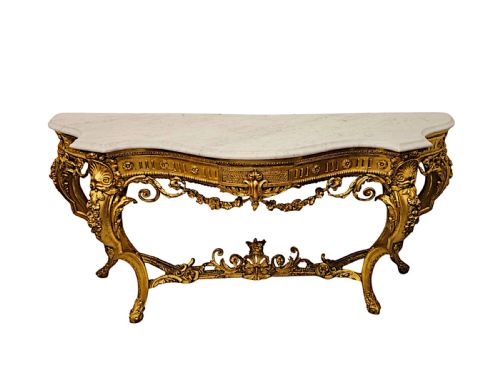
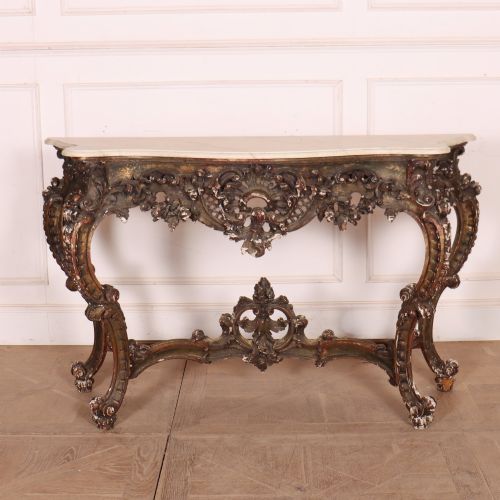
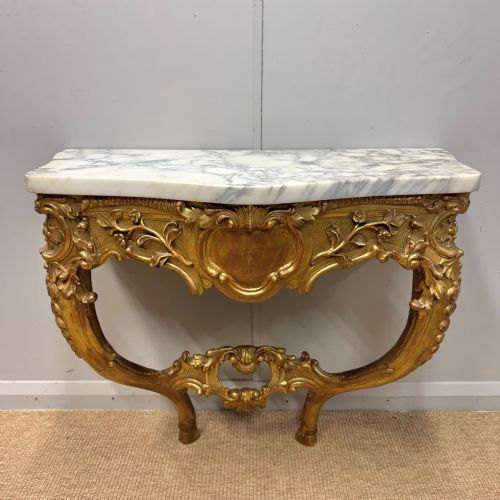
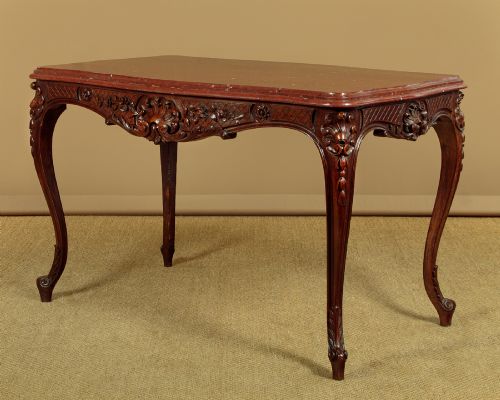
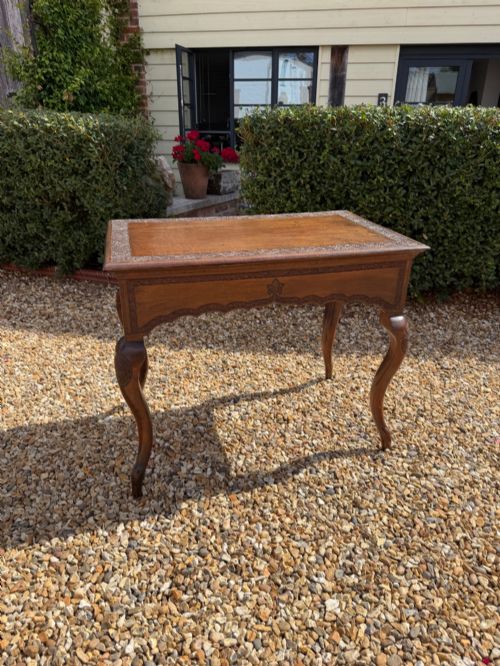
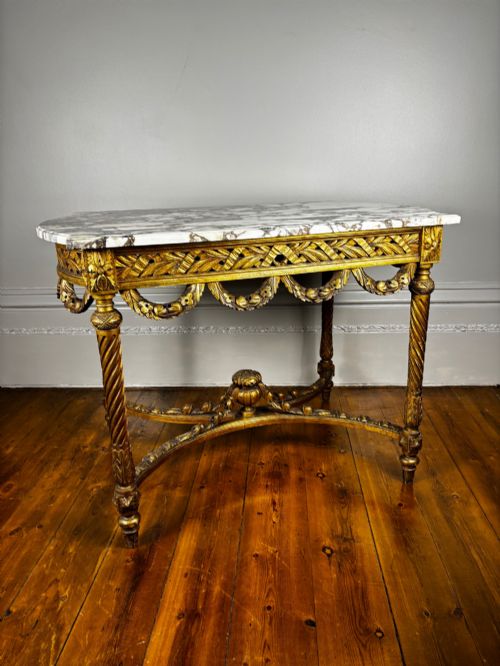
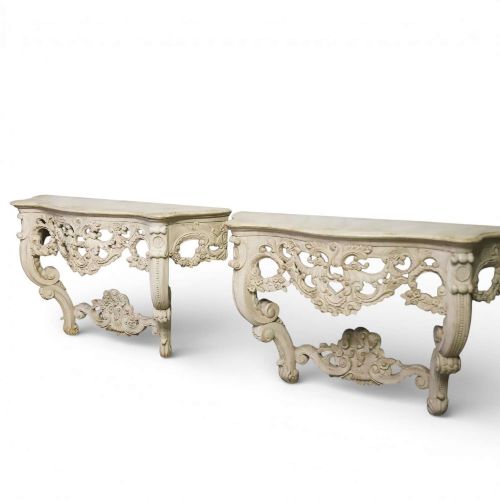
An ornate carved hall table encompasses console tables, centre tables, and side tables designed for prominent display in entrance halls and reception rooms. These pieces originate from various European and international workshops, spanning periods from the late seventeenth century through the Victorian era and into the early twentieth century. Buyers seeking this phrase encounter formats ranging from serpentine French consoles to substantial Anglo-Indian tables.
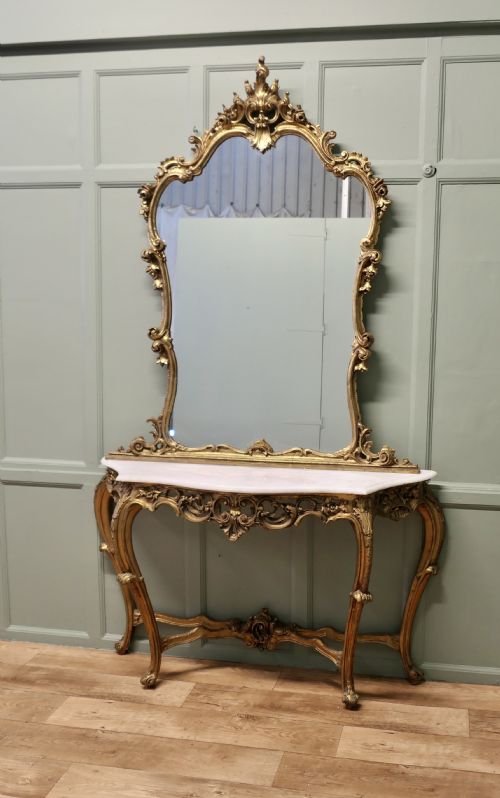
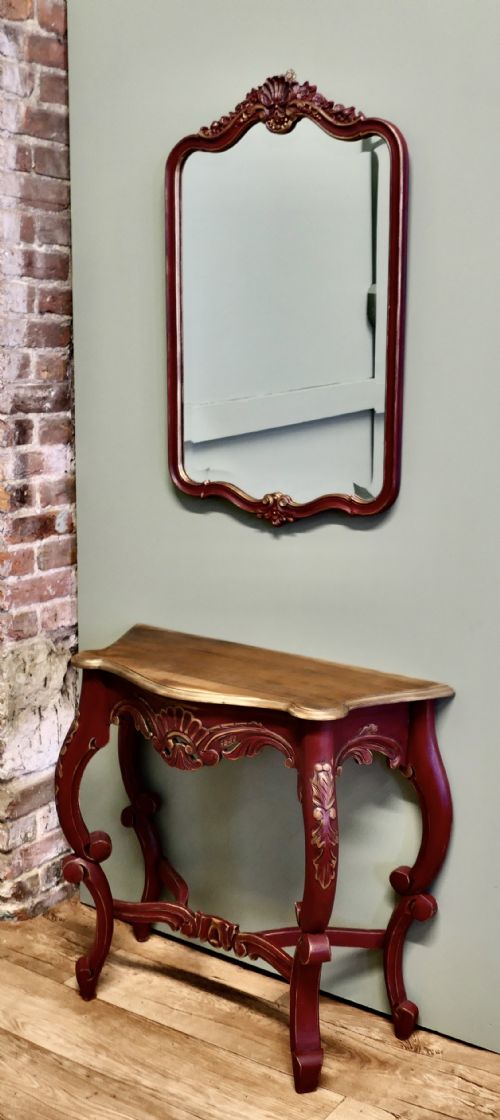
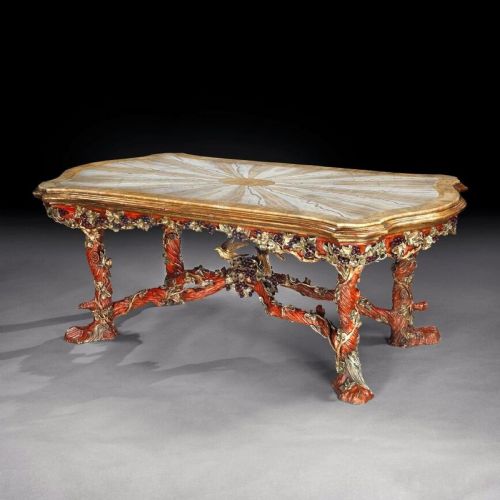
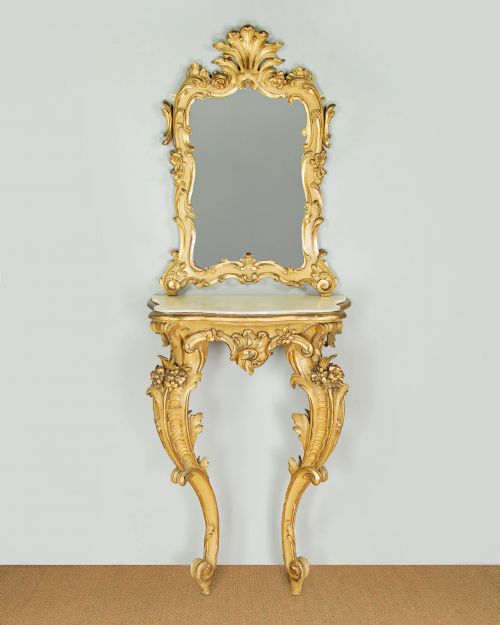
The selection includes matched sets featuring console tables paired with wall mirrors, alongside freestanding centre tables and wall-mounted console piers. Materials such as marble and onyx frequently form the upper surfaces, supported by heavily carved wooden frames. Regional expressions vary from Italian and French Rococo Revival to British Victorian and Anglo-Indian designs.
Materials and Technique
Craftsmen shaped these tables using solid timbers including walnut, mahogany, rosewood, and oak, alongside softer woods prepared for gilding. Carvers worked directly into the material to produce deep relief ornamentation, scrolls, and figurative elements. Giltwood and gesso surfaces received layers of gold leaf or paint finishes to achieve a reflective, decorative appearance.
Heavy stone slabs, notably white Carrara marble and rouge marble, were cut and polished to fit the upper frames, often resting upon the carved wooden bases without mechanical fixings. Gilding techniques applied gold leaf over prepared gesso grounds on carved wood, while specialist finishes involved parcel gilding on painted surfaces.
Ornate Carved Hall Table Retail Price Guide 2026
Typical asking prices for ornate carved hall table among the pieces listed under this phrase on Sellingantiques today, from the lower quarter to the upper quarter. They describe what is for sale here now, not the wider market.
Listings feature 18th-century, 19th-century, and early 20th-century periods, incorporating French Rococo, Baroque, and Anglo-Indian styles.
Assessing Quality
Quality rests in the depth and sharpness of the hand-carved ornamentation, where crisp undercut foliage and well-defined figures distinguish superior work from softer, mechanical moulding. The selection of timber or the choice of heavy, high-grade marble tops indicates the original investment in materials.
The integrity of the structural joints and the application of historical gilding or paint layers contribute to the overall standard of a piece. Original matching elements, such as companion wall mirrors or unbroken marble slabs, elevate the integrity of the table.
Amleto Bertoni
The Ornate Carved Hall Table Glossary
- Console table
- A table designed to stand against a wall, frequently secured to the vertical surface with brackets or designed with legs at the front only. These pieces often feature decorative aprons.
- Giltwood
- Timber that has been coated with a thin layer of gold leaf over a prepared base. This finish appears frequently on Rococo and Baroque revival furniture.
- Gesso
- A plaster-like material applied to wood to create a smooth surface for gilding or painting. It accepts detailed carving and moulding before the application of gold leaf.
- Serpentine
- A curved furniture front or top shaped in a continuous wave, curving outward at the centre and inward at the sides. This contour appears on eighteenth and nineteenth-century tables.
Ornate Carved Hall Table: Frequently Asked Questions
Where should I place an ornate carved hall table?
These tables suit entrance halls, corridors, and reception rooms where wall space allows a console or pier table to sit flush against the vertical surface. Centre tables require adequate clearance on all sides to function as freestanding focal points in larger rooms.
Pairing a console with a matching wall mirror creates a balanced arrangement for an entryway, reflecting light and providing a complete decorative unit.
How do I care for a marble top table?
Marble surfaces require gentle cleaning with a damp cloth and mild soap, avoiding acidic substances or harsh chemical cleaners that can etch the polished stone. Using coasters and mats protects the porous material from staining.
The wooden bases and gilded frames benefit from dusting with a soft, dry cloth without applying modern liquid polishes that might degrade historic finishes.
How do I identify a Rococo Revival table?
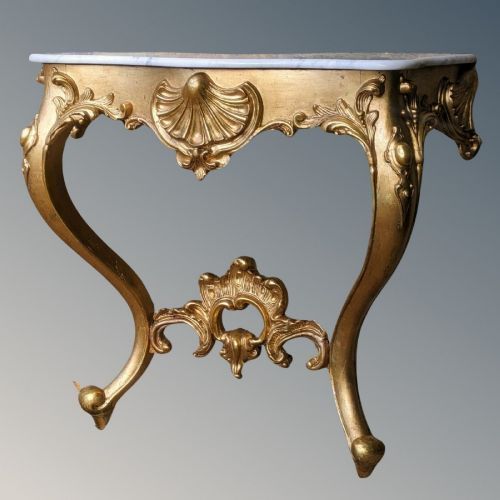
Rococo Revival pieces feature asymmetric scrolls, C-scrolls, naturalistic floral motifs, and shell carvings executed in deep relief. These designs often draw upon eighteenth-century French models from the Louis XV period.
The frames are frequently rendered in giltwood or painted finishes, accompanied by serpentine marble tops and cabriole legs ending in scrolled feet.
What is the difference between a console and a centre table?
Console tables are designed to stand directly against a wall, sometimes relying on wall fixings or featuring flat backs, whereas centre tables are finished on all four sides for placement in the middle of a room.
Console tables often pair with matching wall mirrors, while centre tables provide a multi-directional view of the carved woodwork and marble or timber tops.