

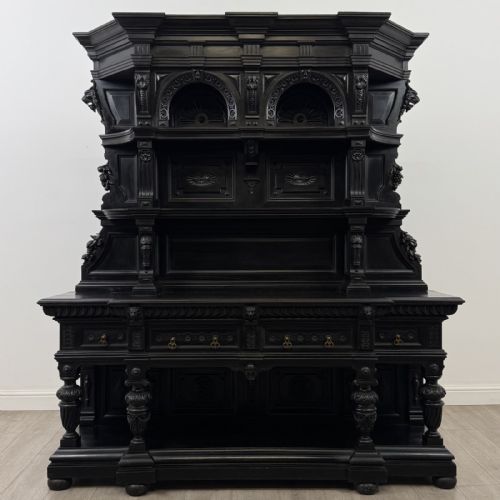
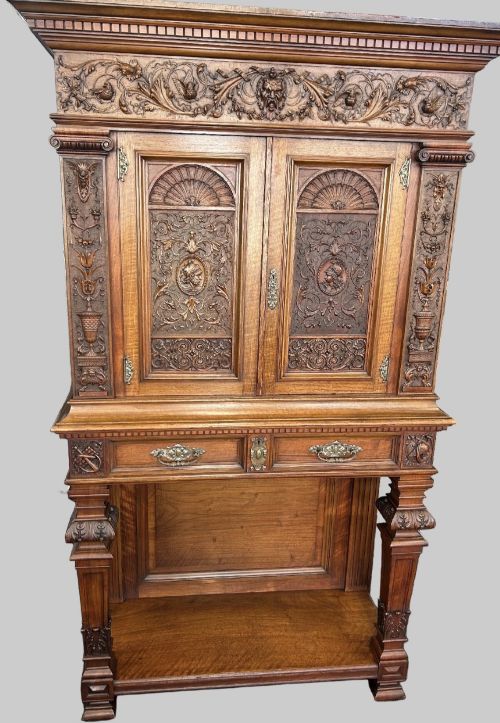
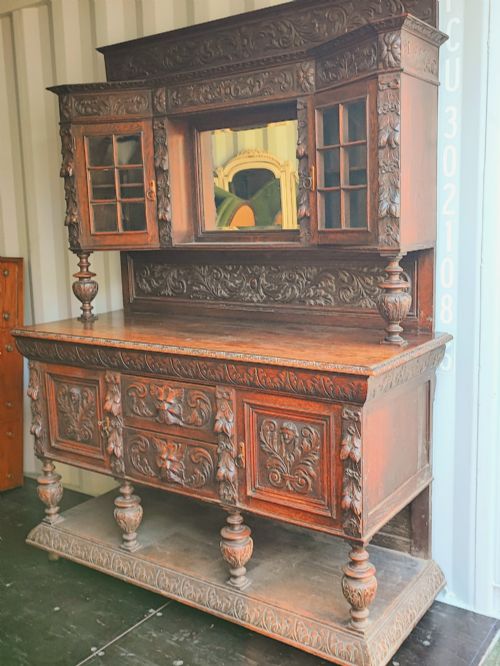
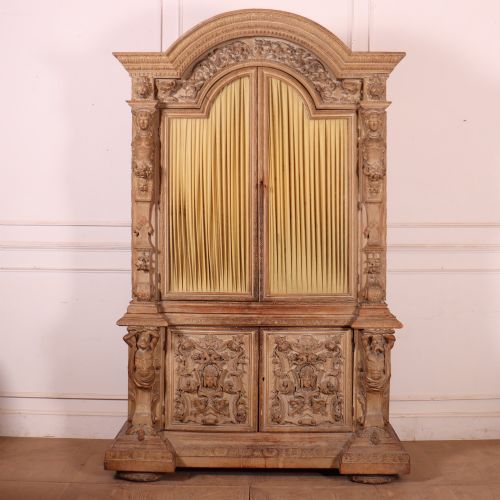


Ornate Carved Display Cabinet
An ornate carved display cabinet holds treasured possessions behind glass while adding sculptural weight to a room.
Ornate Carved Display Cabinet
An ornate carved display cabinet brings together glass panelling and intricate woodwork to showcase precious objects.
The pieces on this page span the Victorian era, the eighteenth century, and the late nineteenth century, taking the form of vitrines, sideboards, cabinets on stand, and bookcases.
Buyers meet walnut, oak, rosewood, and giltwood constructions shaped by Renaissance, Rococo, and Louis XIII revival styles alongside Anglo-Indian designs.
How they were made
Cabinet makers utilised dense timbers like walnut, oak, and burr walnut as structural foundations for deep relief carving.
Surface treatments integrated brass hardware, mirrored backs, marble tops, and fabric linings to complement the carved woodwork.
Joinery techniques combined heavy framing with glazed doors and fitted internal shelving designed to support collections.
Ornate Carved Display Cabinet Retail Price Guide 2026
Typical asking prices for ornate carved display cabinet among the pieces listed under this phrase on Sellingantiques today, from the lower quarter to the upper quarter. They describe what is for sale here now, not the wider market.
Some nineteenth-century cabinet makers hid tiny secret compartments behind elaborate carved mouldings to guard personal letters.
What varies in quality
The depth and crispness of the carving distinguish standard production from exceptional work, separating mechanical execution from fluent hand-chiselling.
Selection of timber grain, particularly in burr walnut and figured oak surfaces, dictates the visual richness of the finished piece.
Integration of secondary materials such as marble inserts and bevelled mirror glass indicates the original tier of manufacture.
Sigmund Jaray, Wien
The Ornate Carved Display Cabinet Glossary
- Vitrine
- A glass-fronted cabinet designed specifically for the display of porcelain, curiosities, and small valuables.
- Giltwood
- Timber treated with gold leaf or gesso to create a lustrous metallic surface finish.
- Cabinet on stand
- A raised storage compartment supported by an open framework of legs and stretchers.
- Chiffonier
- A compact sideboard or low cabinet typically fitted with drawers and enclosed shelving below.
- Revival
- A design movement that borrows decorative motifs and architectural forms from earlier historical periods.
Ornate Carved Display Cabinet: Frequently Asked Questions
Where should I place an ornate carved display cabinet?
These cabinets suit principal reception rooms or libraries where natural light strikes the glass panels and highlights the carved details.
Ensure the floor is level and stable, as heavy timber and marble elements require solid support.
How do I care for the carved wood?
Dust the intricate crevices regularly with a soft brush and apply traditional beeswax sparingly to nourish the grain.
Keep the timber away from direct heat sources and strong sunlight to prevent warping and fading.
What items look best inside?
Glass shelves and mirrored backs invite collections of ceramics, glassware, and small metalwork to catch the surrounding light.
Limit the number of objects to maintain breathing space around the interior carving and fabric linings.
How do revival styles differ?
Revival pieces reinterpreting the seventeenth and eighteenth centuries employ robust proportions and heavy architectural moulding.
Later Victorian interpretations often combine multiple historical motifs into a dense, decorative surface scheme.