



Bowfront Walnut Display Cabinet
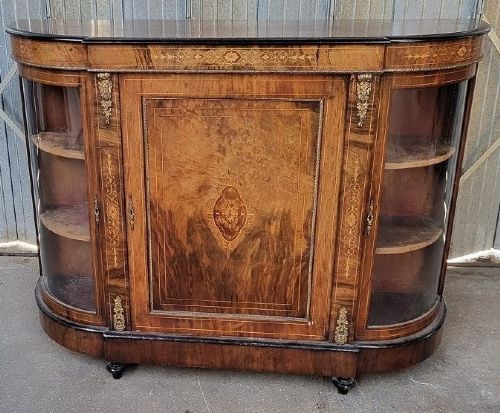
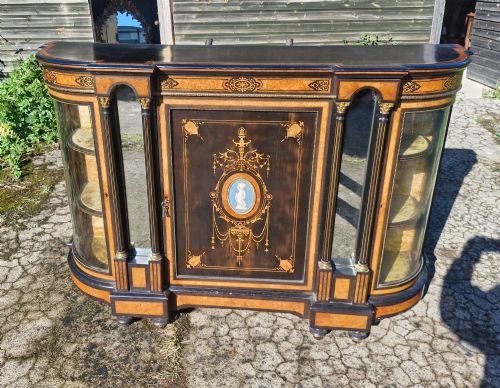
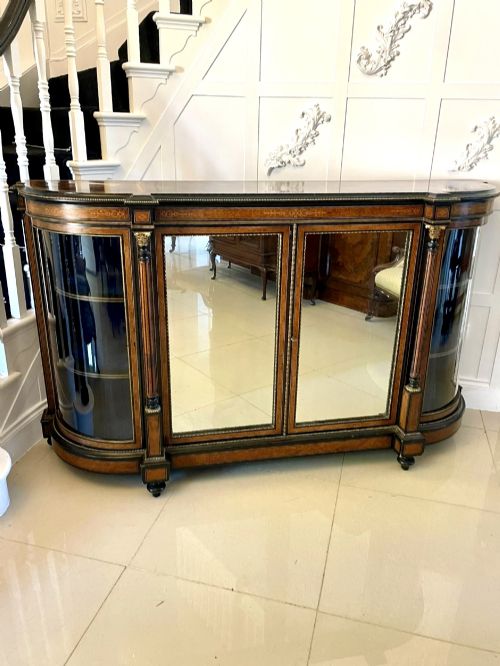
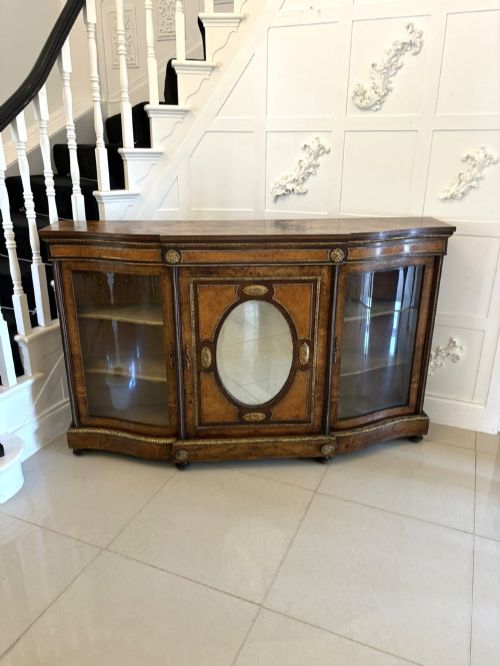
A bowfront walnut display cabinet combines curved glass with rich timber figures, offering an elegant focal point to exhibit china or books.
Bowfront Walnut Display Cabinet
When you search for a bowfront walnut display cabinet, you meet a range of nineteenth-century and early twentieth-century furniture, spanning Victorian pieces to Art Deco designs by makers such as Maurice Adams. These items take the form of corner cabinets, side cabinets, credenzas, and sideboards featuring curved fronts and glazed doors.
The selection here encompasses various periods including the eighteenth century, the Victorian era, and nineteen-thirty. Walnut and burr walnut dominate the construction, often enhanced with marquetry inlay, ormolu mounts, and brass details.
Corner cabinets and credenzas offer alternative footprints for different room layouts while maintaining the characteristic curved timber framing. Most examples rely on glass panels to showcase collections within domestic interiors.
How they were made
Cabinet makers utilised figured burr walnut veneers applied over solid timber carcasses to create intricate grain patterns across the curved surfaces. Marquetry inlay added contrasting floral or geometric motifs into the wooden panels.
Glazing framed in timber houses the display sections, whilst ormolu mounts and brass hardware provide metallic accents. Mirror glass often lines the interior backs of these cabinets to reflect light through the stored objects.
Bowfront Walnut Display Cabinet Retail Price Guide 2026
Typical asking prices for bowfront walnut display cabinet among the pieces listed under this phrase on Sellingantiques today, from the lower quarter to the upper quarter. They describe what is for sale here now, not the wider market.
Listings feature Victorian, Edwardian, and Art Deco periods, with burr walnut and glass as recurring materials.
What varies in quality
Exhibition quality pieces display superior selection and matching of burr walnut veneers across the curved bowfront doors and sides. Finer examples integrate elaborate marquetry work and heavy ormolu mounts rather than relying on plain timber surfaces.
The precision of the cabinet work, particularly around the curved glass housing and the alignment of inlay, separates standard production from exceptional craftsmanship.
Maurice Adams
The Bowfront Walnut Display Cabinet Glossary
- Bowfront
- A convex curved cabinet front that projects outward in a smooth arc. This shape softens the corners of a room and catches light across the timber grain.
- Burr Walnut
- A specialised wood cut from walnut tree growths, yielding swirling, knotty grain patterns. It is typically sliced into thin veneers for decorative furniture surfaces.
- Ormolu
- Gilt bronze mounts applied as decorative ornaments to furniture corners and borders. This technique adds metallic highlights to the dark walnut timber.
- Marquetry
- Inlaid patterns formed by fitting small pieces of contrasting wood veneer into a background sheet. Artisans use this technique to create floral or geometric designs on cabinet doors.
- Credenza
- A low cabinet form frequently featuring glazed central doors flanked by curved side cupboards. These pieces provide surface display space alongside enclosed storage.
Bowfront Walnut Display Cabinet: Frequently Asked Questions
Where should I place a corner cabinet?
A corner cabinet fits neatly into empty room junctions, making efficient use of overlooked spaces while displaying collections behind glass.
These pieces work well in dining rooms or drawing rooms where floor space remains at a premium.
How do I clean burr walnut surfaces?
Dust the timber gently with a soft, dry cloth to prevent scratching the polished veneer finish. Avoid abrasive polishes and excessive moisture which can damage the antique wood.
Regular gentle maintenance preserves the natural warmth and lustre of the walnut grain over time.
What items fit inside these display cabinets?
The glass-fronted shelves suit the exhibition of fine porcelain, glassware, and small curated collections. Interior mirror panels help illuminate the displayed objects from multiple angles.
Lower enclosed cupboards provide additional storage for items you prefer to keep out of sight.
How do I distinguish Victorian from Art Deco cabinets?
Victorian examples frequently feature ornate burr walnut veneers, marquetry inlay, and cast ormolu mounts. They often display traditional revival styles or heavily carved decorative elements.
Art Deco pieces from the nineteen-thirties showcase cleaner geometric lines and streamlined forms associated with modern design movements.