
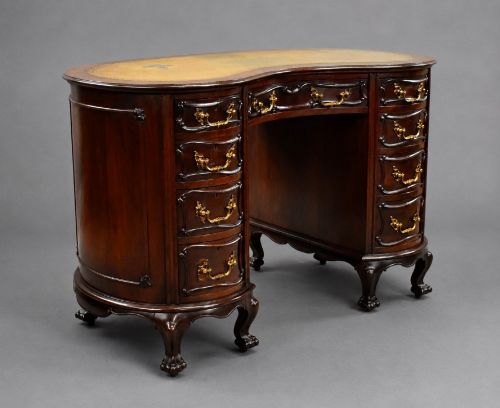


Ornate Carved Desk
An ornate carved desk brings tactile depth and historical weight to a study, uniting elaborate ornamentation with practical workspace.
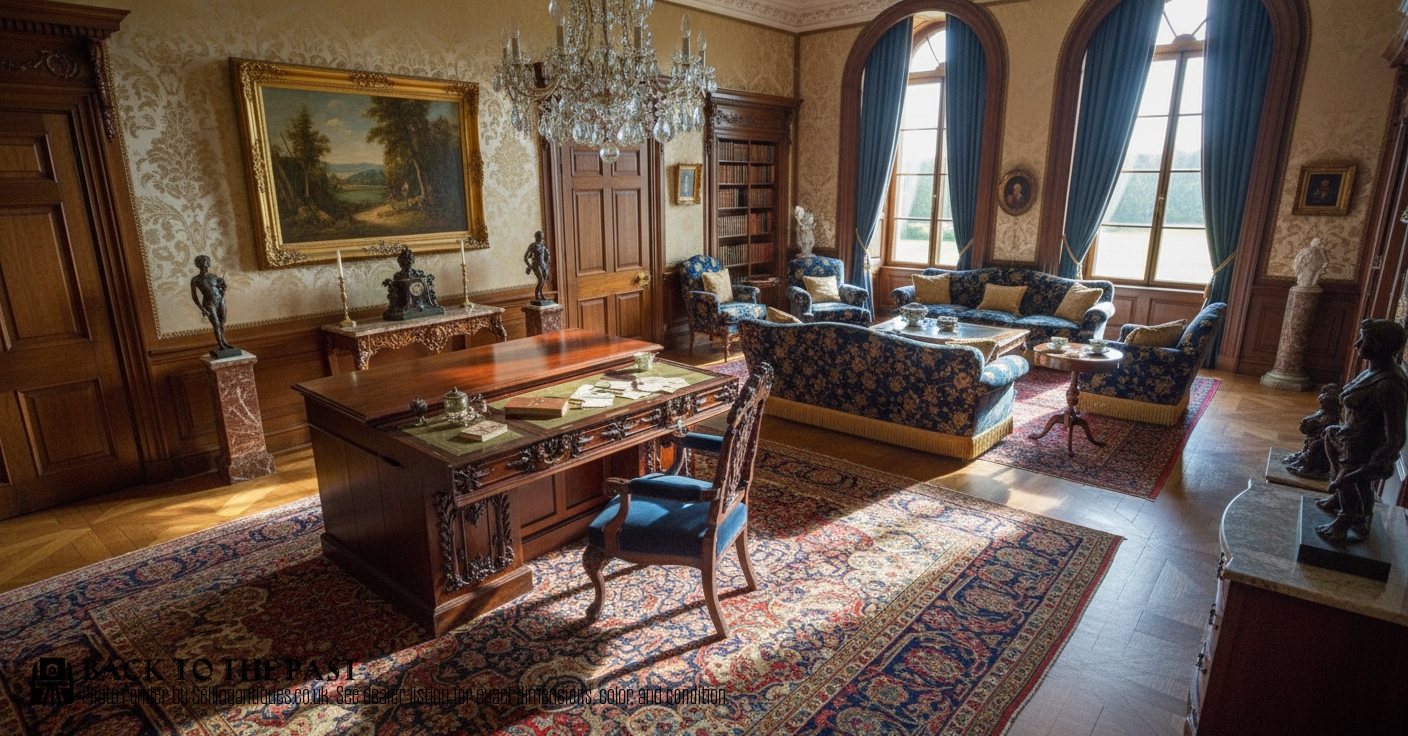
Ornate Carved Desk
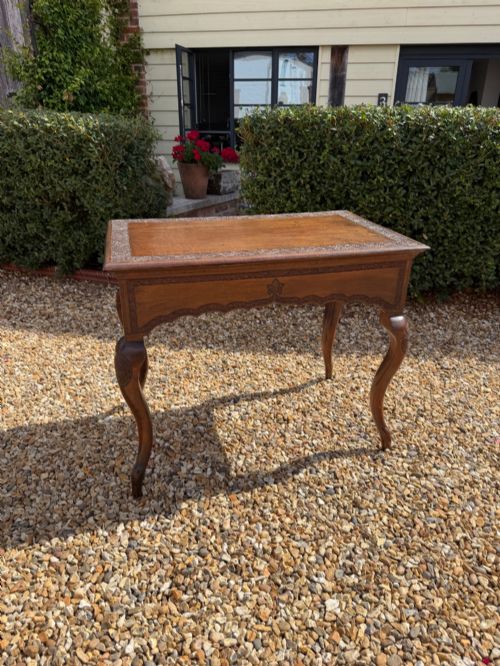
An ornate carved desk provides a substantial working surface combined with detailed surface decoration executed in timber. These pieces emerge from the nineteenth century, drawing on styles such as Victorian, Renaissance, and Anglo-Indian design traditions.
The selection here includes pedestal formats, partners desks, writing desks, and Davenport variations. Woods such as mahogany, walnut, padouk, and rosewood serve as the primary structural foundations for these carved items.
How they were made
Cabinet makers utilised dense hardwoods including mahogany, walnut, and padouk, which tolerated deep chisel work and intricate relief carving. Timber sections were joined using traditional cabinet-making methods suited to heavy pedestals and writing boxes.
Surface enrichment involved hand-carved foliage, figures, and geometric patterns executed directly into the solid wood. Brass and bronze elements occasionally complemented the timber structures on related desk accessories.
What varies in quality
Quality rests upon the depth, sharpness, and execution of the hand carving across the timber surfaces. Crisp relief work with well-defined undercut details distinguishes finer pieces from simpler mechanical or shallow press-moulded ornamentation.
The selection of timber grain and the integrity of the structural joinery determine the overall calibre of a desk. Superior examples display carefully matched veneers or dense solid hardwoods that have aged with stable joints and intact mouldings.
Angiolo Barbetti·Samuel Marti
The Ornate Carved Desk Glossary
- Partners desk
- A large double-sided writing table designed for two people to work opposite one another, typically fitted with drawers and cupboards on both faces.
- Davenport desk
- A compact writing desk featuring a sloping lid above a pedestal of side drawers, originating in the late eighteenth century and remaining popular through the Victorian era.
- Padouk
- A heavy, durable tropical hardwood with a reddish hue, frequently utilised in Anglo-Indian and colonial furniture production for detailed carving.
- Renaissance Revival
- A nineteenth-century design movement that revived classical motifs, heavy architectural moulding, and sculptural cartouches inspired by sixteenth-century art.
- Breakfront
- A cabinet or desk facade where the central section projects forward from the flanking outer sections.
Ornate Carved Desk: Frequently Asked Questions
Where should an ornate carved desk go?
These large timber pieces suit studies, libraries, or central placement in a spacious room where all sides remain visible.
Position the desk away from direct heat sources to protect the solid wood and preserve the carved details.
How do I care for carved wood?
Dust the intricate carvings regularly using a soft brush to prevent dirt accumulation within the recesses of the timber.
Apply occasional applications of appropriate furniture wax to nourish the wood without dulling the carved definition.
What periods do these desks represent?
The pieces span the nineteenth century, incorporating Victorian interpretations of Renaissance and Rococo styles alongside Anglo-Indian colonial production.
Each period brings distinct carving characteristics and timber choices to the desk design.
How do partners desks function?
A partners desk offers simultaneous workspace on opposing sides, equipped with matching drawers and kneeholes.
This layout allows two individuals to sit and write facing each other across a single shared piece of furniture.