




Ornate Cabriole Leg Table
An ornate cabriole leg table brings double-curved scrolling lines and rich timber grains into a room, offering both practical surface space and distinct period character.
Ornate Cabriole Leg Table
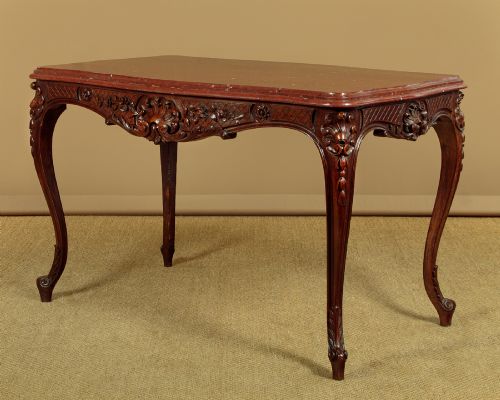
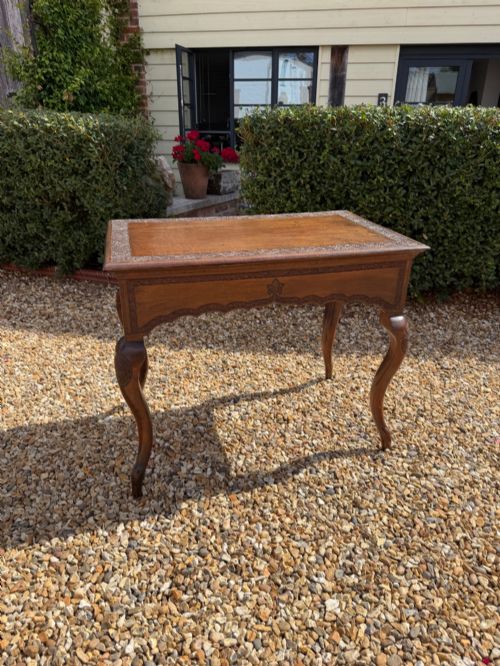
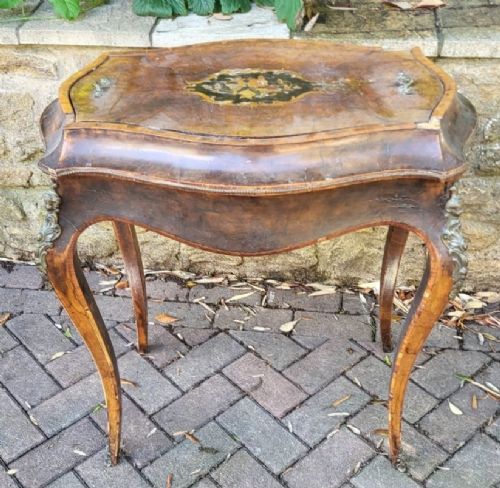
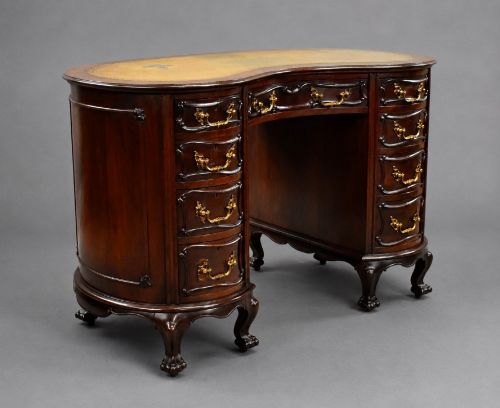
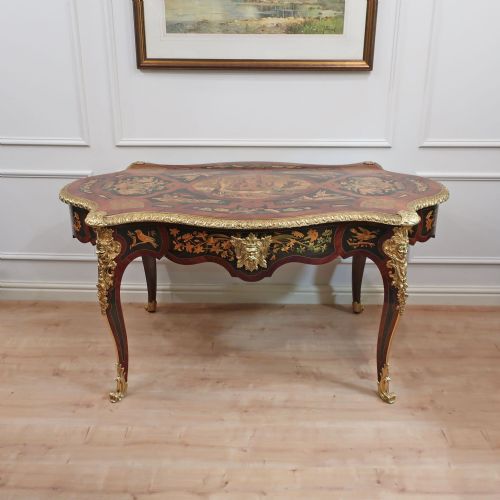
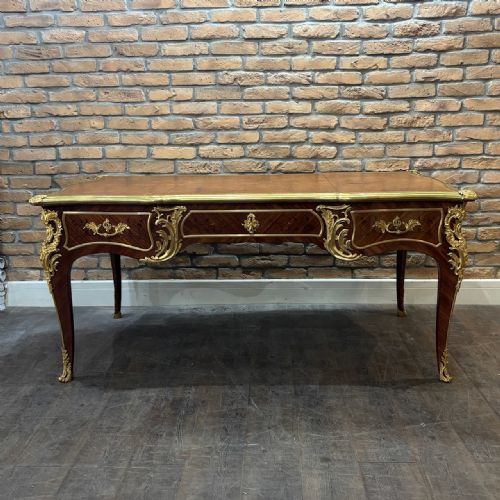
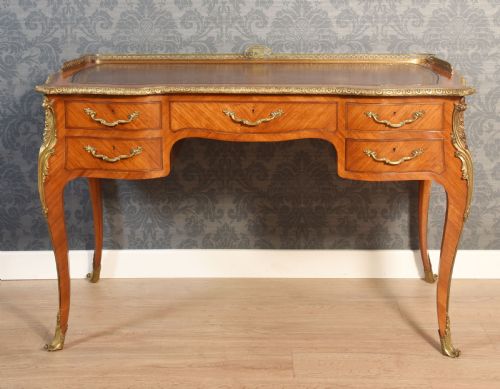
When you search for an ornate cabriole leg table, you are looking at items defined by their characteristic double-curved supports that taper outward at the knee and inward at the foot. These pieces appear most frequently in forms such as centre tables, writing desks, console tables, and display or bijouterie tables.
The selections span the nineteenth century and the early twentieth century, drawing heavily on French revival aesthetics like Louis XV and Rococo. Walnut, rosewood, kingwood, and mahogany form the primary timber bodies, often enhanced by marquetry or parquetry inlay.
You are likely to encounter French and English pieces alongside Anglo-Indian or Kashmiri walnut examples. The function ranges from small occasional surfaces and bedside items to large library desks and serpentine console hall tables.
How they were made
Cabinetmakers constructed the frames using dense hardwoods like walnut, mahogany, rosewood, and kingwood, frequently applying intricate marquetry or parquetry patterns in contrasting veneers. Tops occasionally feature rouge marble inset into carved wooden surrounds.
Metal mounts in ormolu, gilt bronze, and brass were cast and chased to highlight the corners, edges, and aprons of the tables. Leather inserts appear on the working surfaces of writing desks and bureaux.
The listings here include items made from walnut, rosewood, kingwood, mahogany, and black lacquer, spanning the Victorian era and the early twentieth century.
What varies in quality
The distinction between tiers rests upon the crispness of the wood carving and the depth of hand-chased detail found in the metal mounts. Subtle variations in veneer selection, such as figured burr walnut or complex geometric parquetry, elevate certain examples above plain timber surfaces.
Proportion and the fluidity of the leg curvature dictate the visual success of the piece. Superior craftsmanship shows in the seamless integration of bronze or ormolu mounts to the wooden carcase.
The Ornate Cabriole Leg Table Glossary
- Cabriole leg
- A furniture support that curves outward at the knee and tapers inward toward the foot, mimicking animal limbs. This design gained prominence during the eighteenth century and saw frequent revival in nineteenth-century pieces.
- Ormolu
- Gilded bronze applied to furniture mounts and decorative hardware. The metal is cast and then treated with a gold amalgam to produce a bright metallic finish.
- Marquetry
- Decorative veneer work forming pictorial or geometric patterns using various woods. Craftsmen cut thin slices of different timbers and fit them together before gluing the sheet to the carcase.
- Bureau plat
- A flat-topped writing desk, typically freestanding with cabriole legs and mounted with bronze or ormolu. These desks often feature drawers within the frieze.
- Bijouterie table
- A display table with a glass top and sides designed to showcase small decorative objects, medals, or jewellery. They frequently stand on slender cabriole supports.
Ornate Cabriole Leg Table: Frequently Asked Questions
What is a cabriole leg?
A cabriole leg is a furniture support shaped with two curves, swelling outward at the top knee and tapering inward toward the ankle before flaring slightly at the foot.
This profile draws inspiration from traditional animal forms and underpins many nineteenth-century revival styles.
How do I identify a bureau plat?
A bureau plat is a freestanding writing desk featuring a flat top, often inset with leather, supported by four legs.
These desks typically incorporate drawers in the frieze and display decorative mounts in ormolu or bronze.
Where were these tables made?
These tables originate predominantly from English and French workshops, with distinct regional variants also coming from India and Kashmir.
European pieces frequently adopt French aesthetic models such as Louis XV and Rococo Revival.
What materials are used in these tables?
Construction relies on dense hardwoods including walnut, rosewood, kingwood, and mahogany.
Surfaces are frequently embellished with parquetry, marquetry, ormolu mounts, and occasionally inset marble tops.