
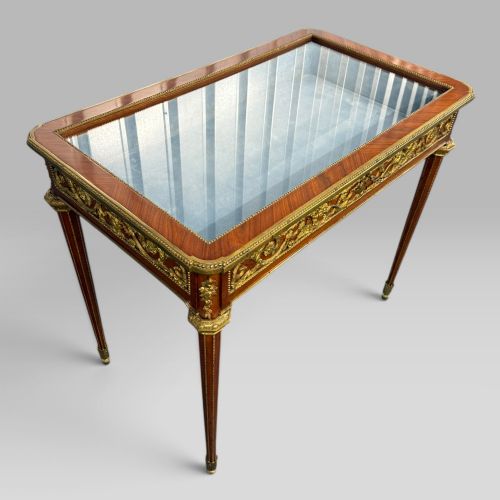
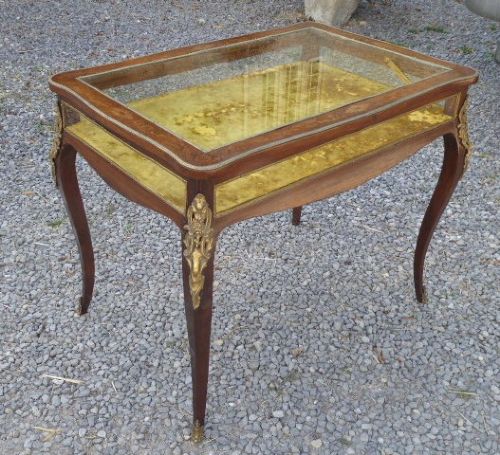


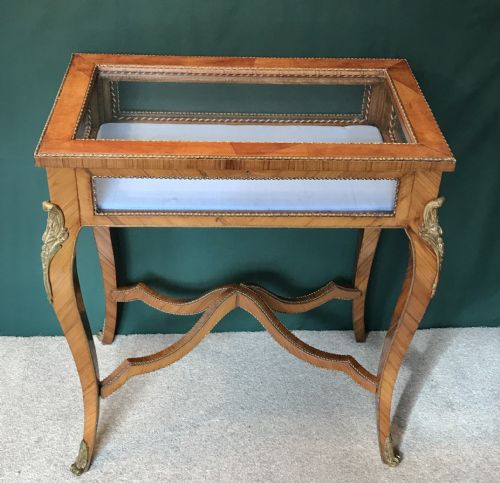


Brass Mounted Bijouterie Table
A brass mounted bijouterie table displays your treasured collections beneath glass, bringing elegance and refined visibility to any room.
Brass Mounted Bijouterie Table
A brass mounted bijouterie table serves as a specialised display surface, designed specifically to showcase small decorative objects, jewellery and collectibles under a glass top. These tables combine the function of a vitrine with the proportions of a centre or display table.
The pieces seen here span from the mid-nineteenth century through the Edwardian era and into the mid-twentieth century, drawing heavily on French revival styles. You will frequently encounter forms executed in mahogany, rosewood or kingwood, often featuring glazed display compartments.
Victorian and Edwardian iterations dominate the selection, alongside continental and French inspired examples from the late nineteenth century. Whether standing on slender cabriole legs or heavier turned supports, each piece provides a secure, dust-free enclosure for delicate items.
How they were made
Cabinet makers constructed the structural frames using dense timbers like mahogany, rosewood and kingwood, frequently applying decorative marquetry and brass inlay directly into the wood. Veneers were carefully laid over solid secondary woods to create rich patterned surfaces on the tops and sides.
Cast and chased ormolu and brass mounts edge the glass lids and accent the legs, secured with tiny screws or pins to frame the display area. Glazed panels are fitted into hinged or lift-top lids, allowing easy access to the velvet or fabric lined interior wells where collectibles rest.
Listings feature eighteenth and nineteenth century French revival styles, predominantly Louis XV and Louis XVI, executed in mahogany and rosewood.
What varies in quality
The distinction between standard examples and the finest pieces lies in the crispness of the metal mounts and the complexity of the timber work. Superior tables display finely chased ormolu rather than simple stamped brass, paired with intricate kingwood marquetry or precise brass inlay.
Interior detailing also marks the grade of a table, with high-quality specimens retaining their original hand-stitched velvet or fabric linings and smoothly operating glazed hinges. Heavier construction and robust secondary framing distinguish the more substantial Victorian and Edwardian productions from lighter continental variants.
François Linke
The Brass Mounted Bijouterie Table Glossary
- Bijouterie table
- A specialised display table with a glazed top and sides, created to exhibit small precious objects, medals, or jewellery. These pieces elevate the display of collections to furniture status.
- Ormolu
- Gilded bronze mounts applied to furniture edges and legs for decorative effect. The metal is cast and chased to achieve crisp sculptural detail before gilding.
- Kingwood
- A dense, richly figured Brazilian timber prized by cabinet makers for its contrasting dark and golden brown striping. It appears frequently in nineteenth century marquetry.
- Vitrine
- A glass-fronted cabinet or display case designed to protect and exhibit porcelain, curiosities, or fine items. In this context, it describes the lidded display compartment.
- Marquetry
- The art of applying decorative veneer pieces of various woods to a structural panel to form geometric or floral designs. This technique decorates the tabletops and aprons.
Brass Mounted Bijouterie Table: Frequently Asked Questions
What goes inside a bijouterie table?
These tables are traditionally used to display small collectable items such as pocket watches, medals, coins, miniatures and fine jewellery. The glass lid protects the contents from dust while keeping them fully visible.
Collectors also use them for fossils, shells, small ceramics and other delicate curiosities that benefit from a dedicated, elevated presentation surface within a room.
How do you clean the interior fabric?
The velvet or fabric lining inside the display well requires gentle maintenance, typically using low suction through a soft brush attachment to remove accumulated dust.
Avoid liquid cleaners or excessive moisture, as older adhesives holding the fabric to the timber base can degrade or stain the surrounding wood.
Are the glass tops original?
Many tables retain their original thick, bevelled glass plates, which often display slight surface wear or tiny bubbles consistent with age.
Replacement glass is occasionally fitted during restoration work, though surviving original panes maintain the historical integrity and character of the piece.
Where should I place one?
A display table works well in a drawing room, study or hallway where light can pass through the glass top to illuminate the collection inside.
Positioning the table away from direct, strong sunlight protects both the internal fabric lining and any sensitive items displayed beneath the glass from fading.