



French Style Curio Table
A french style curio table brings glass and polished timber together to display small treasures.
French Style Curio Table
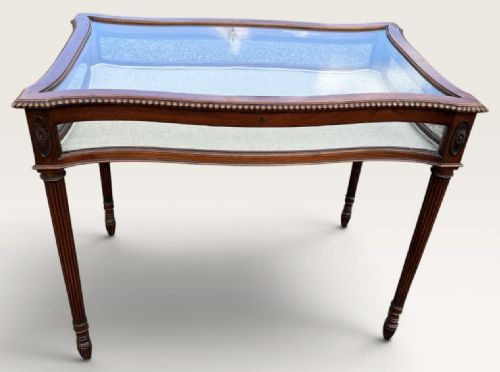
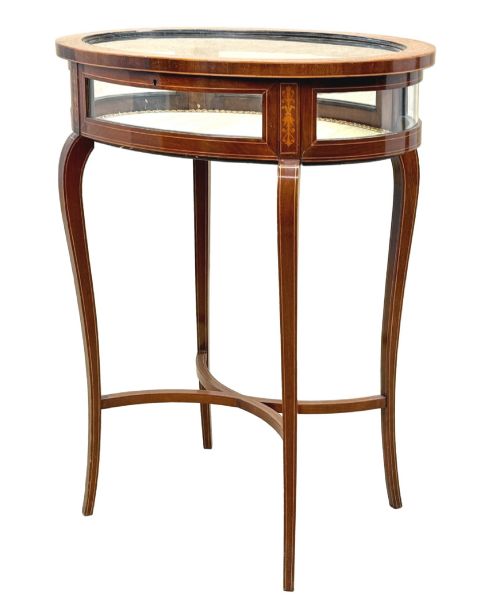
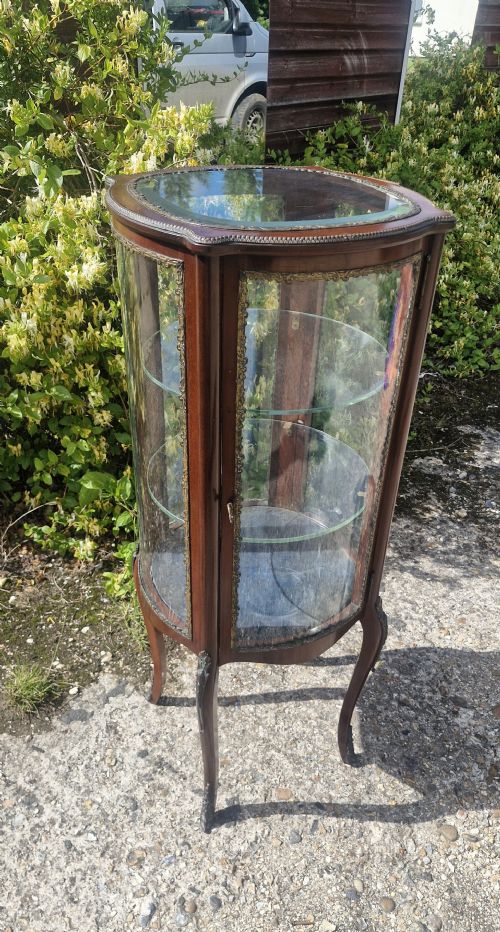
A french style curio table is a specialised display surface designed to showcase small decorative objects beneath glass. These pieces take the form of bijouterie tables, display cabinets, and vitrines.
The selections encountered here span from the mid-nineteenth century through the Edwardian era and into the 1930s. Makers drew heavily upon French Rococo Revival, Louis XV, and Louis XVI styles.
Mahogany and rosewood form the structural foundation of most examples, frequently complemented by kingwood veneers and brass inlay. The primary function remains the exhibition of precious items within a glazed compartment.
Construction and materials
Cabinet makers utilised dense hardwoods such as mahogany and rosewood to build the frames and legs of these display tables. Rich kingwood veneers add decorative grain patterns across the surfaces.
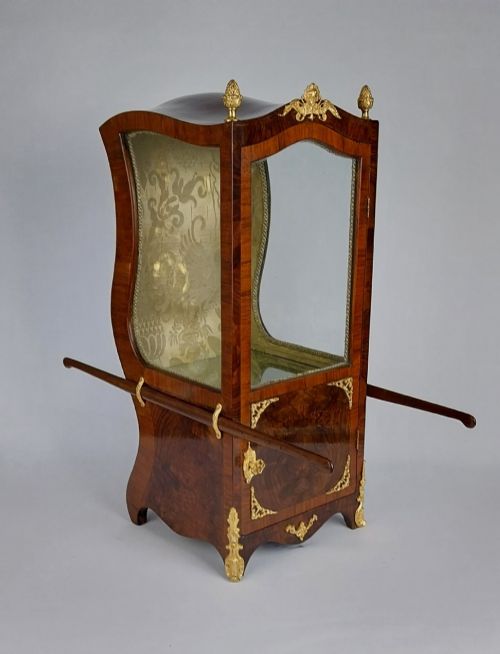
Ormolu mounts, cast as gilded bronze, adorn the corners, legs, and aprons to emulate French royal furniture. Glass panels enclose the top and sides, while interiors are frequently lined with velvet or fabric.
The listings span from 1860 through the Edwardian period to 1930, uniting Victorian and continental revival designs.
Distinctions in quality
The refinement of the cast ormolu mounts separates standard production from superior pieces. Crisp chasing and heavy gilding indicate higher craftsmanship in the bronze elements.
Timber selection and veneer matching dictate the visual depth of the woodwork. Intricate brass inlay and serpentine shaping demand advanced joinery skills that elevate the standing of the table.
The French Style Curio Table Glossary
- Bijouterie table
- A glazed display table specifically made for holding small valuables and trinkets. The hinged or lift-off glass top allows direct access to the lined interior.
- Ormolu
- Gilded bronze applied to furniture as decorative mounts and feet. The technique involves coating bronze with a gold amalgam.
- Kingwood
- A dense, richly figured wood utilised for veneering in fine cabinet making. It displays dark violet-brown streaks.
- Vitrine
- A glass-sided cabinet or table designed for exhibiting objects of vertu. These pieces protect contents from dust while offering all-round visibility.
- Serpentine
- A curved line that undulates inward and outward, typical of Rococo furniture design. This shaping adds fluid movement to the wooden framework.
French Style Curio Table: Frequently Asked Questions
What goes inside a french style curio table?
Owners typically place small collectibles, pocket watches, medals, and porcelain figures beneath the glass top. The velvet or fabric lining cushions these delicate items while they rest in view.
Visitors to the room can inspect the collection from above without handling the objects directly. This creates a personal museum display within a domestic setting.
How do I date a french style curio table?
Dating relies on identifying the underlying timber, secondary woods, and stylistic revival cues. Pieces from the mid-nineteenth century often display heavy Victorian proportions and rich rosewood.
Later Edwardian and 1920s versions may incorporate lighter mahogany frames and subtle brass inlay. Examining the construction methods inside the carcass clarifies the manufacturing period.
Where should I place a display table?
These tables sit well in drawing rooms, studies, or hallways where natural light can illuminate the glazed compartment. Positioning them away from direct sunlight protects fabric linings from fading.
Sufficient floor clearance allows uninterrupted circulation around the piece while granting easy access to the display area.
How do I care for the glass and ormolu?
Cleaning requires mild, non-abrasive cloths for the glass panels to avoid scratching the surface. Ormolu mounts need gentle dusting without chemical polishes that might strip the gilding.
Maintaining stable room humidity prevents the timber frame from warping and keeps the veneer secure.