





Ornate Brass Travel Clock
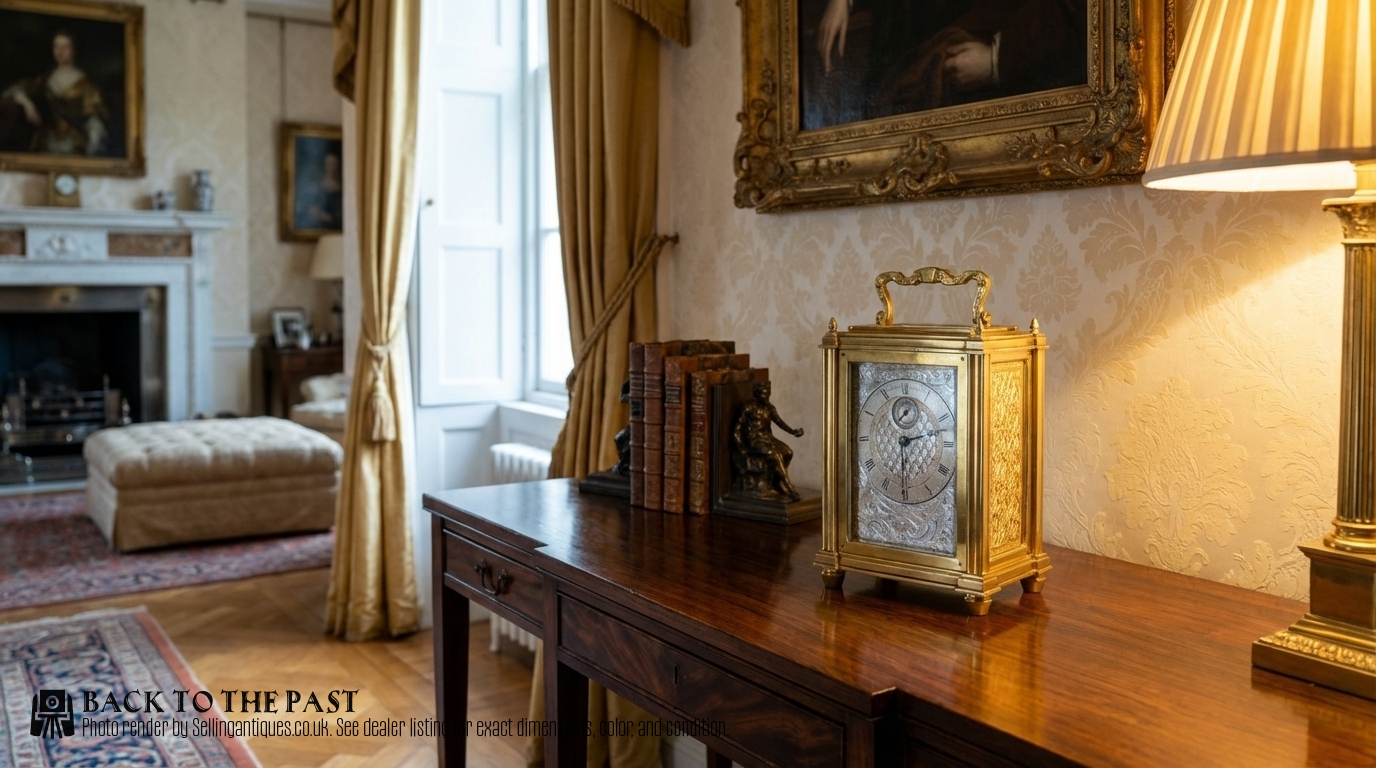
An ornate brass travel clock packs heavy metal and glass into a portable form, offering functional engineering wrapped in intricate period decoration.
Ornate Brass Travel Clock
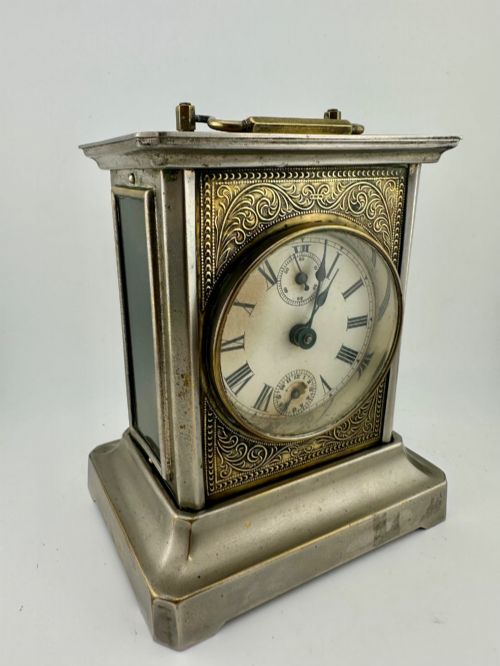
When you search for an ornate brass travel clock, you encounter portable timepieces built for mobility during the nineteenth and early twentieth centuries. These pieces predominantly take the form of carriage clocks and mantel clocks originating from French workshops and English makers.
The objects span periods from the mid-nineteenth century through the Edwardian era, incorporating styles like Rococo Revival and Second Empire. Miniature formats and giant versions with complications such as compasses and thermometers appear alongside standard repeating designs.
How these timepieces were constructed
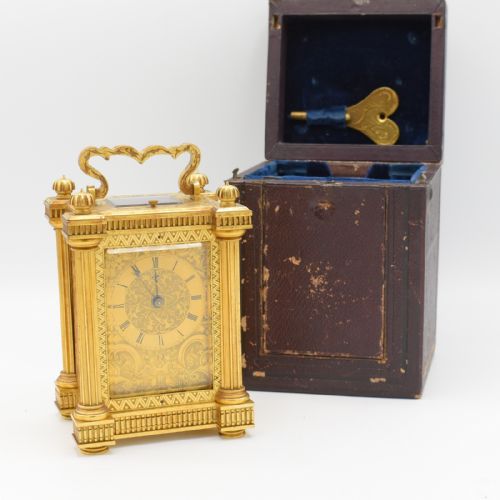
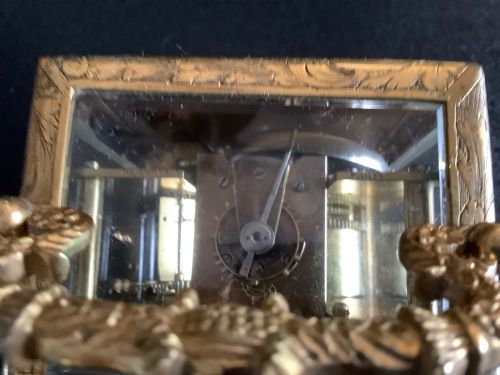
Maker workshops utilised brass, gilt brass, and ormolu to form heavy cast cases, which often received profuse hand-engraving, chasing, or filigree decoration across their sides. Bevelled glass panels fitted into the frames to protect the internal escapement and dial.
Many dials incorporated painted enamel or Limoges enamel details, whilst movements utilised platforms for escapements and occasionally featured repeater mechanisms operating on bells or gongs. Leather outer travelling cases frequently accompanied these pieces to protect the metalwork during transit.
Ornate Brass Travel Clock Retail Price Guide 2026
Typical asking prices for ornate brass travel clock among the pieces listed under this phrase on Sellingantiques today, from the lower quarter to the upper quarter. They describe what is for sale here now, not the wider market.
Listings span the Victorian and Edwardian eras, incorporating materials such as leather, enamel, and gilt brass across French and English designs.
What dictates the quality of these clocks
Quality rests in the crispness of the cast metal and the depth of the engraving across the brass and gilt bronze cases. Plain, smooth surfaces contrast with densely chased and filigree-decorated examples where every side receives detailed ornamentation.
The sophistication of the internal movement further separates standard timepieces from grand sonnerie and repeating mechanisms. Signed plates by known retailers and makers indicate a higher tier of horological production.
Brunelot·Thomas Cole and James Cole·Hunt And Roskell·Gontard & Bolviller Paris·E.J.Dent - Paul Garnier·Tiffany·Howell & James London
The Ornate Brass Travel Clock Glossary
- Carriage clock
- A portable spring-driven timepiece designed for travel during the nineteenth century. These clocks typically feature a rectangular brass case with glass panels and a swing handle.
- Repeater
- A mechanism that chimes the hours and quarters upon demand when a lever or button is pressed. This complication requires intricate internal gearing.
- Escapement
- The mechanism within a clock that controls the release of power from the mainspring to the gear train. Precision in this assembly ensures accurate timekeeping.
- Chasing
- A metalsmithing technique where designs are hammered into the front surface of the brass rather than cut away. This method creates raised decorative reliefs on the case.
- Gilt brass
- Base brass metal treated with a thin layer of gold wash or electroplating to impart a bright yellow finish. It provides the appearance of solid gold whilst maintaining structural strength.
Ornate Brass Travel Clock: Frequently Asked Questions
What is an ornate brass travel clock?
These pieces are portable mechanical clocks housed in protective brass cases with glass viewing panels. They were originally designed for use during journeys by carriage or rail.
Today, collectors value them for their combination of robust engineering and decorative metalwork, spanning styles from Victorian revivalism to French Second Empire design.
How do you wind a carriage clock?
Winding typically involves inserting a dedicated key into the arbours located on the backplate of the movement. Care must be taken not to overwind the mainspring.
Many examples feature platform escapements visible through the top glass panel, requiring steady handling during any maintenance.
Were these clocks made in France or England?
The evidence shows a strong French dominance in production, with numerous pieces originating from Paris workshops. English retailers frequently imported these movements and housed them or retailed them under their own names.
Stylistic cues such as repeating mechanisms and enamel dial work often point directly to French manufacturing traditions of the nineteenth century.