

Ornate Brass Hearth Guard
An ornate brass hearth guard protects the room from stray embers while bringing decorative metalwork and period character to the fireplace.
Ornate Brass Hearth Guard
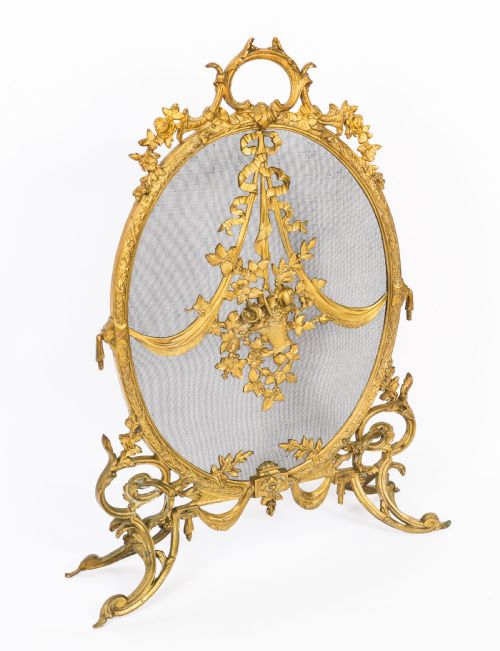
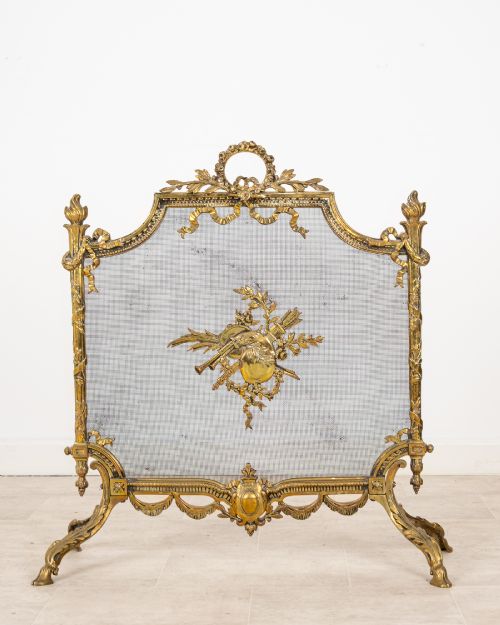
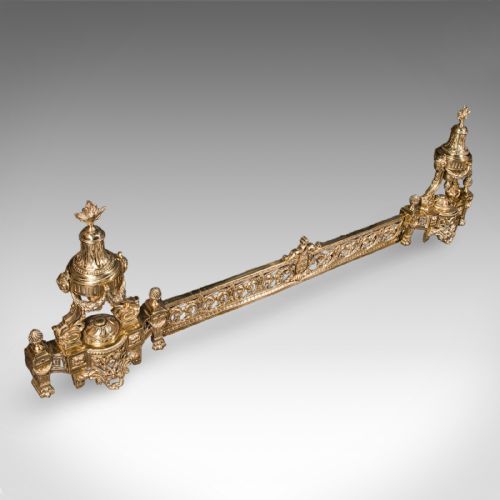
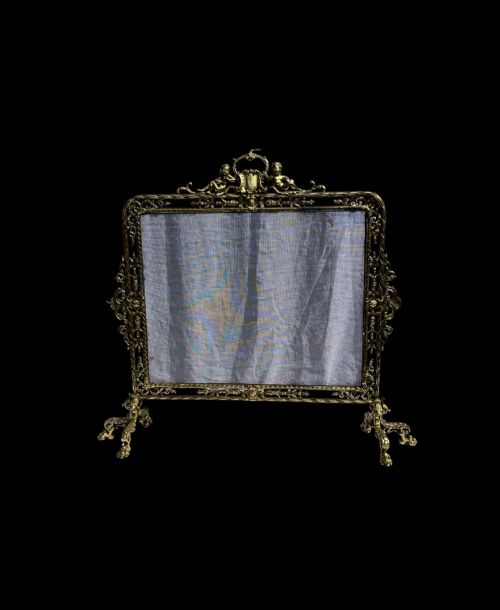
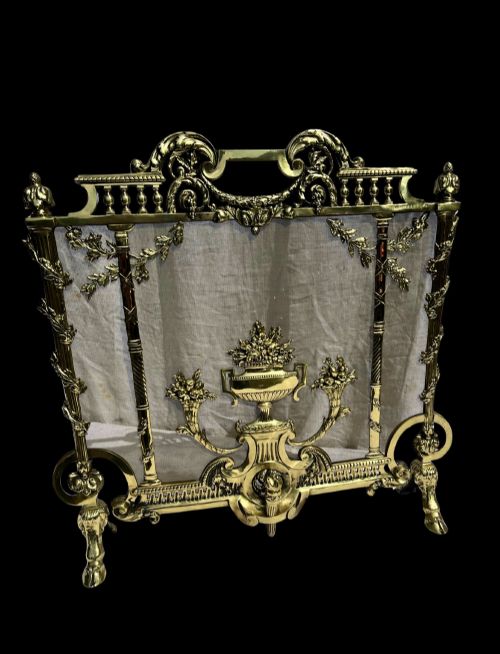
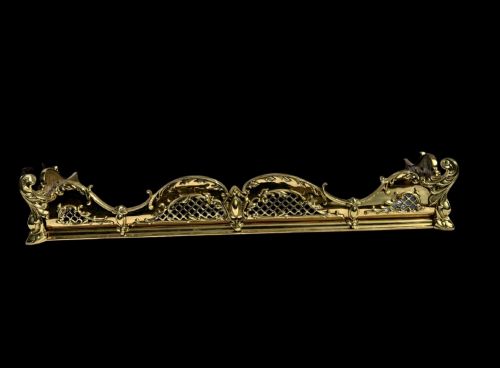
An ornate brass hearth guard spans fire screens and extending fenders designed to contain fires and adorn the mantelpiece setting. These pieces emerge predominantly from nineteenth century Victorian workshops as well as French revival traditions.
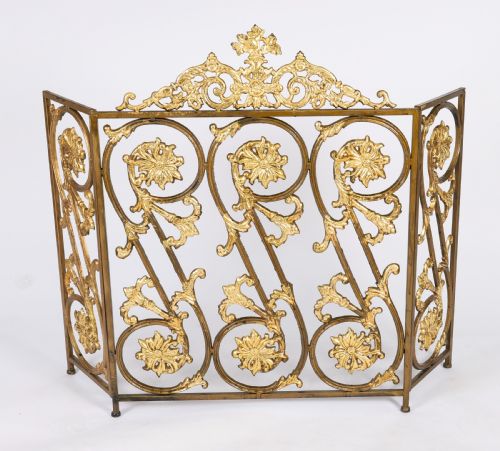
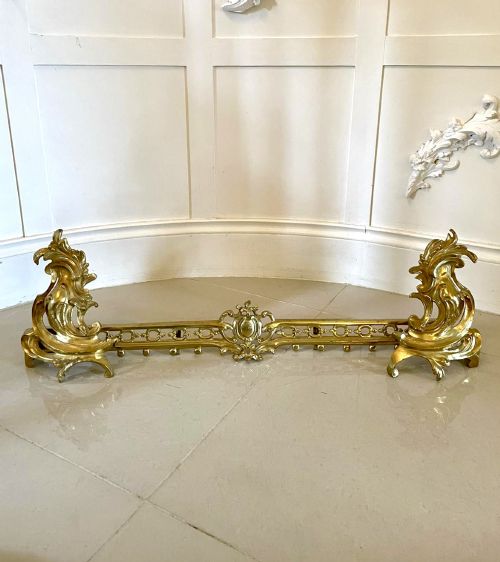
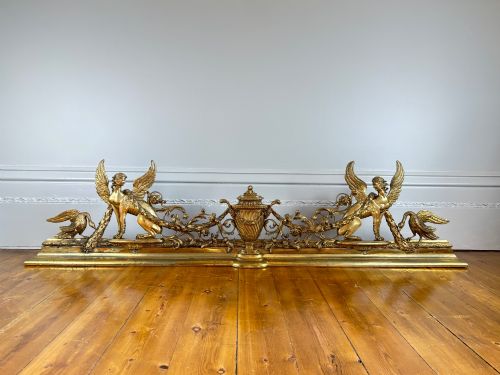
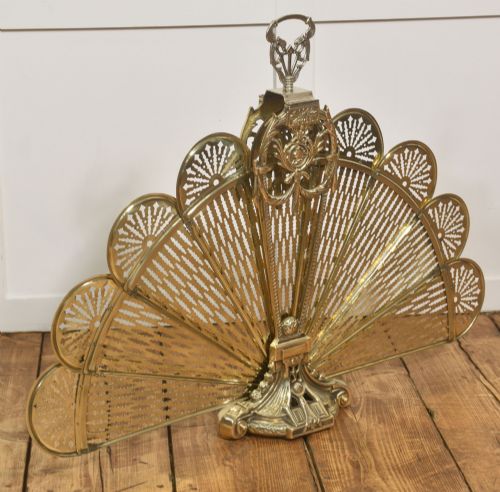
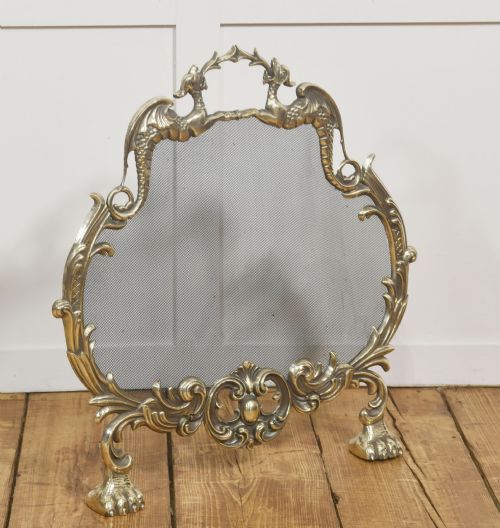
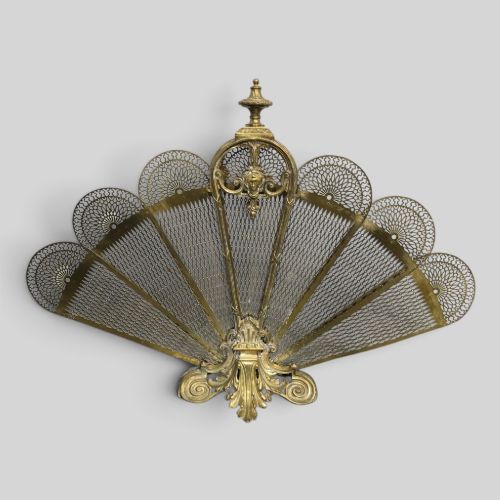
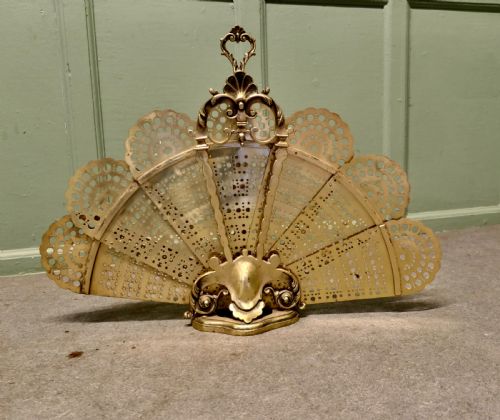
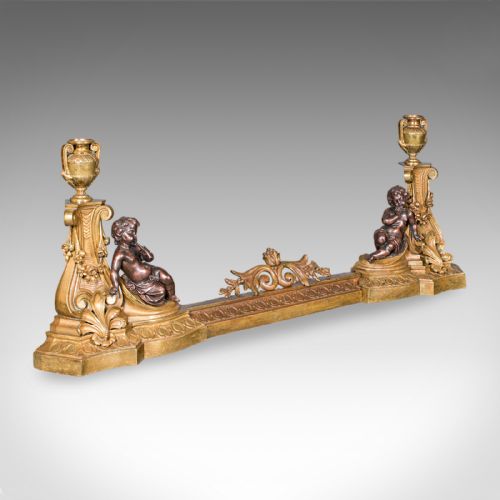
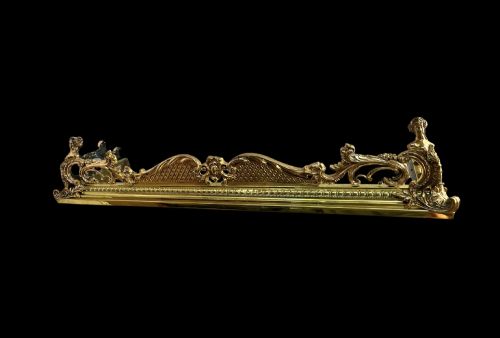
Fire screens present upright decorative barriers featuring wire mesh, folding panels, or peacock fan configurations. Fenders sit low around the hearth perimeter, often incorporating adjustable widths and heavy cast frames.
French stylistic influences dominate the selection, showing Louis XV, Louis XVI, and Rococo Revival ornamentation alongside English Victorian interpretations.
Materials and construction methods
Artisans utilised brass, gilt bronze, and ormolu to build these hearth accessories, frequently combining cast components with fine wire mesh and steel supports. Ormolu and gilt finishes provided a rich surface lustre that elevated the status of the metalwork.
Foundries cast brass and bronze elements into intricate scrollwork, classical trophies, and dolphin motifs before hand-chasing the details. Extending mechanisms on fenders allowed custom fits for various hearth dimensions.
Listings span the nineteenth century through the early twentieth century, encompassing Victorian and French revival styles in brass, bronze, and gilt metal.
Assessing quality in period metalwork
Quality rests upon the crispness of the cast ornamentation and the weight of the metal utilised in the frame. Finer examples display deep relief work in motifs like floral garlands and classical trophies rather than shallow pressing.
The integrity of the construction distinguishes superior items, visible in robust extending mechanisms, securely articulated folding peacock screens, and intact fire mesh without distortion.
E F Caldwell New York
The Ornate Brass Hearth Guard Glossary
- Fender
- A low metal guard placed around the hearth to keep burning coals and ash contained within the fireplace. These pieces often feature adjustable widths and decorative pierced brass rails.
- Ormolu
- Gilded bronze applied to decorative hardware and fire screen frames during the eighteenth and nineteenth centuries. This technique imparts a rich golden finish to the cast metal.
- Rococo Revival
- A design style popular in the nineteenth century characterised by asymmetrical scrolls, C-curves, and naturalistic plant motifs. It appears frequently on French and English fire screens.
- Peacock Fan
- A folding fire screen composed of overlapping metal blades that fan outward like a tail. This form opens to block the hearth opening during warmer months when no fire burns.
- Fire Screen
- An upright decorative guard placed in front of the fireplace opening to shield the room from radiant heat. They utilise materials like brass mesh, glass panels, or folding metal frames.
Ornate Brass Hearth Guard: Frequently Asked Questions
What is the difference between a fender and a fire screen?
A fender sits horizontally on the floor around the perimeter of the hearth to contain logs and embers.
Conversely, a fire screen stands vertically in front of the opening to block excess heat and decorative ash when the fireplace is inactive.
How do I clean antique brass hearth guards?
Dust the metalwork gently with a soft dry cloth to remove surface soot and debris.
Avoid harsh chemical polishes that strip historical patina, opting instead for gentle cleaning methods appropriate for nineteenth century metal.
Are peacock fan screens adjustable?
Yes, peacock fan screens utilise a pivoting mechanism that allows the metal blades to expand outward into a wide semi-circle.
They fold inward compactly when not in use, making them versatile for different seasonal fireplace presentations.
How do I identify French Rococo Revival pieces?
French Rococo Revival items feature asymmetrical scrollwork, flowing curves, and intricate floral motifs cast in brass or gilt bronze.
These designs reflect eighteenth century Louis XV aesthetics popularised again during the nineteenth century.