
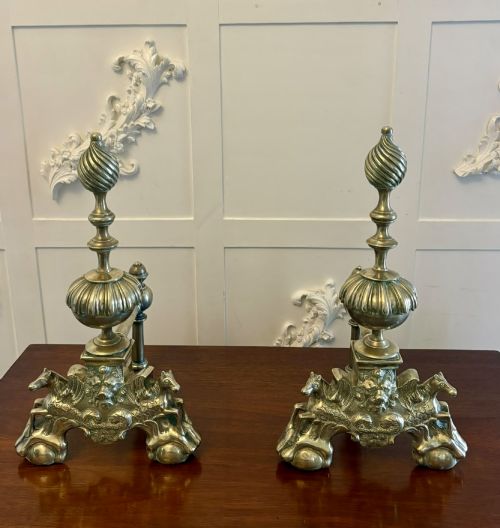
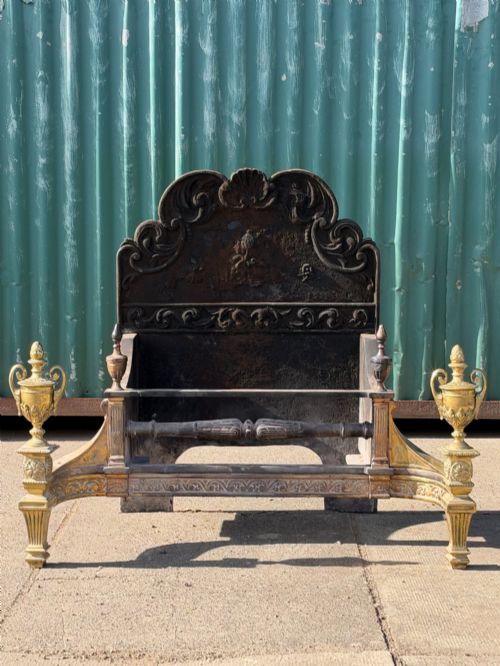
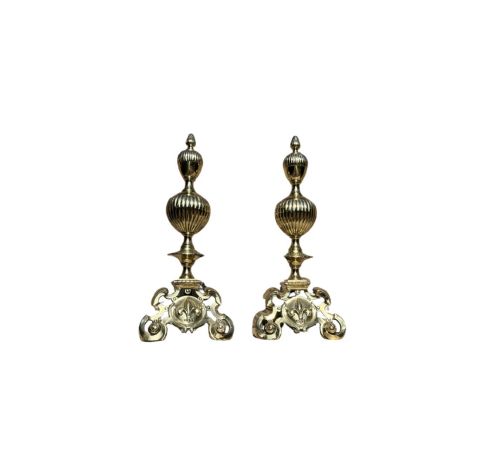
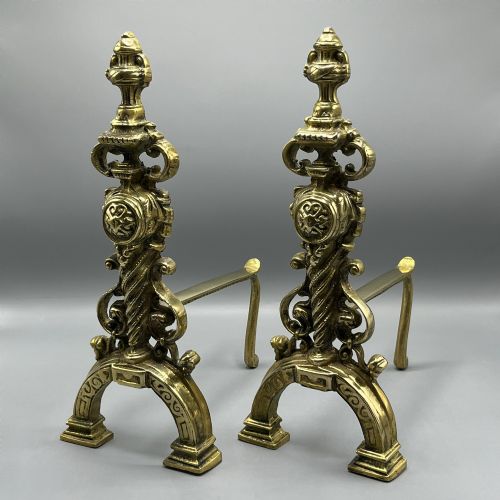
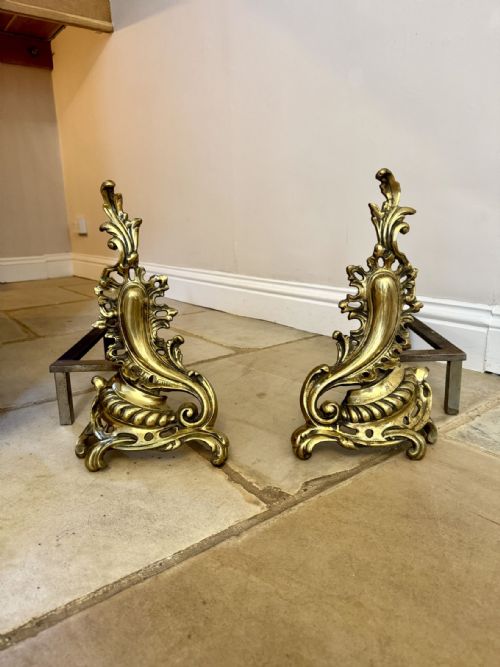

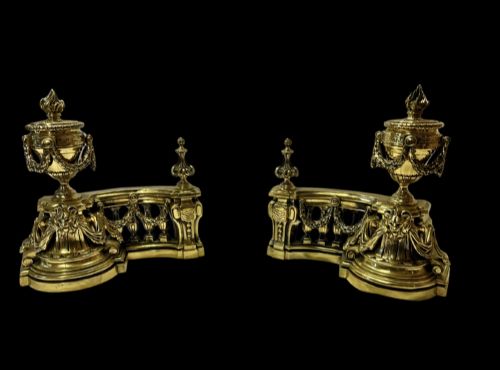
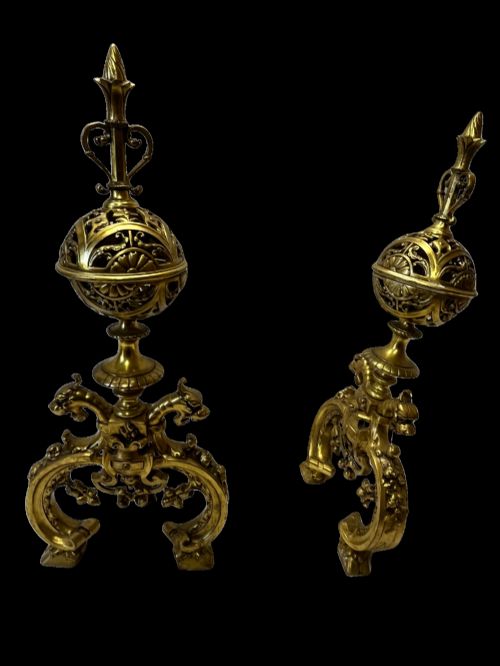


Ornate Brass Fireplace Dogs
Ornate brass fireplace dogs are hearth supports that anchor logs and elevate the visual weight of a period chimney piece.

Ornate Brass Fireplace Dogs
Ornate brass fireplace dogs appear across the nineteenth century in various robust forms including large pairs, monumental andirons, and French chenets. These heavy hearth accessories function primarily to hold wood above the hearth floor while introducing sculptural presence to the fireplace opening.
The inventory on this page ranges from mid-nineteenth-century English Victorian items to continental French Rococo, Baroque, and Louis XVI revival designs. Buyers will find substantial cast brass pieces alongside combinations of brass, iron, and wrought elements intended for active or decorative hearths.
What varies in quality
The standard of a pair depends heavily on the crispness of the casting and the depth of the hand-chasing applied to the brass or ormolu surfaces. Heavy solid brass construction and substantial scale separate ordinary hearth furniture from exceptional exhibition pieces.
Design articulation dictates visual value, with pieces demonstrating restraint in their French Rococo or Baroque revival curves outperforming simpler, flat castings. The integration of durable iron backs with decorative brass fronts also shows the maker's commitment to utility and longevity.
Materials documented across the listings include cast brass, gilt bronze, ormolu, wrought iron, and standard cast iron.
James Cartland & Sons
The Ornate Brass Fireplace Dogs Glossary
- Andirons
- Supports used in a fireplace to hold burning wood logs above the hearth floor. They typically feature an upright decorative front and a horizontal bar extending backward.
- Chenet
- The French term for an andiron or fire dog. These often display elaborate Rococo or Louis XVI scrollwork and include tool rests.
- Ormolu
- Finely ground high-carat gold applied to a bronze or brass base metal using a mercury amalgamation process. This technique produces a durable, luminous golden finish characteristic of French decorative arts.
- Rococo
- An exuberant decorative style originating in France during the eighteenth century and revived during the Victorian era. It is characterised by asymmetrical C-scrolls, shell motifs, and naturalistic plant forms.
- Firedogs
- Alternative nomenclature for andirons or hearth supports. They serve both functional and decorative purposes within the fireplace opening.
Ornate Brass Fireplace Dogs: Frequently Asked Questions
What is the difference between fire dogs and andirons?
Fire dogs and andirons are essentially the same object, serving as structural supports for burning logs inside an open fireplace.
Regional terminology often dictates the preferred name, with English makers frequently using fire dogs and continental makers favouring andirons or chenets.
Can these fireplace dogs be used with an open fire?
Many nineteenth-century examples combine heavy brass fronts with sturdy iron billets designed to withstand high temperatures.
Buyers should examine the internal iron bars to determine whether a particular pair is suited for active hearth use or purely decorative display.
How do I identify French Rococo style on these pieces?
French Rococo revival pieces display characteristic asymmetrical scrollwork, flowing acanthus leaves, and shell motifs cast in brass or ormolu.
This aesthetic prioritises ornate curves and elaborate three-dimensional surface decoration over strict symmetry.
What periods do these hearth accessories come from?
The available pieces originate predominantly from the nineteenth century, encompassing Victorian English production and French revival periods.
Dates range from the eighteen-fifties through the early nineteen-twenties, reflecting popular historicist design movements.