



Ornate Brass Crest Mirror
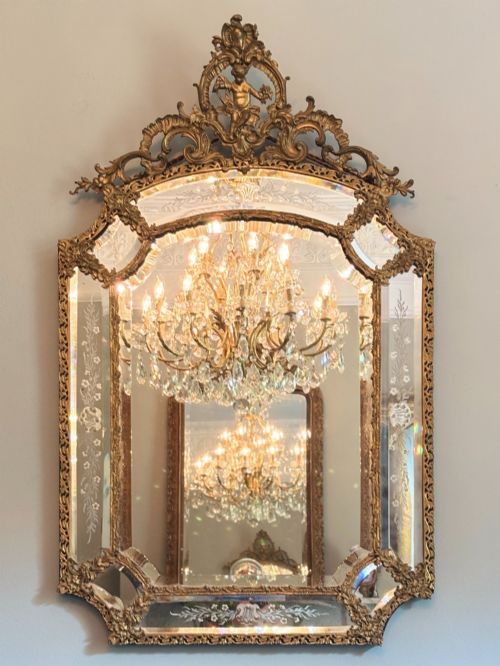
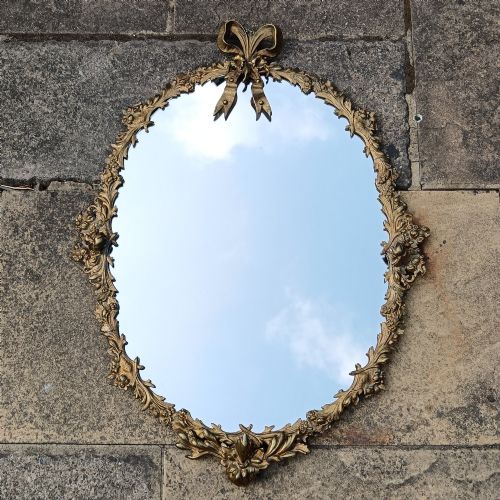
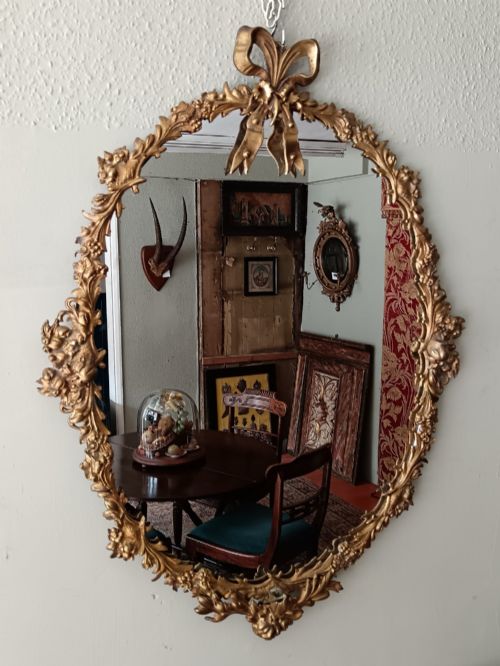
An ornate brass crest mirror brings immediate weight and reflection to a room through heavy metalwork and period form.
Ornate Brass Crest Mirror
An ornate brass crest mirror combines reflective glass with elaborate metal framing, drawing on styles from the Regency period through to the late nineteenth century. These pieces function primarily as wall mirrors, though table mirrors also appear across the selection.
The aesthetic leans heavily into continental revivals, with French Louis XVI, Flemish Renaissance, and Dutch Baroque styles dominating the current listings. Buyers encounter cushion frames, oval formats, and prominent crests adorned with masks or repoussé work.
Originating largely from nineteenth-century workshops, these mirrors vary from French gilt bronze creations to simpler pressed and cast brass domestic pieces. Each surviving example demonstrates the Victorians' enthusiasm for historical revival design.
Materials and construction methods
The construction of the crests required skilled metalworking, using casting and hand-embossing to achieve high relief decoration such as masks and scrolling foliage. Cushion mirrors utilise distinct metal mounts to secure the glass within the deep frame.
Ornate Brass Crest Mirror Retail Price Guide 2026
Typical asking prices for ornate brass crest mirror among the pieces listed under this phrase on Sellingantiques today, from the lower quarter to the upper quarter. They describe what is for sale here now, not the wider market.
Several mirrors include stern mask crests peering down from the top, keeping a watchful eye on everyone in the room.
Distinguishing quality in period metalwork
The distinction between standard domestic production and superior pieces lies in the crispness of the casting and the depth of the metal relief. Finely cast examples show sharp detail in the crests and mounts, whereas pressed brass variants tend to exhibit softer definition.
Material choice also signals quality, with heavy gilt bronze and substantial cast brass frameworks commanding greater presence than lighter pressed metal alternatives. The integration of original bevelled mirror glass further enhances the integrity of the piece.
The Ornate Brass Crest Mirror Glossary
- Crest
- The decorative upper portion of a mirror frame, often heavily ornamented with cast or embossed motifs. It serves as the visual focal point of the piece.
- Repoussé
- A metalworking technique where the metal is hammered from the reverse side to form a raised design in relief. This method defines many Flemish and Dutch style frames.
- Cushion mirror
- A frame style characterised by a rounded, outward-sloping profile resembling a cushion. These typically feature extensive metal mounts.
- Gilt bronze
- Copper alloy treated with a gold or gilt surface finish, frequently utilised in French revival pieces for a rich metallic lustre.
Ornate Brass Crest Mirror: Frequently Asked Questions
Where should I hang a heavy brass mirror?
These heavy brass pieces require secure fixing directly into wall studs or masonry using appropriate wall anchors. The weight of the cast metal and glass demands robust support to ensure stability.
Position the mirror at eye level where natural light can catch the polished brass frame and reflective glass surface effectively.
How do I clean an antique brass frame?
Dust the metal gently with a soft, dry cloth to prevent the accumulation of dirt within the intricate relief work. Avoid harsh commercial polishes that strip away the aged patina accumulated over the centuries.
Keep moisture away from the mirror glass edges and backing timbers to prevent silvering damage and wood warping.
What defines a French Louis XVI style mirror?
Louis XVI style pieces draw upon classical restraint, featuring symmetrical forms, refined botanical motifs, and precise cast bronze ornamentation. They often present an oval format with controlled decorative flourishes.
This aesthetic contrasts sharply with the heavier, more theatrical baroque and renaissance revival designs originating from Flanders and the Netherlands.
Are these mirrors suitable for bathrooms?
High humidity and fluctuating bathroom temperatures pose a significant risk to antique mirror glass and the timber backing components. Moisture can cause the silver backing to degrade and the metal frames to oxidise unevenly.
Display these pieces in dry living areas, hallways, or bedrooms to preserve their materials.