



Ornamental Hearth Guard
An ornamental hearth guard protects the room from stray sparks while adding a brilliant metallic focal point to the fireplace.
Ornamental Hearth Guard
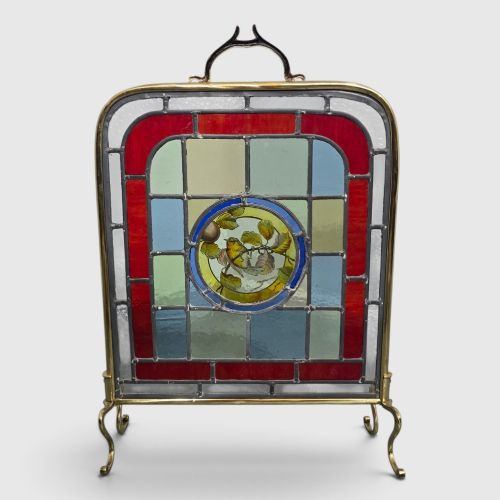
When you search for an ornamental hearth guard, you are looking at functional metalwork designed to shield rooms from open flames while enhancing the mantel. The examples available here span the Georgian era through to the nineteen thirties, encompassing fire screens, fenders, and firedogs.
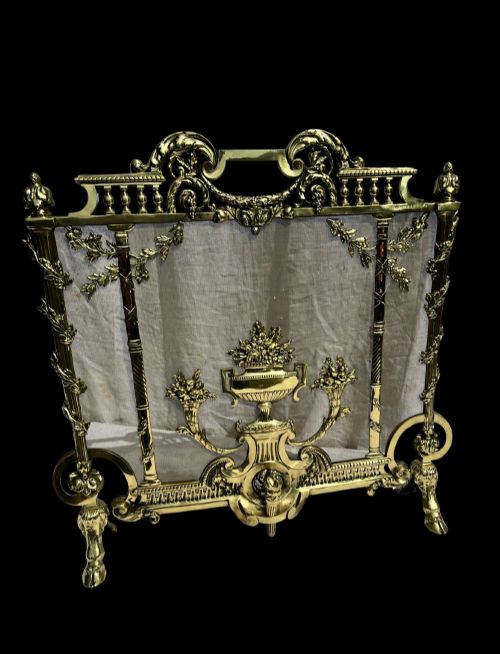
You are most likely to meet 19th-century brass fire screens on this page, often featuring mesh panels and intricate cast frames. These pieces combine utility with decorative metalwork, serving as both spark guards and ornamental centrepieces for the hearth.
How they were made
Makers utilised cast brass, wrought iron, and bronze, often combining wire or metal mesh with solid frames to contain sparks safely. Giltwood and carved oak also appear in the evidence, showing that wooden framing was sometimes employed for panel inserts.
Decorative details included floral and dragon motifs, ormolu mounts, and figural tapestry panels set within polished steel or bronze structures. These varied techniques ensured that each guard matched the prevailing styles of its period, from French Rococo Revival to Arts and Crafts.
Ornamental Hearth Guard Retail Price Guide 2026
Typical asking prices for ornamental hearth guard among the pieces listed under this phrase on Sellingantiques today, from the lower quarter to the upper quarter. They describe what is for sale here now, not the wider market.
Some Victorian fire screens doubled as discreet windbreakers for chilly drawing rooms before the coal fire had properly caught.
What varies in quality
The distinction between standard examples and superior pieces rests on the crispness of the casting and the refinement of the decorative detail. Heavier gauge metals and intricate hand-wrought elements set the better examples apart from simpler production items.
Design cohesion also dictates quality, where pieces following specific stylistic movements like French Neoclassical or Arts and Crafts display a more intentional harmony between structure and ornament.
The Ornamental Hearth Guard Glossary
- Fire screen
- A movable decorative panel placed before a fireplace to shield the room from radiant heat when the fire is low. They are frequently made of brass or wood with tapestry inserts.
- Fender
- A low metal guard placed on the hearth around the fireplace opening to contain rolling embers and protect the floor covering. They are commonly fashioned from brass, iron, or polished steel.
- Chenets
- Andirons or firedogs used to support logs in an open fireplace, often highly ornamental and visible even when no fire is lit. They are frequently paired with other hearth accessories.
- Ormolu
- Gilded bronze mounted onto decorative objects or furniture, popular in French-inspired metalwork. The technique involves applying a gold amalgam to a bronze base.
- Rococo Revival
- A 19th-century design style characterised by asymmetrical scrolls, C-curves, and naturalistic shell motifs. It draws heavily on 18th-century French aesthetics.
Ornamental Hearth Guard: Frequently Asked Questions
How do I date a brass fire screen?
Dating a brass fire screen involves looking at the manufacturing techniques, fastenings, and stylistic design cues. Pieces from the Georgian era show different casting qualities compared to Victorian or later 20th-century items.
Examining the type of mesh and the wear on the metal also helps determine the age. Makers often incorporated period-specific motifs that align with styles like Arts and Crafts or Rococo Revival.
What is the difference between a fire screen and a fender?
A fire screen is an upright panel that stands in front of the fireplace opening to block heat and sparks. A fender is a low barrier that sits directly on the hearth stones around the base of the fire.
Screens are typically taller and often feature mesh or glass panels. Fenders run along the floor and are usually built from solid brass, iron, or steel.
How do I clean an antique brass hearth guard?
Cleaning antique brass requires a gentle approach to preserve the aged surface patina and historical character. Harsh chemical cleaners can strip away the desirable darker tones accumulated over decades.
Using a soft cloth and mild soapy water removes surface dust safely. Avoid aggressive polishing unless the piece has been previously stripped and modern bright brass is desired.