
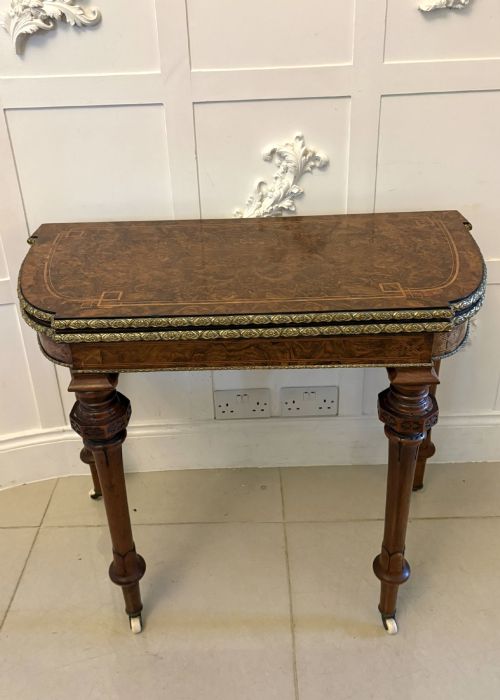
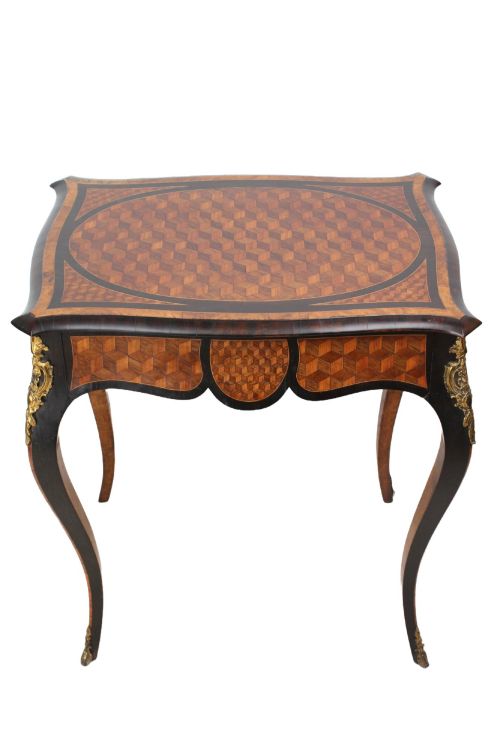
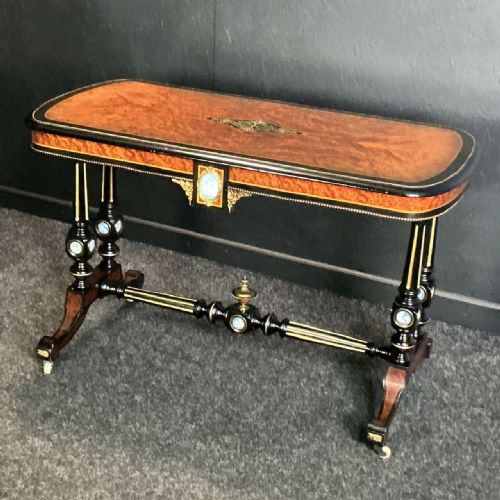
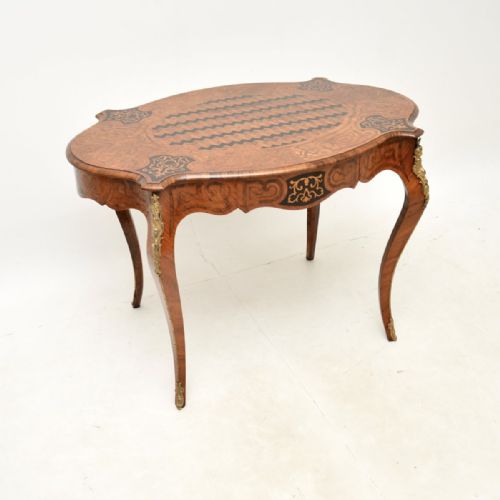


Ormolu Walnut Desk
An ormolu walnut desk brings together rich burr walnut, intricate marquetry and gleaming gilt bronze mounts in pieces built during the nineteenth century.
Ormolu Walnut Desk
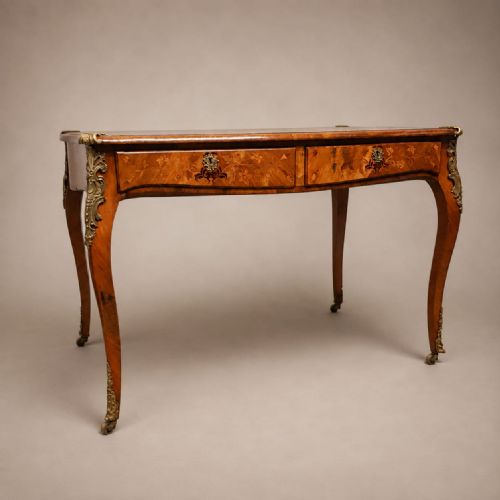
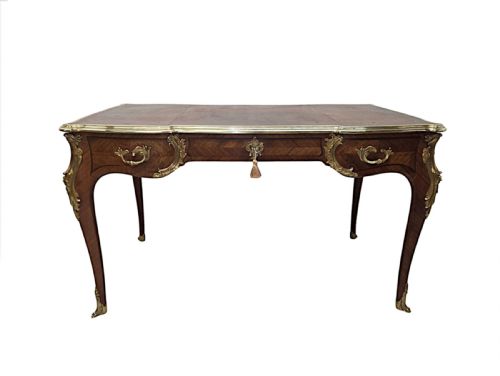
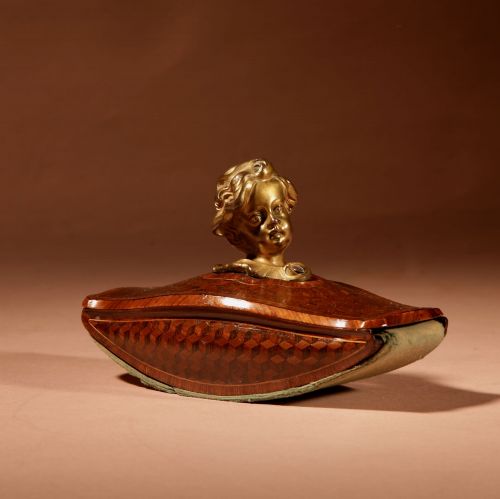
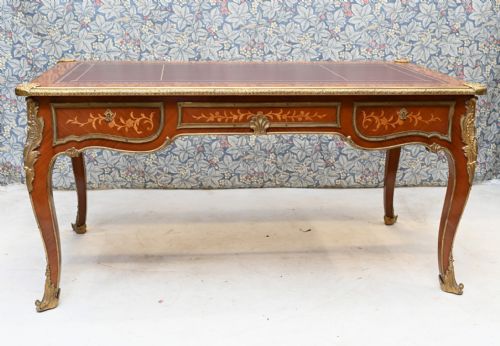
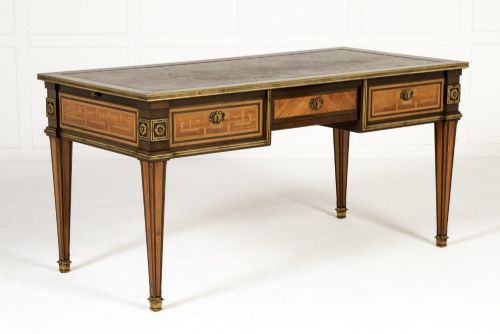
When you search for an ormolu walnut desk, you are looking at nineteenth-century writing furniture, most commonly French bureau plat tables and Victorian freestanding writing desks. These pieces typically feature figured burr walnut surfaces, contrasting inlay and cast gilt bronze or ormolu mounts influenced by Louis XV and Louis XVI revival styles.
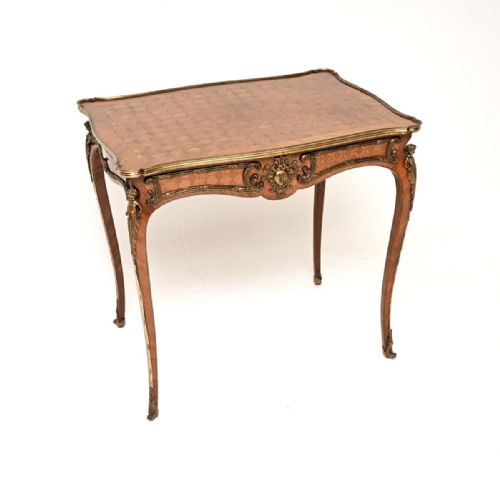
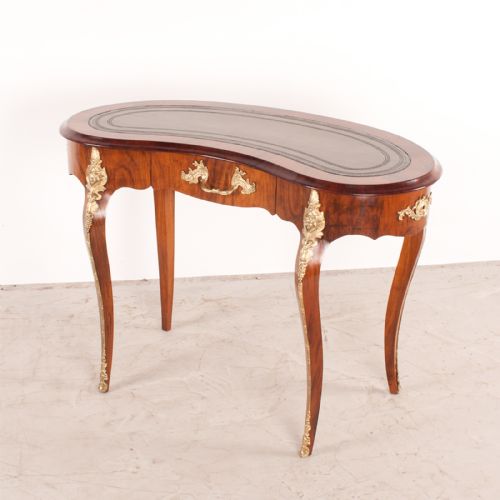
The selection ranges from kidney-shaped library tables and compact ladies' bonheur du jour desks to serpentine centre tables and secrétaire abattant drop-front writing desks. Victorian British workshops and French cabinet-makers produced these designs for formal reception rooms and private studies.
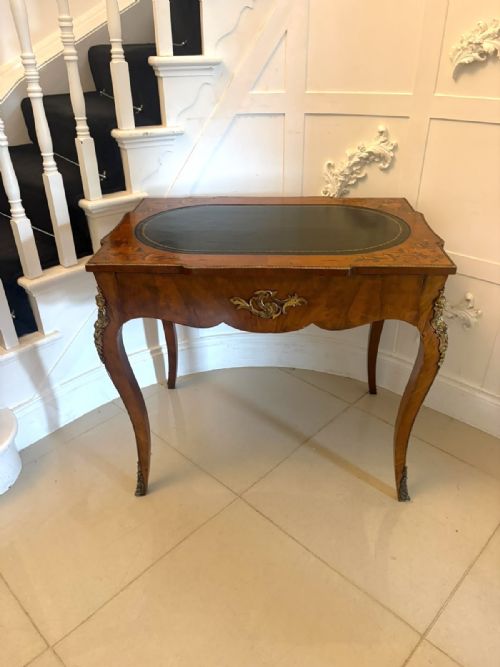
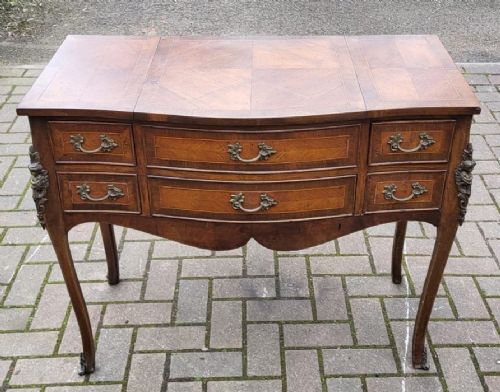
You will encounter freestanding forms designed to be viewed from all sides, often fitted with leather writing surfaces, brass trims and delicate cabriole legs. The integration of walnut timber with gleaming ormolu defines the aesthetic shared across these varied writing tables and desks.
Materials and construction
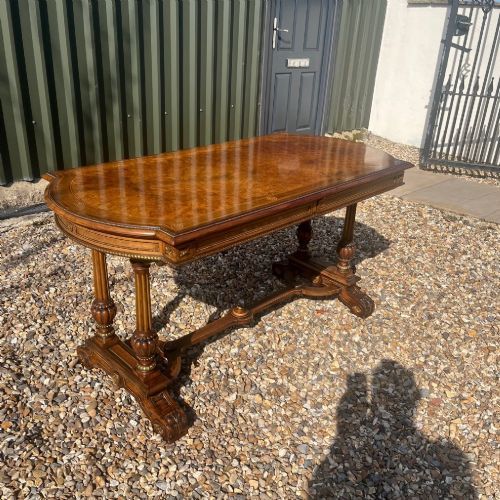
Cabinet-makers built these desks using solid walnut frameworks overlaid with carefully selected burr and figured walnut veneers to create rich grain patterns across the top and drawers. Marquetry and parquetry inlay in satinwood, kingwood and other timbers formed geometric or floral motifs within the wood panels.
Cast ormolu, also known as gilt bronze, was meticulously applied to corners, sabots, drawer edges and aprons to accent the curves of the furniture. Leather inserts were commonly tooled with gold leaf to provide a durable writing surface.
Internal carcases utilised secondary timbers while structural joints relied on traditional cabinet-making techniques suited to nineteenth-century workshop production. Gilt mounts were secured with pins or screws through the walnut substrate to complete the decoration.
Listings feature nineteenth-century pieces spanning the Victorian era through the 1920s, predominantly showcasing French revival styles and burr walnut.
Quality differences
The distinction between standard examples and the finest pieces lies in the crispness of the ormolu casting and the depth of the walnut veneer figures. Master workshops employed heavier, finely chased gilt bronze mounts rather than lightweight stamped brass, creating sharper definition in the foliage and scrollwork.
Marquetry execution also sets pieces apart, with superior desks displaying precise, tight-fitting geometric parquetry or intricate floral motifs without gaps in the inlay. The handling of secondary details, such as internally fitted drawers, finely tooled leather and well-turned cabriole legs, separates ordinary production from exceptional craftsmanship.
JAS Shoolbred·Edward And Roberts·Lenzkirch
The Ormolu Walnut Desk Glossary
- Ormolu
- Gilded bronze used for decorative mounts and furniture trim. The technique involves applying a gold amalgam to a bronze base before heating.
- Bureau plat
- A freestanding writing table fitted with drawers and typically a leather top. These desks were designed to sit in the centre of a room rather than against a wall.
- Burr walnut
- Walnut timber taken from a tree growth or knot, yielding complex swirling grain patterns. It is sliced into thin veneers for decorative furniture surfaces.
- Bonheur du jour
- A small ladies' writing desk featuring a superstructure with small drawers and shelves above the main writing surface. These appeared frequently in nineteenth-century boudoirs.
- Marquetry
- The art of applying pieces of veneer to a structure to form decorative patterns and pictures. Makers used various coloured timbers to create contrast.
Ormolu Walnut Desk: Frequently Asked Questions
What is an ormolu walnut desk?
An ormolu walnut desk is a nineteenth-century writing table constructed from walnut timber and decorated with cast gilt bronze mounts. These pieces were produced in French and Victorian workshops during periods of revivalism.
They combine practical writing surfaces, often lined with leather, with ornamental veneers and metalwork designed for formal interiors.
How do I identify a bureau plat?
A bureau plat is a freestanding writing table featuring a flat top, typically bordered by ormolu and inset with leather, set above one or more drawers in the frieze. Unlike standard pedestal desks, they stand on four legs.
They were built to be viewed from every angle and often include finished backs and elaborate mounts on the legs and aprons.
Where should I place a freestanding desk?
Freestanding desks and centre tables are designed to sit away from walls so their finished backs and detailed parquetry can be appreciated. Placing them in the middle of a study or living space highlights their decorative ormolu mounts.
Keep them away from direct sunlight and heat sources to protect the walnut veneer and prevent the leather writing surface from drying out.
How do I care for burr walnut furniture?
Burr walnut requires gentle dusting with a soft, dry cloth and occasional treatment with appropriate furniture wax to nourish the timber. Avoid using liquid polishes or silicone sprays that can damage the antique finish.
Maintaining stable room humidity prevents the fine veneers from lifting and preserves the gilt bronze mounts.