


Ormolu Tier Display Stand
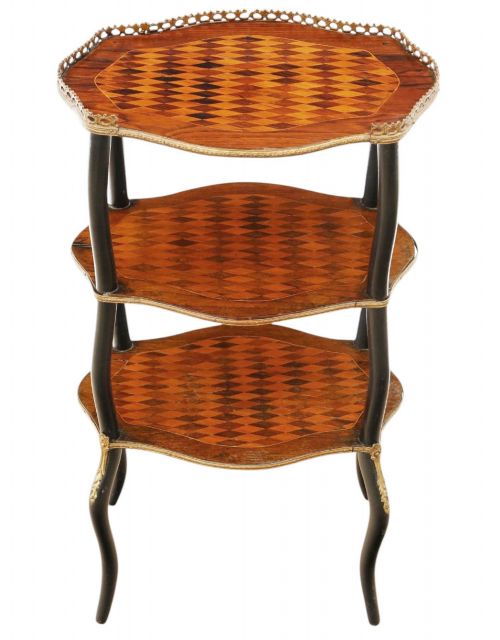
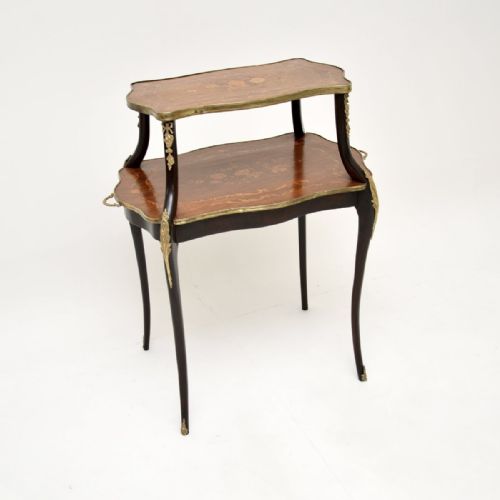
An ormolu tier display stand combines gilded bronze mounts with tiered shelving designed to show small treasures to their absolute best.
Ormolu Tier Display Stand
An ormolu tier display stand is principally represented here by etageres, occasional tables, and tabletop display shelves originating across the nineteenth century and the Edwardian era. These multi-level pieces serve to elevate ornaments, jewellery, and cabinet pieces within a room using minimal floor space. Buyers searching for an ormolu tier display stand will encounter tiered wooden frameworks accented with gilded cast brass mounts, often drawing on French stylistic influences. Most examples on this page date from the Victorian period through to around nineteen ten, spanning the Napoleon III, Louis XV style, and Belle Epoque aesthetic movements.
The dominant forms are etageres and whatnot display shelves, frequently constructed with two or three horizontal surfaces supported by slender uprights. Alongside free-standing tier tables, the selection includes tabletop etageres and jewellery cabinets designed for intimate display. These items reflect a Victorian and Edwardian appetite for surfaces dedicated to ornamental display, taking inspiration from earlier French Rococo and Louis XV revival fashions. The physical presence of ormolu mounts unites these varied table and shelf forms under a single decorative banner.
How they were made
The foundation of these tier display stands relies on timber carcases fashioned from walnut, rosewood, mahogany, amboyna, and ebonised wood. Artisans applied intricate marquetry and parquetry inlays across the tiers, utilising fruitwood, satinwood, and various contrasting veneers to create geometric patterns and floral motifs. These decorative wood surfaces provide the rich tonal background necessary to contrast with the bright metallic detailing.
Cast ormolu mounts, comprising mercury-gilded or electrogilded brass, are pinned and screwed to corners, feet, and gallery rails to accentuate the structural lines of each piece. The ormolu is chased to refine the surface texture after casting, offering crisp relief work that defines the French Revival and Napoleon III styles. Structural joinery supports multiple tiers without heavy vertical members, maintaining an airy profile suitable for light display duties.
Some nineteenth-century etageres were built light enough to be repositioned easily by candlelight during evening soirées.
What varies in quality
Quality in an ormolu tier display stand is dictated by the crispness of the bronze chasing and the complexity of the wood veneers. Superior pieces display finely detailed ormolu mounts with deep relief and sharp edges, rather than soft, mass-produced castings lacking hand-finishing. The intricacy and precision of the marquetry inlay also mark out the higher tier of manufacture, showing tight joints and varied natural timbers.
Proportion and stability separate standard production from exceptional examples, as multi-tiered pieces require careful engineering to prevent sway. Makers who invested in robust internal framing and high-grade secondary woods ensured the structural integrity matched the decorative ambition of the exterior surface.
Edwards & Roberts
The Ormolu Tier Display Stand Glossary
- Ormolu
- Gilded bronze or brass mounts used decoratively on furniture and decorative objects. The term derives from the French for ground gold.
- Marquetry
- Decorative veneer work where pieces of wood, ivory, or shell are fitted into a ground to form floral or geometric designs. This technique covers the flat tier surfaces.
- Parquetry
- A geometric mosaic of wood pieces used for floors and furniture surfaces. It appears on several tier display stands in repeating angular patterns.
- Whatnot
- A Victorian term for an open set of multi-tiered shelves used for storing or displaying ornaments. These items became popular during the nineteenth century.
Ormolu Tier Display Stand: Frequently Asked Questions
What is an etagere?
An etagere is an open-shelved piece of furniture designed specifically for displaying ornaments, ceramics, and small curiosities. The multiple tiers allow various items to be seen simultaneously from different angles.
These pieces function well in drawing rooms and reception spaces as decorative focal points that occupy minimal floor area. Their open construction ensures they do not block light or visually crowd a room.
How do I date a tier display stand?
Dating relies on examining the timber species, inlay styles, and the manufacturing characteristics of the ormolu mounts. Mid-nineteenth-century examples often feature rich rosewood and walnut with hand-chased mounts, while later Edwardian pieces may show modified revival traits.
Construction methods inside the carcase and the style of the wood veneers further narrow the production window. Comparing decorative motifs to established design periods helps place the piece within the Victorian or Edwardian eras.
Where should I place an etagere?
An etagere suits corners or flat wall spaces where decorative objects require an elevated and organised stage. They are traditionally placed in drawing rooms, boudoirs, or studies to hold collections of small art objects.
Because these stands have open shelves on multiple levels, positioning them away from heavy foot traffic protects the displayed items. Adequate ambient light allows the marquetry and ormolu details to be fully appreciated.
What is French revival style?
French revival style encompasses nineteenth-century British and continental furniture that consciously imitates earlier French court aesthetics, particularly Louis XV and Louis XVI designs. This movement embraced ornate ormolu mounts and curved cabriole lines.
Makers reinterpreted these historical motifs to satisfy Victorian and Edwardian demands for opulent interior decoration. The resulting pieces combine traditional French ornamentation with contemporary nineteenth-century construction techniques.