

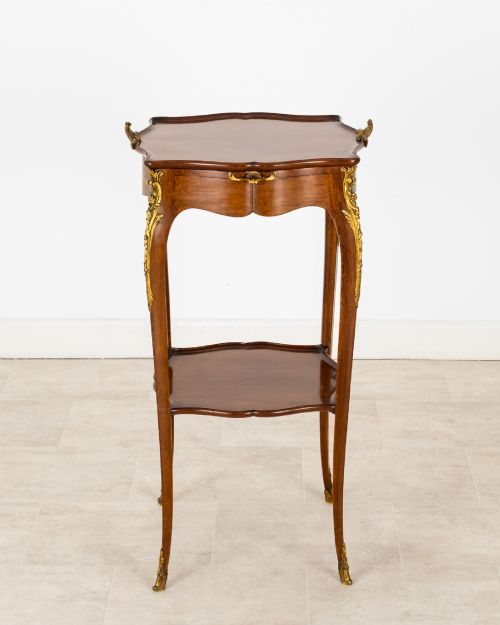

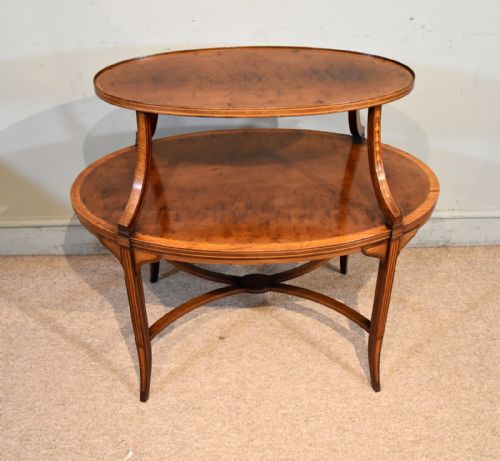
French Style Tier Table
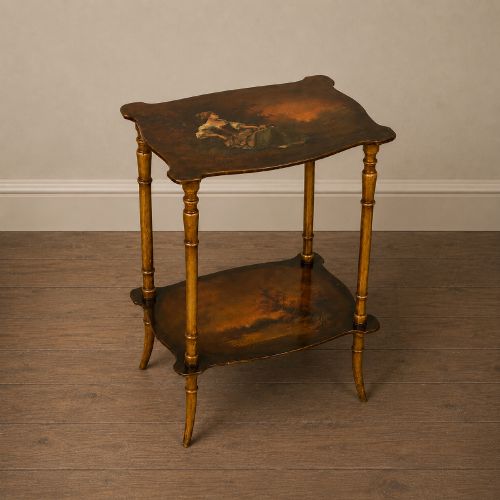
A french style tier table brings tiered display and surface space to a room, drawing on eighteenth-century models through marquetry and ormolu mounts.
French Style Tier Table
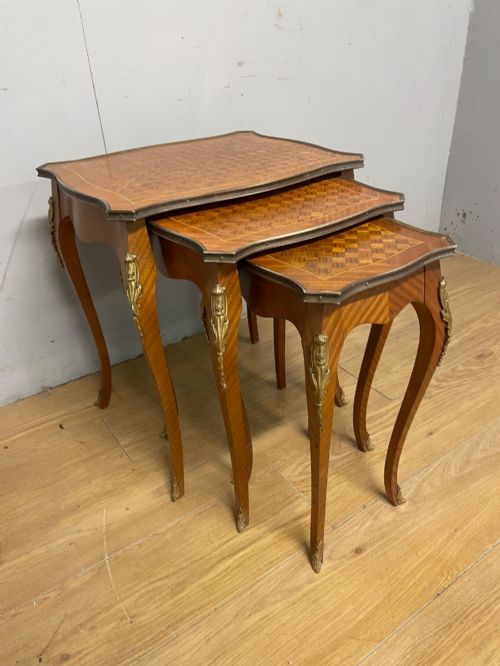
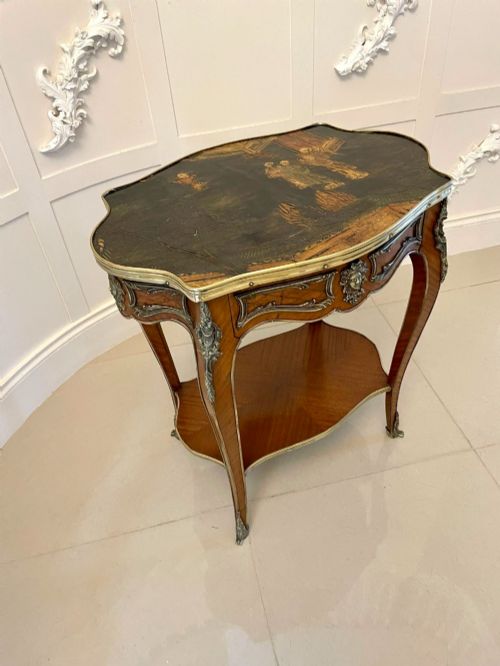
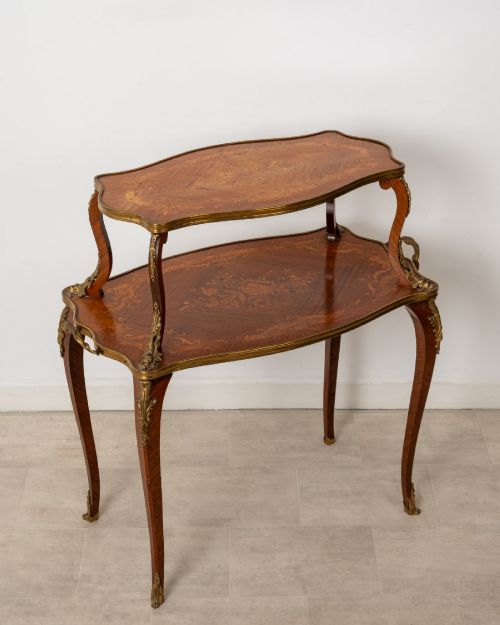
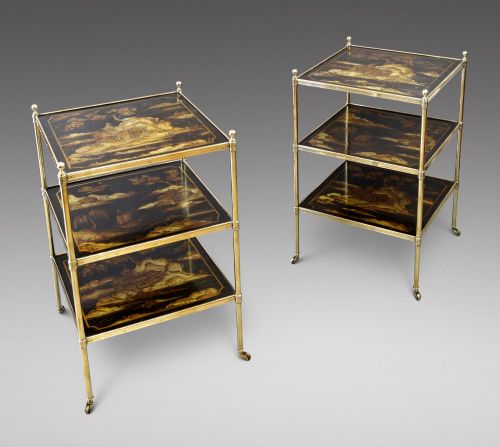
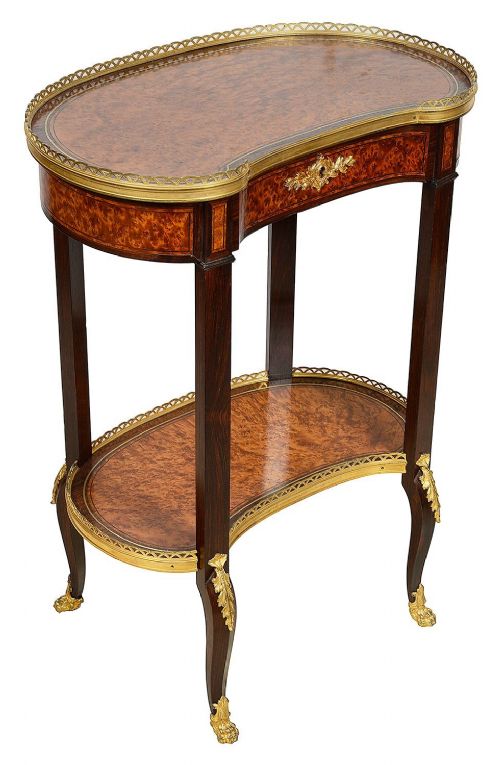
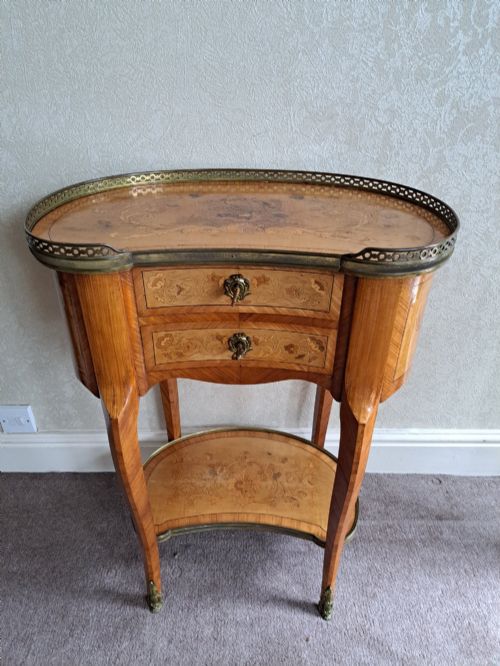
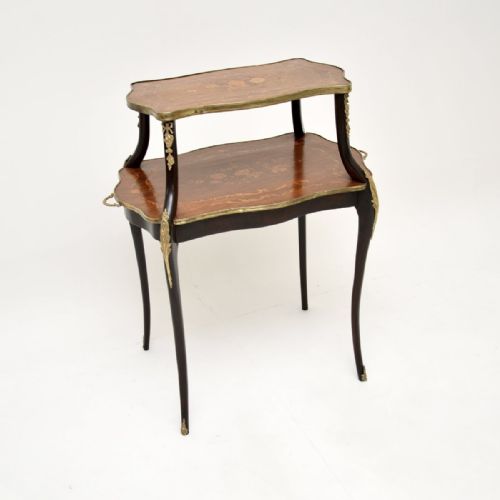
When searching for a french style tier table, buyers encounter multi-level surfaces designed for display and convenience, spanning the nineteenth century up to the 1930s. The selection includes two-tier étagères and occasional tables showing Louis XV and Louis XVI revivals.
These pieces appear in various forms such as side tables, centre tables, and display shelves. Walnut, mahogany, and kingwood form the primary bodies, often fitted with multiple tiers supported by slender uprights.
Materials and construction
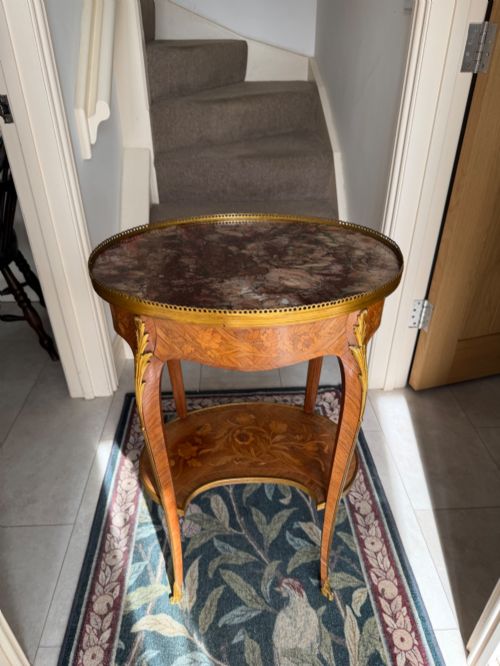
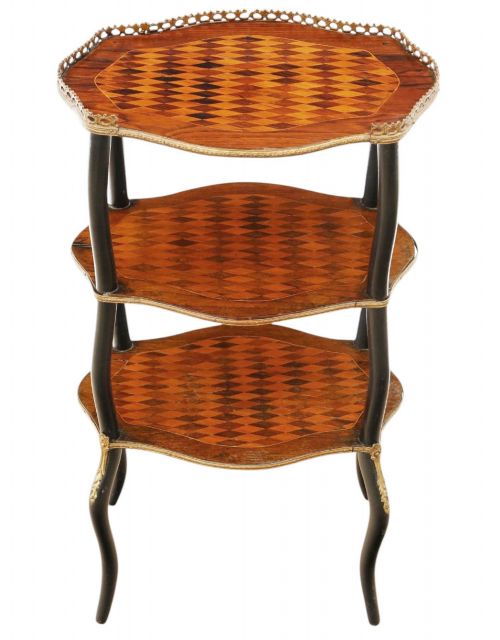
Cabinetmakers used rich timbers like kingwood, rosewood, and mahogany as foundations for intricate marquetry and parquetry patterns. Tops frequently incorporate marble or painted panels alongside wood veneers.
Cast brass and ormolu mounts provide structural enrichment and decorative borders around table edges and legs. Joinery relies on traditional framing techniques to support the multi-tiered structures without heavy profiles.
The listings span the Victorian era through the 1930s, featuring walnut, mahogany, and kingwood alongside ormolu and marble.
Standards of craftsmanship
Quality rests on the precision of the marquetry inlay and the crispness of the cast bronze and ormolu mounts. Finer examples display meticulously fitted veneers and substantial metalwork rather than pressed brass plating.
The architectural balance of the tiers and the choice of dense hardwood timbers distinguish workshop pieces from mass-produced alternatives.
Tehan·François Linke·Edwards & Roberts·Gabriel Viardot
The French Style Tier Table Glossary
- Étagère
- A set of open shelves or tiers for displaying small objects. This form became popular during the nineteenth-century revival periods.
- Ormolu
- Gilded bronze mounts applied to furniture edges and legs. This technique adds metallic contrast to wood surfaces.
- Marquetry
- Inlaid wood veneers forming decorative pictures or geometric patterns. Artisans use contrasting timber colours to create depth.
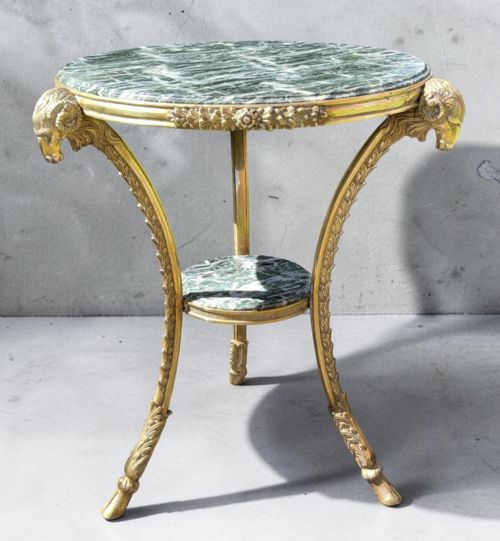
- Gueridon
- A small circular table supported by a central pillar or multiple legs. These pieces often feature marble tops and brass mounts.
- Parquetry
- Geometric wood inlay patterns resembling parquet flooring. It appears frequently on table tops from the nineteenth century.
French Style Tier Table: Frequently Asked Questions
What is a french style tier table?
A multi-level piece of furniture featuring stacked surfaces for display and small items, styled after eighteenth-century French designs.
Cabinetmakers built these tables using hardwoods and decorative veneers, adding metal mounts for ornamentation.
Where were these tables placed?
These pieces functioned as side tables, lamp tables, or centre tables in nineteenth-century drawing rooms and parlours.
Their multiple tiers provided extra surface area for ornaments, tea service, or lighting without occupying large floor space.
How do I identify the style period?
Louis XV style pieces display curved lines and asymmetrical floral marquetry, while Louis XVI versions favour symmetrical neoclassical geometry.
Revival pieces from the nineteenth and early twentieth centuries combine these historical motifs with the construction methods of their own era.
What materials should I expect?
Construction typically involves mahogany, walnut, or kingwood veneers laid over secondary timbers, accented with marquetry and parquetry.
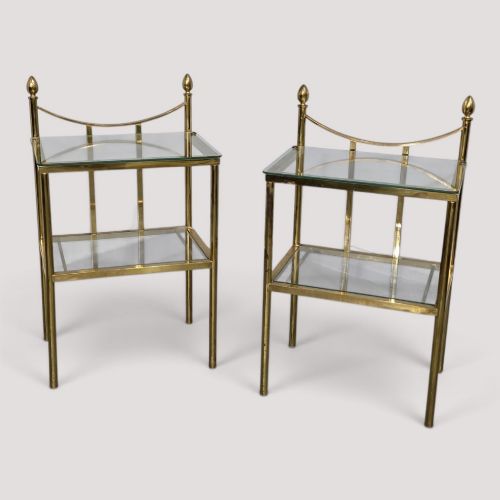
Many examples incorporate brass or ormolu mounts, and certain pieces feature inset marble slabs or glass tops.