
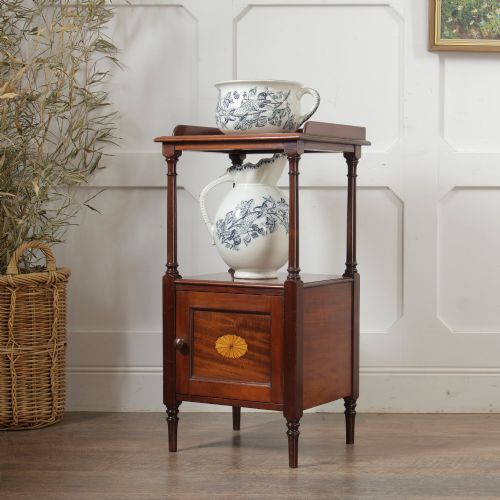


Victorian Marquetry Tier Table
These pieces unite surface art and tiered height, bringing layered display space and detailed woodwork to a room.
Victorian Marquetry Tier Table
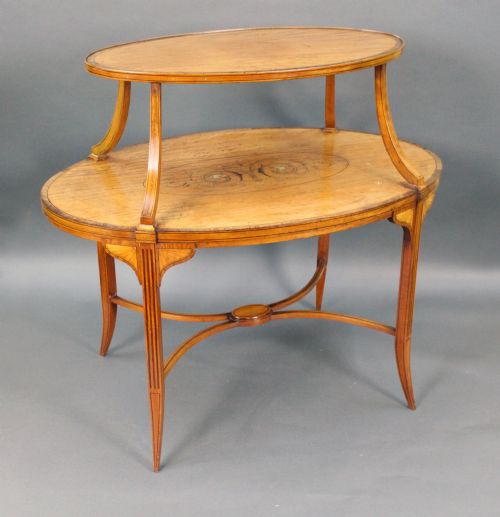
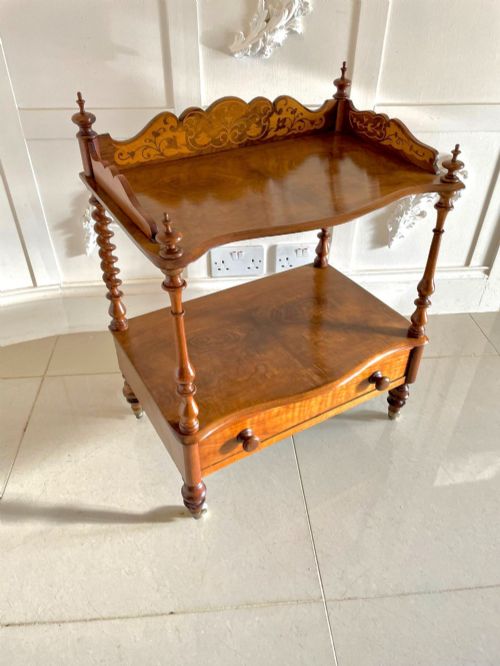
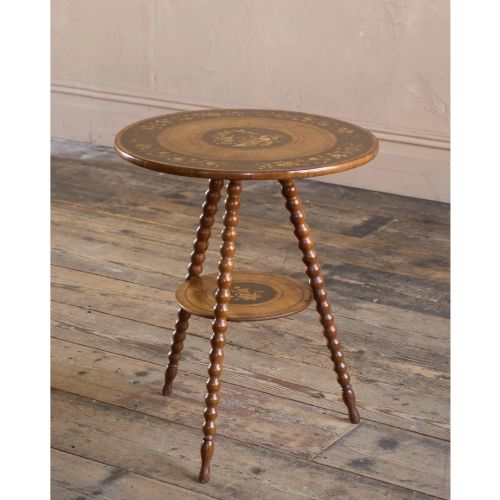
A victorian marquetry tier table combines multi-level shelving with elaborate wood-inlaid surfaces, appearing across periods from the mid-nineteenth century into the edwardian era. These small display and occasional pieces take forms such as etageres, oval stands, and multileaved tables designed to hold small objects and lamps.
The materials span walnut, rosewood, mahogany, and satinwood, often decorated with contrasting boxwood and kingwood inlays. Makers and workshops across England, France, and Italy produced these tiered structures in styles ranging from french rococo revival to sheraton revival and the aesthetic movement.
The version most commonly met on this page is the multi-tiered etagere or occasional stand featuring floral or geometric marquetry. These tables serve as decorative focal points in drawing rooms and reception spaces, offering functional display tiers without heavy visual weight.
How They Were Made
Cabinetmakers constructed these tables using a hardwood carcase of walnut, mahogany, or rosewood, applying contrasting veneers of satinwood, boxwood, and kingwood for the surface decoration. Marquetry cutters sliced thin botanical or geometric motifs by hand, fitting the pieces together like puzzles before pressing them into the wood ground.
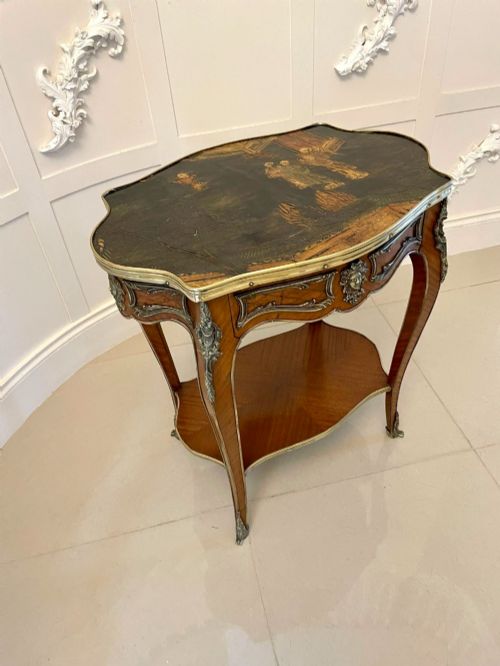
Metal mounts in brass and ormolu were cast and polished to edge shelves, protect corners, or frame legs. Joinery relied on traditional tenons and dowels to support the multiple stacked tiers while maintaining slender, elegant profiles.
The listings span the Victorian, Edwardian, and 1930s periods, featuring walnut, rosewood, mahogany, and satinwood.
What Varies in Quality
The precision of the marquetry cutting separates standard production from exhibition work, where tighter veneer joints create seamless floral panels without visible filler. The choice of underlying timber also dictates standard, moving from plain mahogany to highly figured burr walnut, coromandel, and kingwood.
Structural ambition defines the upper tier of these pieces, distinguishing simple two-tier tables from complex freestanding centre pieces with bronze ormolu mounts and signed workshop provenance. The crispness of carved details on legs and the integration of cast brass galleries reveal the original maker's investment of time.
Edwards and Roberts·Collingson and Lock·Donald Ross
The Victorian Marquetry Tier Table Glossary
- Marquetry
- The art of forming decorative patterns by fitting together small pieces of wood veneer. This technique creates pictorial or geometric designs on tabletops and tier surfaces.
- Etagere
- A piece of furniture consisting of a set of open shelves for small objects and ornaments. These tiered stands developed in France during the eighteenth century and remained popular through the victorian era.
- Ormolu
- Gilded bronze used for decorative mounts, feet, and edge guards on nineteenth-century furniture. The metal is cast and then treated with gold leaf or mercury gilding.
- Satinwood
- A durable, hard wood with a golden-yellow sheen used extensively for veneers and stringing lines. It provides sharp contrast against darker woods like rosewood and mahogany.
- Stringing
- Thin lines of contrasting wood inlay used to outline panels and borders on tabletops. This linear detail defines geometric compartments within larger marquetry schemes.
Victorian Marquetry Tier Table: Frequently Asked Questions
How were tier tables used?
These pieces served as display surfaces for porcelain, small clocks, and lamps in Victorian drawing rooms. Their multiple levels allowed homeowners to group collections within a compact floor footprint.
They stood beside seating areas or against walls as occasional furniture, moved easily to suit the requirements of afternoon tea or evening gatherings.
Where were these tables made?
Production centred in English workshops, alongside significant output from French cabinetmakers working in revival styles. Italian makers also contributed specialised marquetry pieces, particularly from Sorrento.
English firms adapted French and Italian influences, incorporating local timbers like mahogany alongside imported rosewood and satinwood veneers.
How do I date a tier table?
Dating relies on stylistic shifts between mid-Victorian walnut forms, late-century aesthetic movement ebonised details, and Edwardian Sheraton revivals. Material choices also guide the timeline, from early mahogany carcases to later exotic veneers.
Maker signatures, stamped numbers, or brass tags offer precise chronological markers when workshops recorded their output.
How do I care for marquetry surfaces?
Protect the veneered surfaces from direct sunlight to prevent fading in delicate woods like satinwood and rosewood. Maintain stable indoor humidity to keep the thin veneer inlays from lifting.
Apply microcrystalline wax periodically to nourish the wood and protect the polished finish from moisture.