

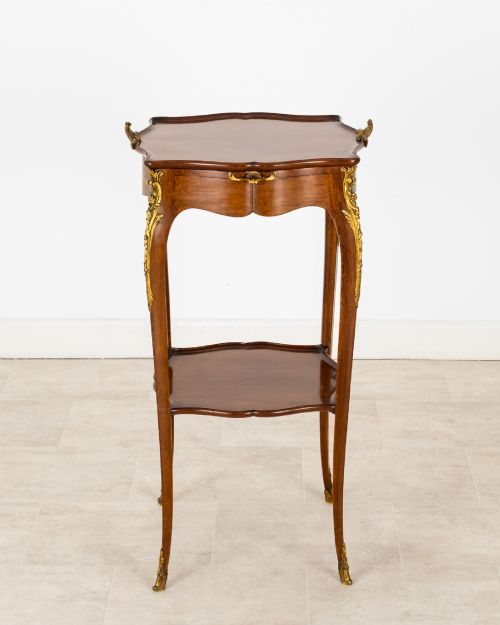
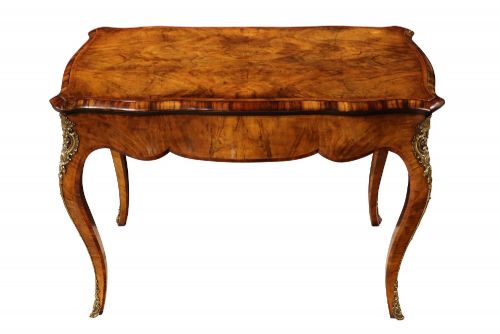

Ormolu Tea Table
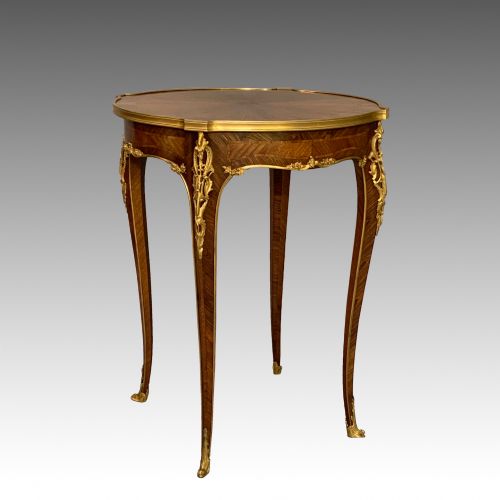
An ormolu tea table brings French revival glamour into a room, offering surface space framed in cast bronze mounts and exotic woods.
Ormolu Tea Table
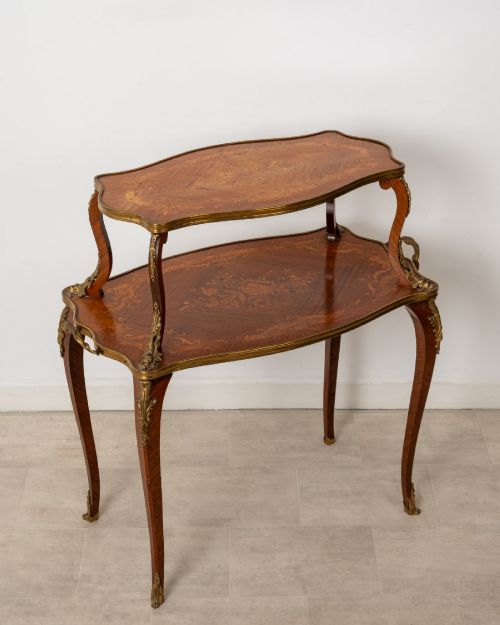
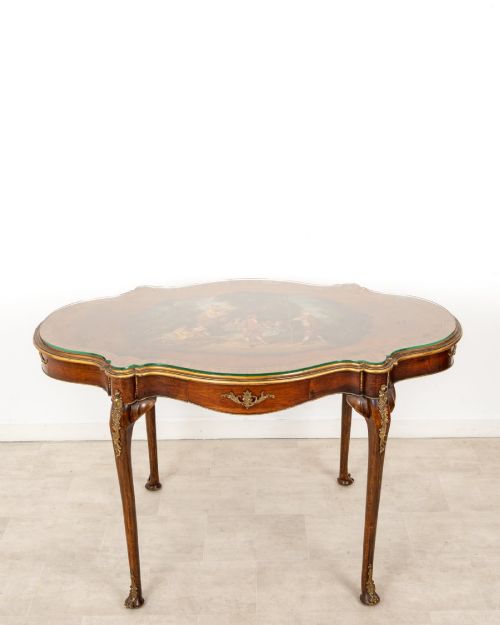
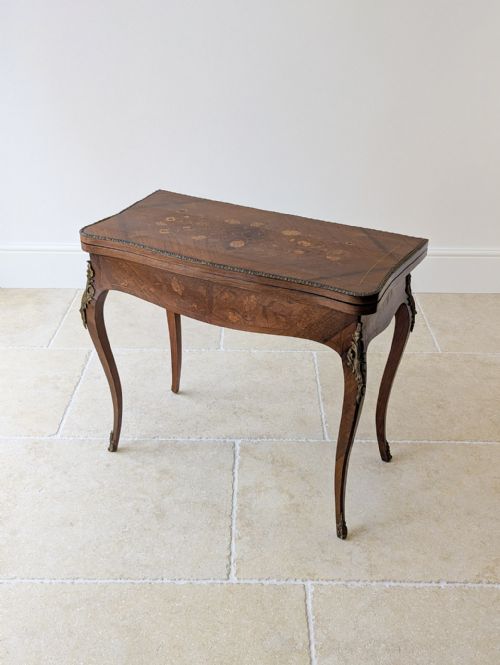
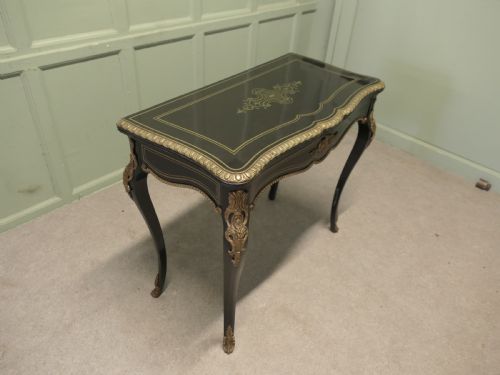
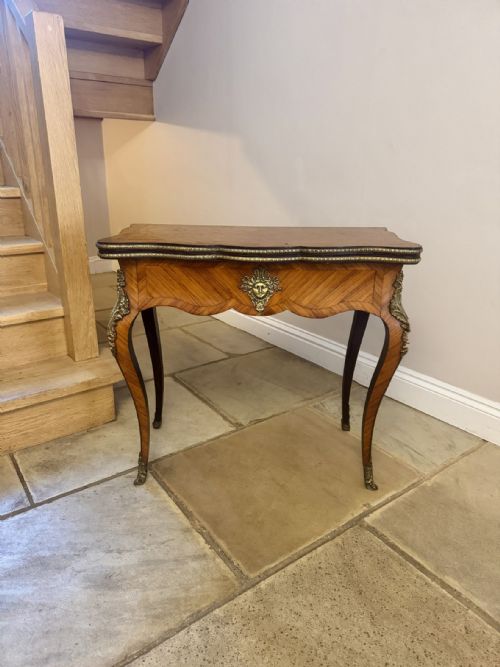
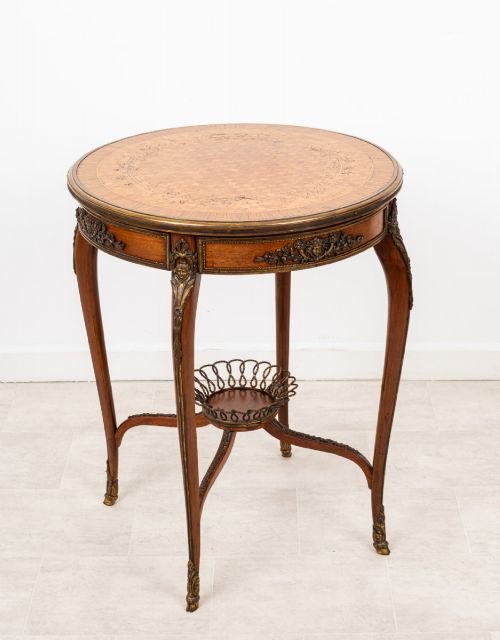
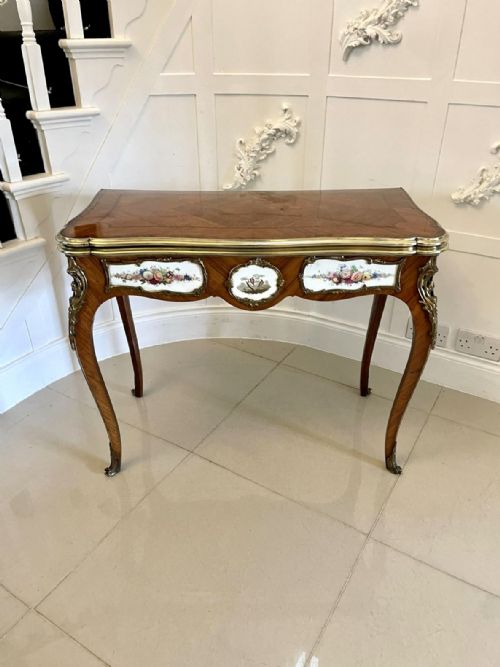
An ormolu tea table combines timber structures with cast gilt bronze mounts, predominantly taking form as card tables, games tables, and two-tier etageres. These pieces date largely from the nineteenth century, spanning Victorian and Edwardian periods with strong French stylistic influences.
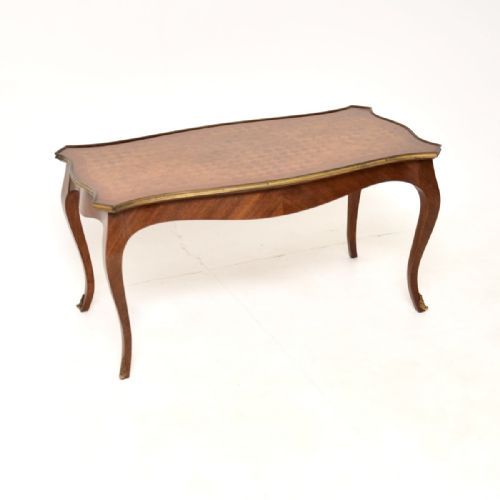
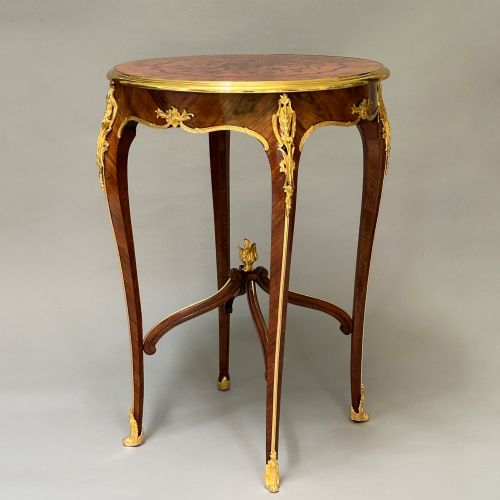
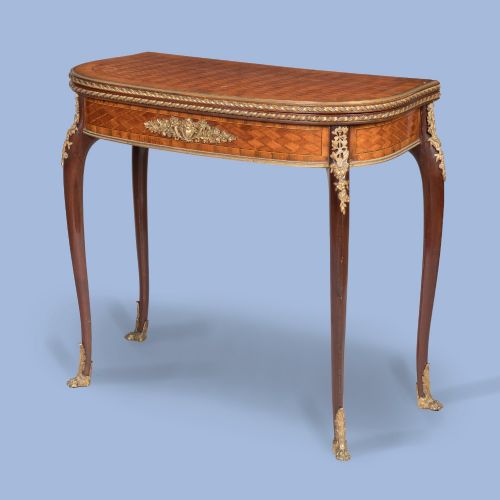
The most common variants appearing on this page follow Louis XV and Louis XVI revival designs, often executed in kingwood, walnut, or mahogany. Makers and workshops drew heavily upon eighteenth-century French aesthetics, producing folding card tables, occasional tables, and coffee tables with intricate marquetry.
Buyers encounter surfaces arranged for display or social pastimes, resting on cabriole legs finished with ormolu sabots or hoof feet. The construction reflects a nineteenth-century European appetite for continental elegance, adapting earlier court furniture for domestic drawing rooms.
Materials and Construction
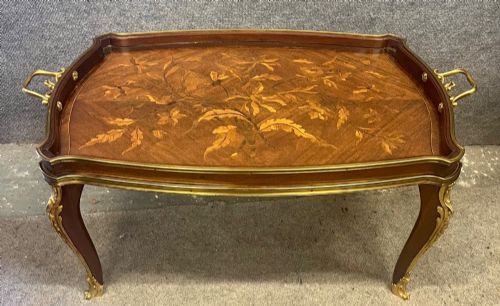
Cabinetmakers constructed the carcases from dense timbers such as kingwood, walnut, mahogany, and rosewood, frequently applying decorative veneers in parquetry and floral marquetry patterns. Cross-banding and delicate stringing defined the borders of tabletops and folding card surfaces.
Gilt bronze ormolu mounts were cast, chased, and fire-gilt before being screwed or pegged to the wooden frames around corners, aprons, and legs. These metal fittings provided structural protection alongside ornamental contrast against the dark and figured woods.
Object forms span card tables, games tables, etageres, and coffee tables, mounted with gilt bronze and ormolu.
Assessing Quality and Execution
Quality rests heavily on the crispness of the bronze chasing and the depth of the wood marquetry. Superior examples display sharply defined acanthus leaves and scrolls in the ormolu, while lesser pieces rely on softer, shallower castings.
The choice of timber and precision of the veneering distinguish workshop standards. Dense use of figured kingwood, well-matched parquetry, and robust mechanism joints for folding card tables separate standard production furniture from masterworks.
Joseph Emmanuel Zwiener·G T Morant·Edwards and Roberts
The Ormolu Tea Table Glossary
- Ormolu
- Gilded bronze, typically produced by applying a mercury-gold amalgam to cast brass or bronze and heating it to drive off the mercury. This technique creates a durable, rich golden surface finish on furniture mounts.
- Marquetry
- Inlaid patterns of wood veneers applied to a carcase structure to form pictorial or geometric designs. It differs from parquetry through its use of curved, floral, and figurative motifs rather than strict geometric tiling.
- Parquetry
- Geometric wood inlay forming repetitive patterns such as cubes, lozenges, or squares across a tabletop. The technique creates structured visual depth using contrasting timber grains.
- Étagère
- A piece of furniture consisting of open open shelves for displaying small objects or serving tea. These tier tables became popular during the nineteenth century in various French revival styles.
- Sabot
- A metal mount fitted to the foot of a furniture leg to protect the timber from wear and moisture. They are frequently cast in ormolu to match apron mounts and corner sabots.
Ormolu Tea Table: Frequently Asked Questions
What is an ormolu tea table?
An ormolu tea table is a nineteenth-century occasional or tea table decorated with gilded bronze mounts and rich wood veneers. These pieces often draw on French Louis XV or Louis XVI revival designs.
They serve as decorative centrepieces or functional surface tables within traditional and eclectic interiors, combining practical timber construction with sculptural metalwork.
How were these tables used originally?
Many tables featuring ormolu mounts were designed for multiple domestic functions, including serving tea, displaying ornaments, or opening out into card and games tables. Fold-over tops concealed baize-lined surfaces intended for evening entertainment.
Drawing rooms in the nineteenth century utilised these versatile pieces for hospitality and social gatherings, placing them centrally or against walls as console tables.
How do I distinguish Louis XV and Louis XVI styles?
Louis XV style tables emphasise asymmetry, sweeping curves, and naturalistic floral marquetry paired with exuberant cabriole legs. Ormolu mounts on these pieces flow organically around corners and aprons.
Louis XVI style furniture introduces symmetry, straight tapered legs, fluting, and neoclassical geometric parquetry. The overall silhouette is more rectilinear and restrained.
How do I care for ormolu and wood surfaces?
Maintenance requires dry dusting with a soft cloth to protect delicate veneers and gilt bronze from abrasive particles. Avoid commercial liquid cleaners, which can damage historic lacquer and fire-gilt surfaces.
Keep tables away from direct sunlight and steady heat sources to prevent the timber veneers from shrinking, warping, or lifting over time.