


Ormolu Portico Mantel Clock
An ormolu portico mantel clock brings architectural symmetry and brilliant gilt metalwork to a room, offering a commanding centrepiece for a mantelpiece.
Ormolu Portico Mantel Clock
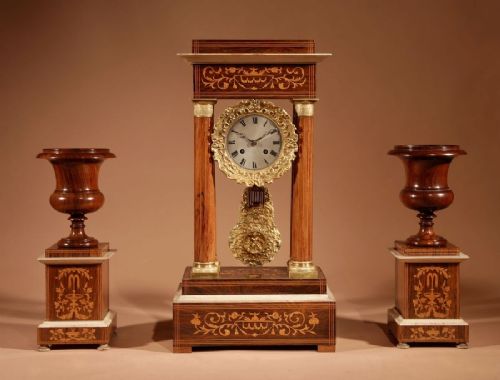
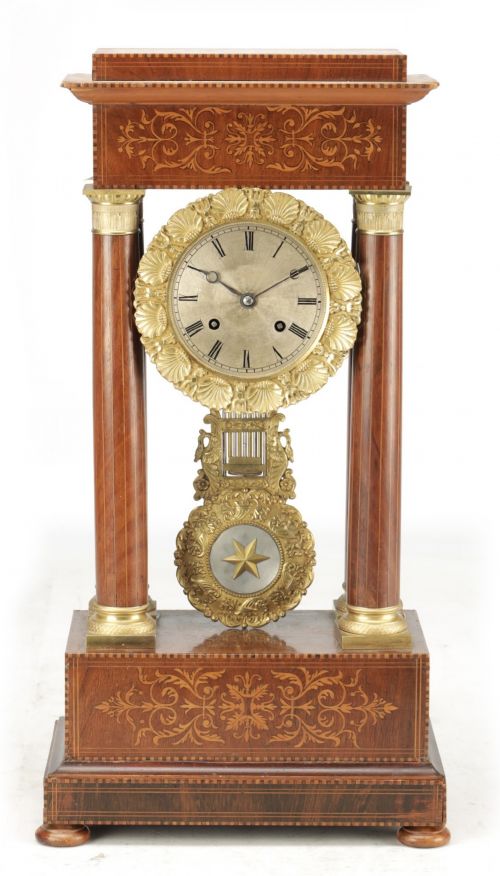
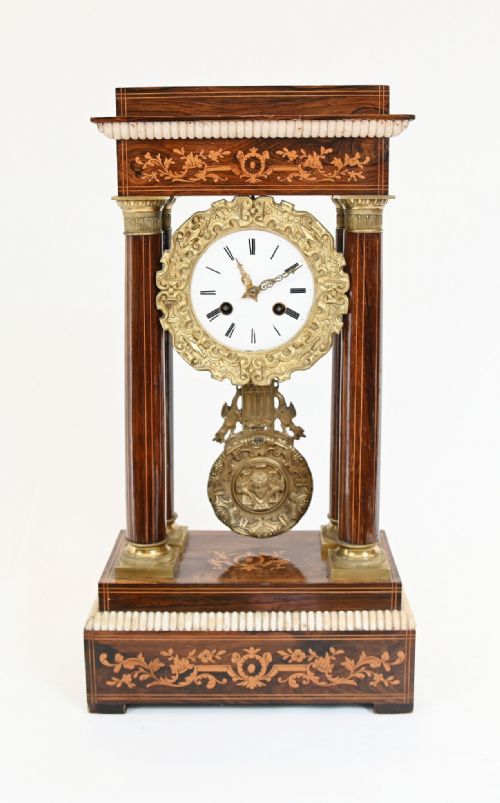
An ormolu portico mantel clock stands on four columns forming a classical pavilion or portico frame around a central suspended pendulum. This architectural layout draws directly from ancient temple designs adapted for domestic interiors during the late eighteenth and nineteenth centuries.
The version most likely to meet you on this page is the French Charles X or nineteenth century model, often paired with matching side garnitures or candelabras. These pieces combine formal columns with striking dials and gilt bronze mountings.
Makers and workshops constructed these timepieces to anchor grand reception rooms and studies, merging sculpture and horology into a single harmonious object.
Materials and Construction
Craftsmen built the architectural cases using dense woods like rosewood and mahogany alongside fine white marble, pink marble, onyx, or alabaster. These solid foundations provided the necessary weight to support heavy metal columns and top cornices.
The metallic brilliance comes from ormolu and gilt bronze, created through mercury gilding or electrogilding processes applied to cast brass components. Enamel dials and cut crystal elements added delicate contrast to the heavy stone and metal structures.
Assessing Quality
The distinction between ordinary and exceptional examples rests in the crispness of the bronze casting and the depth of the gilding. Superior pieces display sharply chased leaf motifs and architectural details that retain their original warm metallic lustre.
Breguet·AD Mougin Paris·Baltazart
The Ormolu Portico Mantel Clock Glossary
- Ormolu
- Gilt bronze created by applying a mixture of gold and mercury to a cast brass object and heating it until the mercury vaporised. This traditional technique produced a durable and rich golden finish seen on fine antique mounts.
- Portico clock
- A mantel clock designed with a distinct architectural facade featuring vertical side columns supporting a horizontal lintel. The pendulum typically swings visibly within the open central space.
- Clock garniture
- A set comprising a central mantel clock accompanied by matching decorative objects such as vases, urns, or candelabras. These matched sets created a balanced decorative scheme across a mantelpiece.
- Fusee
- A conical pulley used inside certain mechanical clocks to equalise the diminishing power of the mainspring as it unwinds. This mechanism helps maintain consistent timekeeping accuracy.
- Charles X
- A French design style spanning the 1820s characterised by clean architectural lines and light wood veneers often combined with contrasting dark mounts. It followed the Empire period and preceded the broader Victorian era.
Ormolu Portico Mantel Clock: Frequently Asked Questions
How do I maintain an ormolu portico mantel clock?
Dust the delicate metalwork and marble surfaces gently with a dry, soft brush to prevent accumulation in recessed carved details. Avoid chemical polishes entirely, as abrasive substances strip the original fire gilding from the bronze.
Ensure the clock rests on a completely level surface to keep the pendulum beating evenly. Professional mechanical servicing every few years keeps the gear train running smoothly.
Where should I place a portico clock?
These architectural clocks suit prominent locations such as a drawing room mantelpiece, a library console, or a large entrance hall table. Their vertical symmetry benefits from being viewed at eye level.
Keep the clock away from direct sunlight, heating vents, and damp exterior walls to protect the timber veneers, marble, and delicate interior metalwork from warping.
How do I tell Charles X from Victorian periods?
Charles X pieces typically date from the 1820s and favour crisp architectural geometry, light rosewood or mahogany veneers, and restrained bronze mounts. The overall aesthetic feels distinctly neoclassical and clean.
Victorian examples from the mid to late nineteenth century often incorporate heavier ornamentation, mixed marbles, or stylistic revivals of earlier Louis XV and Louis XVI designs.
What is a clock garniture?
A clock garniture is a matched suite consisting of a central mantel clock flanked by a pair of matching decorative ornaments, such as candelabras, urns, or vases. These sets were designed to sit together on a mantelpiece.
They share identical materials, styles, and ormolu mounts to create a unified and formal decorative display across a room.