
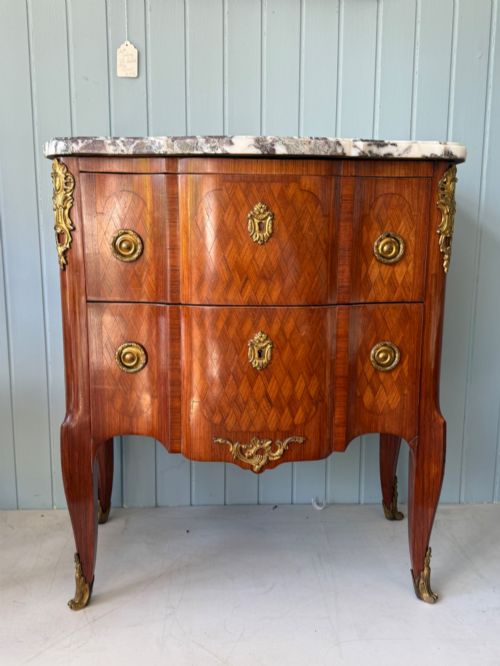
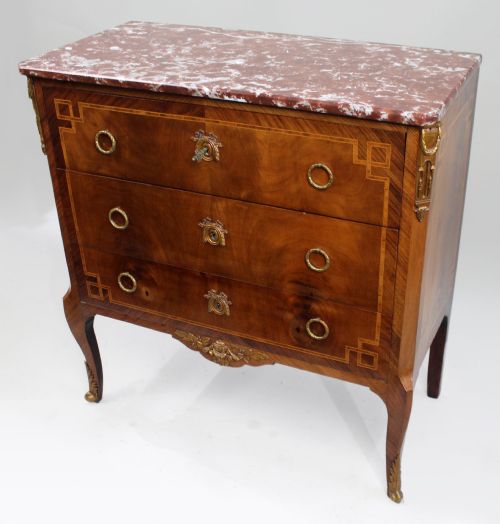
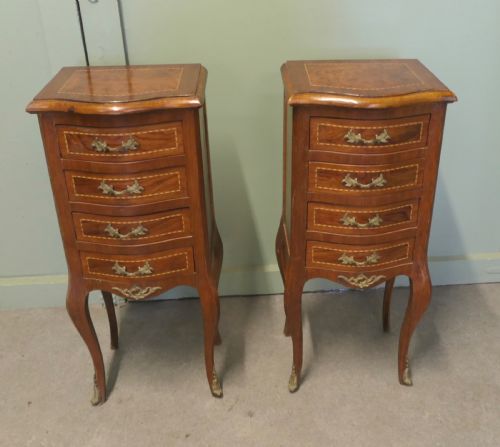
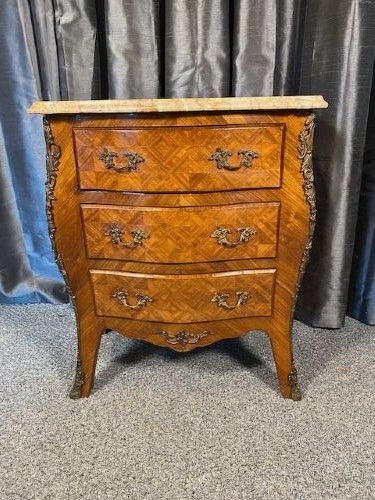
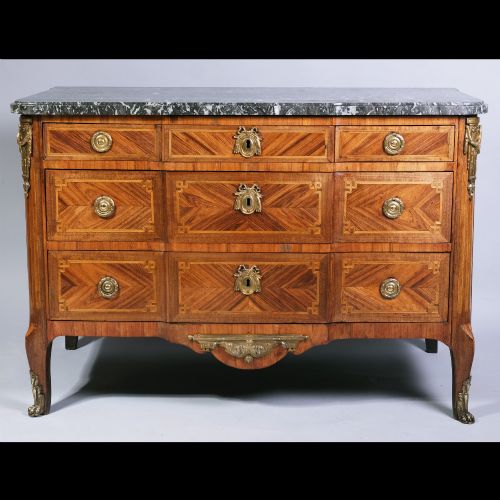
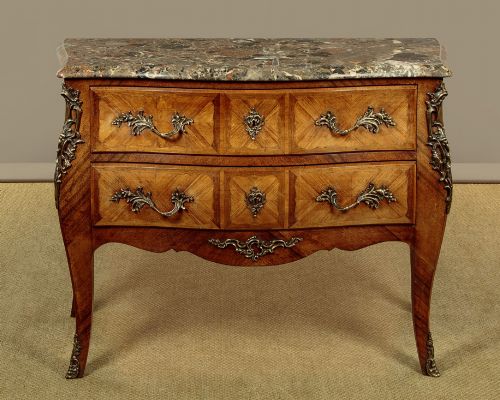
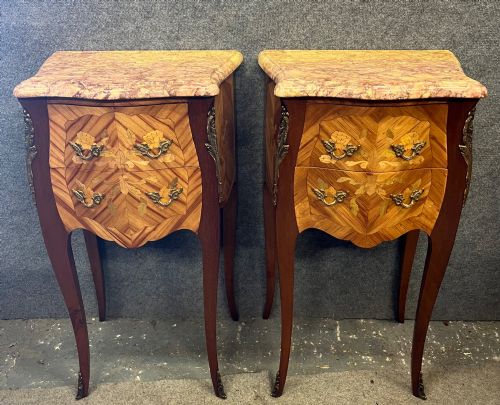
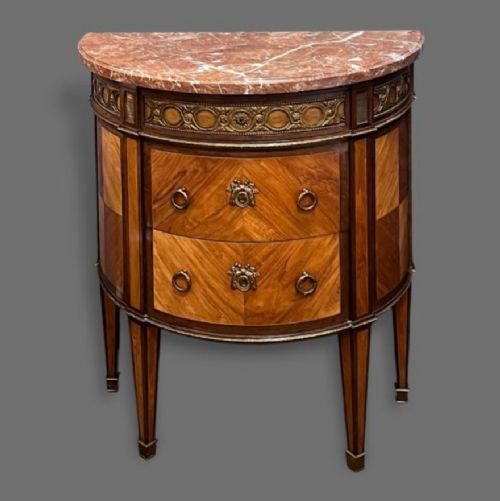

Ormolu Mounted Walnut Commode
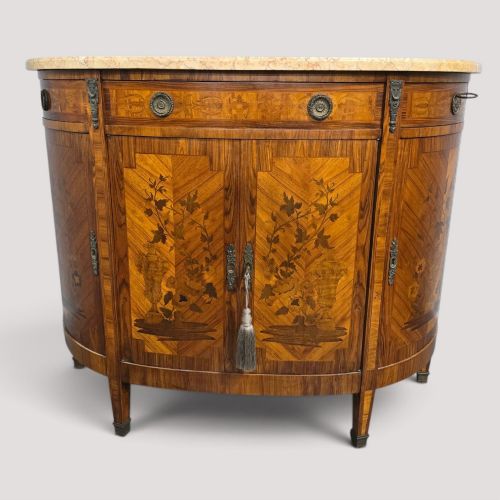
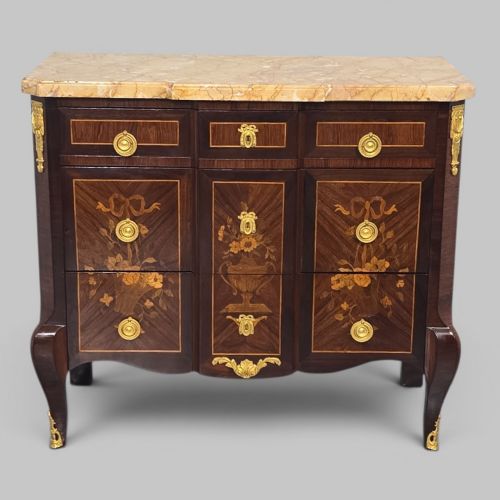
An ormolu mounted walnut commode brings substantial French presence and rich timber tone into a room.
Ormolu Mounted Walnut Commode
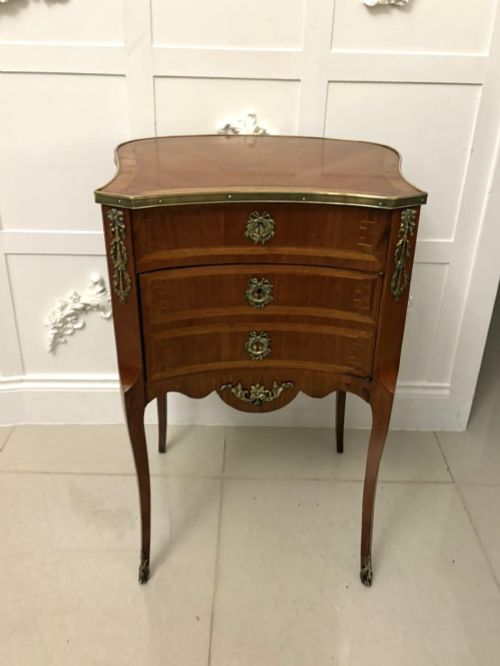
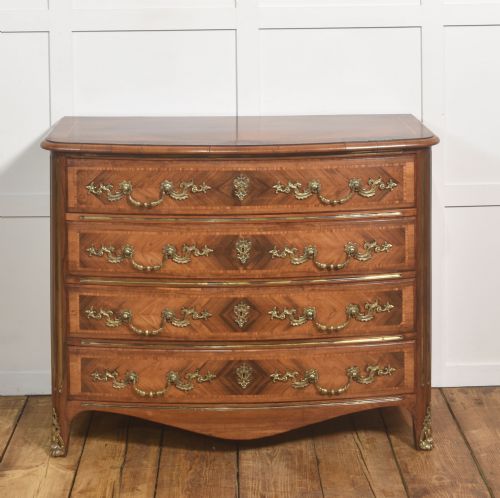
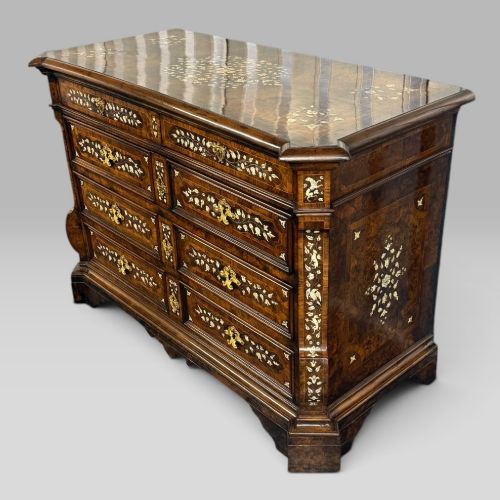
An ormolu mounted walnut commode is a low storage chest designed with drawers or doors, combining figured timber with gilded bronze mounts. Buyers searching for an ormolu mounted walnut commode encounter pieces ranging from eighteenth-century examples to revival works from the nineteenth and early twentieth centuries.
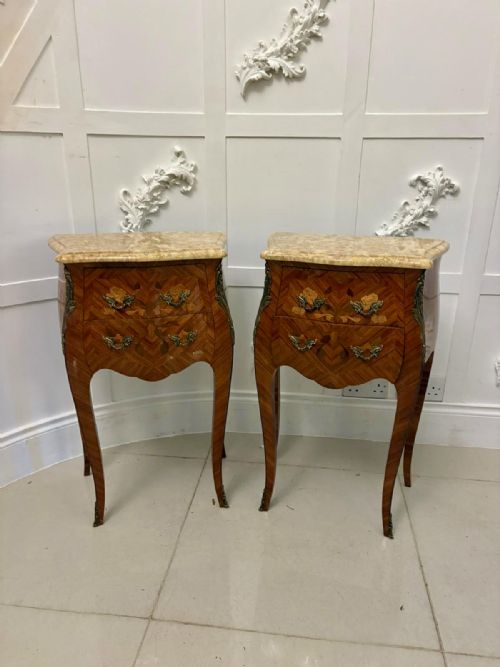
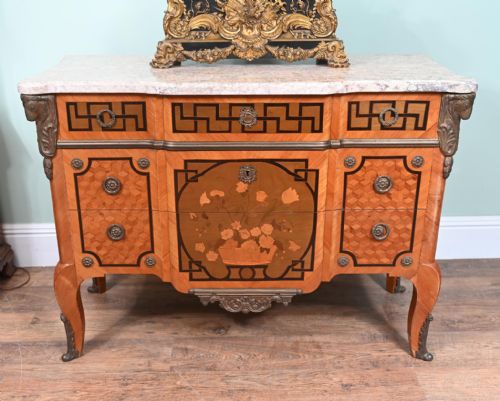
The prevailing forms on this page follow French revival tastes, notably Louis XV and Louis XVI styles, alongside Victorian interpretations. These pieces appear as serpentine chests, bombe commodes, and smaller bedside cabinets, often fitted with marble tops in shades of rouge or white.
The origin spans French cabinet-making traditions, with walnut forming the primary carcass timber, frequently paired with marquetry, parquetry, and contrasting veneers such as kingwood and rosewood.
Materials and construction
Construction relies on a solid timber carcass faced with walnut veneers, burr walnut, and occasional floral marquetry or geometric parquetry patterns. Cabinet-makers shaped these carcasses into serpentine and bombe contours, demanding precise woodworking joinery to maintain stability across curved surfaces.
Ormolu mounts, cast as gilt bronze or brass, are applied to corners, apron centres, and drawer handles to accentuate the architectural lines of the commode. Marble slabs, chosen for their colour and weight, sit flush upon the upper surface of the chest.
Surface finishing involves hand-polishing the walnut grain to reveal natural figuration, while the cast metal mounts receive chemical or fire gilding to produce a durable golden lustre.
Listings feature walnut, burr walnut, and rosewood timbers combined with marble tops and ormolu or brass mounts across eighteenth to twentieth-century periods.
Measures of quality
Quality rests upon the crispness of the ormolu casting and the depth of hand-chiseled detail visible across the mounts. Superior pieces display finely articulated foliage and scrolling motifs that fit the contours of the walnut carcass precisely without gaps.
The intricacy and execution of the marquetry or parquetry work further distinguish finer items, where varied wood species are selected for natural contrast rather than painted additions. Heavier, well-figured walnut and burr walnut veneers indicate higher workshop standards.
Structural integrity shows in the drawer linings, smooth running action, and the thickness and polish of the fitted marble top. Original mounts and uncompromised timber surfaces elevate an example above later replacements.
The Ormolu Mounted Walnut Commode Glossary
- Ormolu
- Gilt bronze mounts applied to furniture for decorative accent. The technique involves applying a gold amalgam to bronze before heating.
- Marquetry
- Inlaid wood veneers arranged to form decorative pictures or geometric patterns. Craftsmen cut contrasting timbers like rosewood and kingwood into the walnut ground.
- Bombe
- A swollen or bulging convex shape characteristic of eighteenth-century furniture forms. This curved profile requires specialised veneer work.
- Parquetry
- Geometric patterns formed by wood veneers laid in symmetrical designs. Squares, triangles, and diamonds create repeating decorative surfaces on the commode top or sides.
- Serpentine
- A curved line that undulates inwards and outwards, featuring a convex centre flanked by concave sides. This contour appears frequently on drawer fronts.
Ormolu Mounted Walnut Commode: Frequently Asked Questions
How do I date an ormolu mounted walnut commode?
Dating relies on examining construction methods, timber types, and the style of the ormolu mounts. Eighteenth-century pieces show hand-cut dovetails and authentic wear patterns beneath the carcass.
Revival pieces from the nineteenth and twentieth centuries often employ machine-sawn timber and standardised screws while imitating earlier Louis styles.
Are marble tops original to these commodes?
Most commodes listed feature marble tops that correspond to the period of the cabinetwork. Rouge and white marble slabs were cut to fit the specific serpentine or straight contours of each piece.
Replacements do occur, so buyers examine the seating rebate and underside edges for signs of period fitting and consistent ageing.
Where should I place a commode in my home?
These chests function effectively in hallways, living rooms, and bedrooms as focal storage points. Their finished backs and sides often allow them to stand free within a room rather than strictly against a wall.
Proportions vary from compact bedside tables to large sideboard cabinets, suiting different spatial requirements.
How do I care for walnut and ormolu?
Walnut requires regular dusting with a soft cloth and occasional application of appropriate furniture wax to nourish the grain. Avoid silicone-based polishes that degrade antique finishes over time.
Ormolu mounts need only gentle dusting, as harsh metal cleaners strip the original gilding from the bronze surface.