
Ormolu Mounted Walnut Bookcase
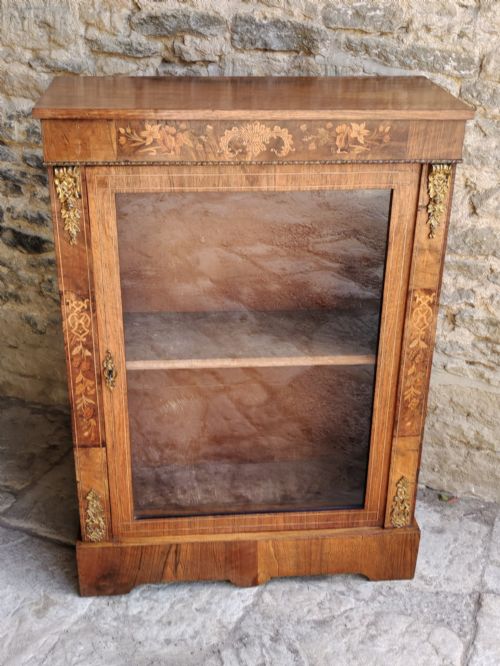
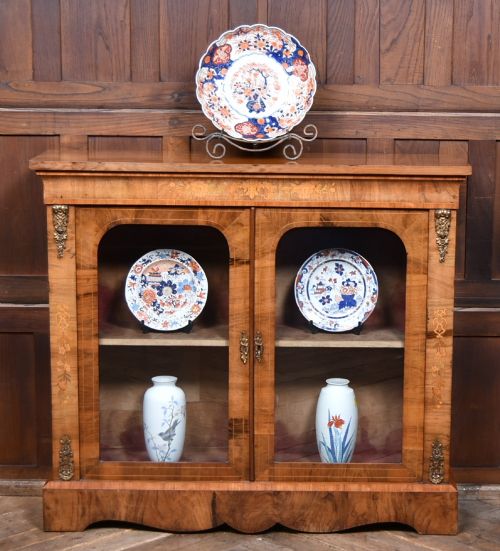
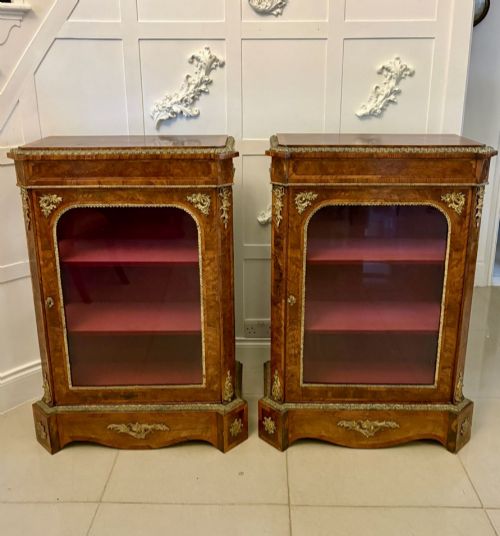
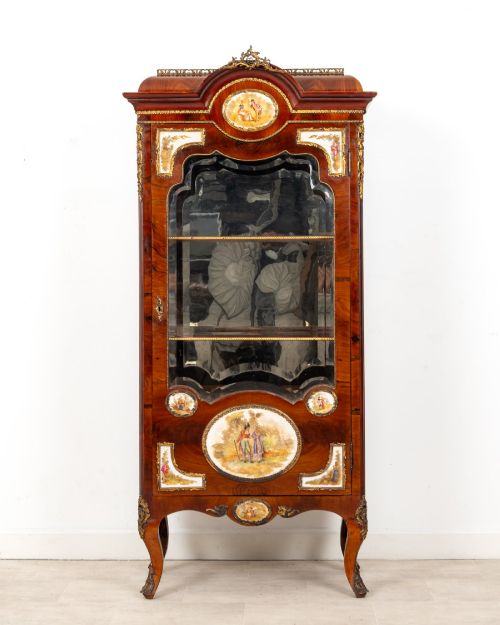
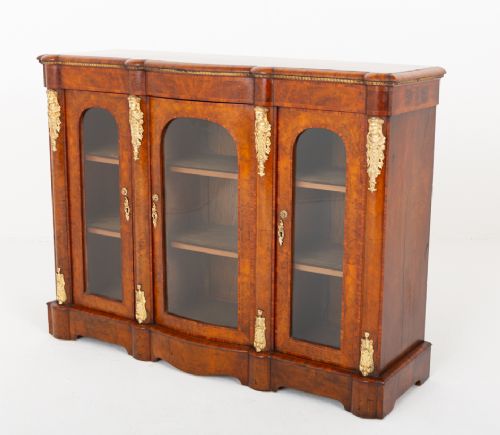
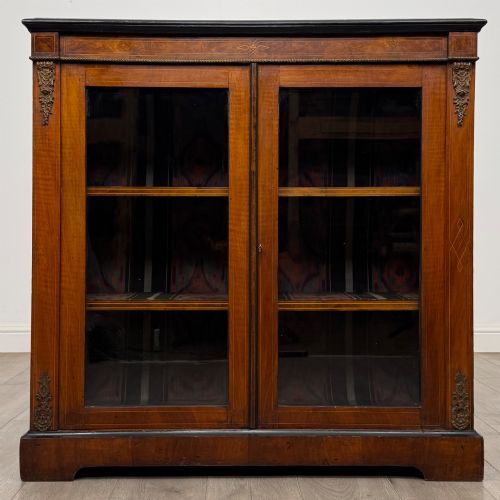
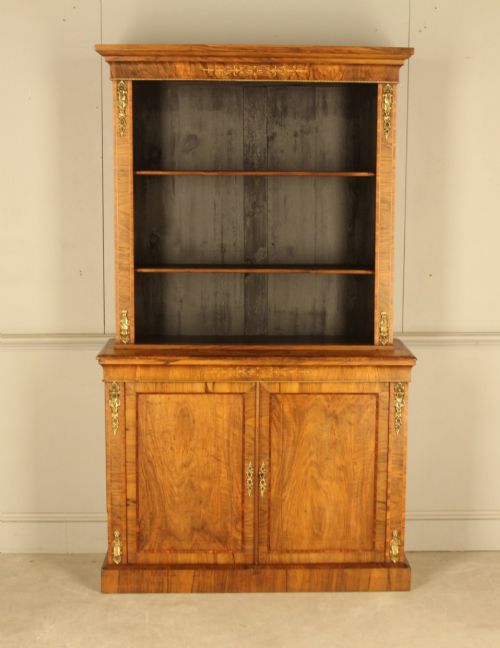
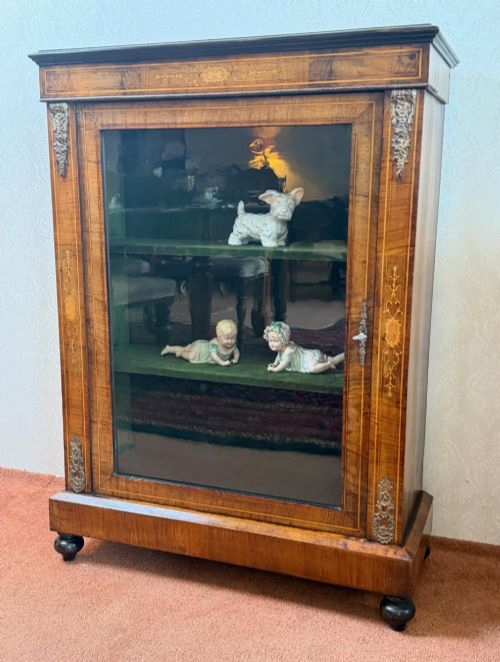
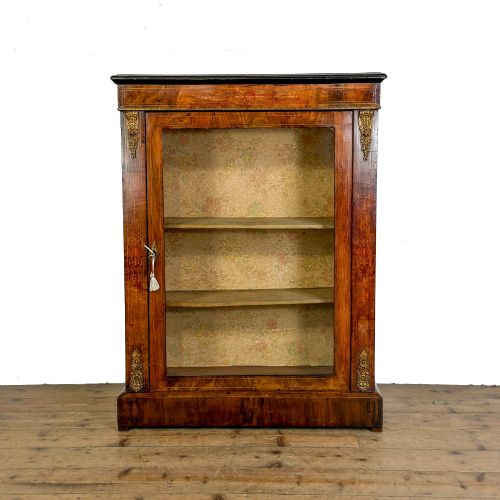
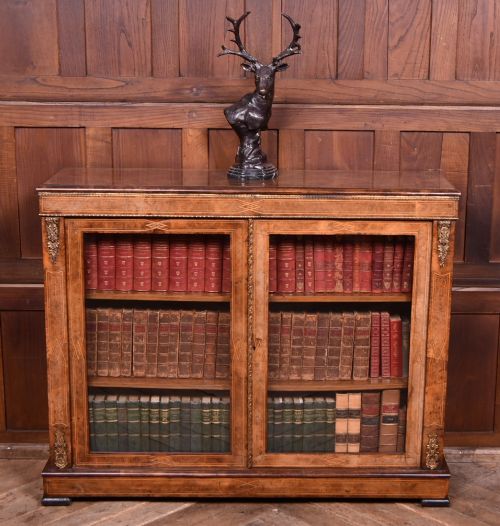
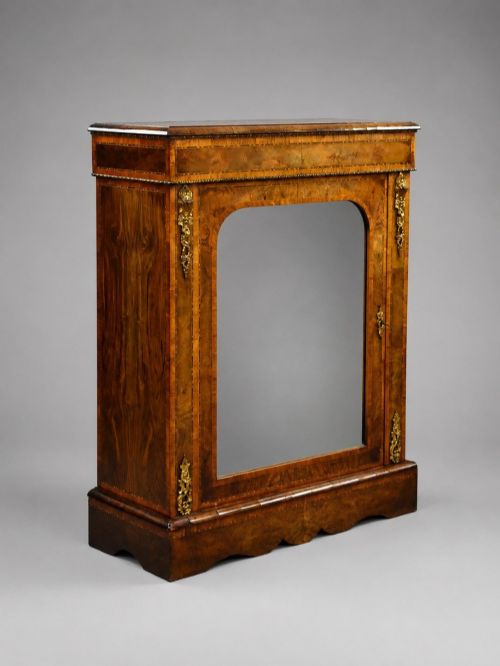
An ormolu mounted walnut bookcase brings together rich cabinet timber and gleaming cast bronze mounts to create a formal display piece.
Ormolu Mounted Walnut Bookcase
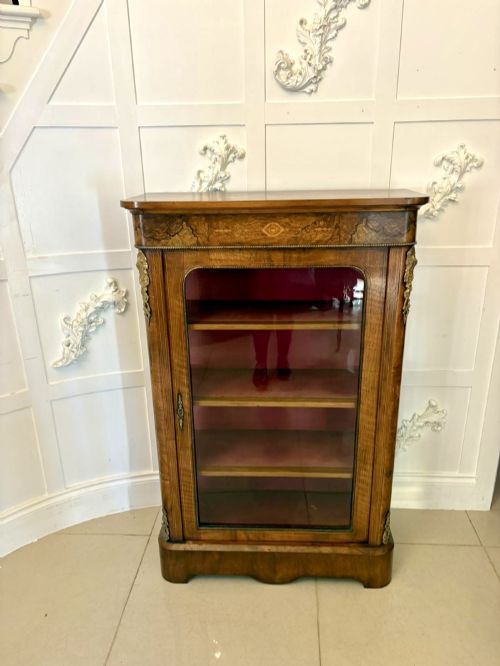
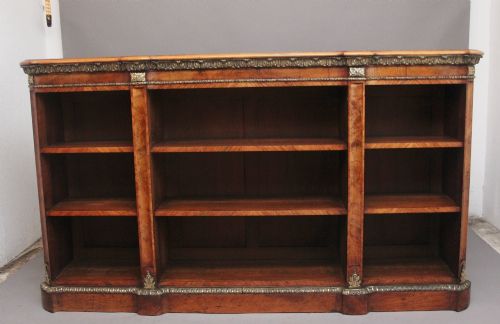
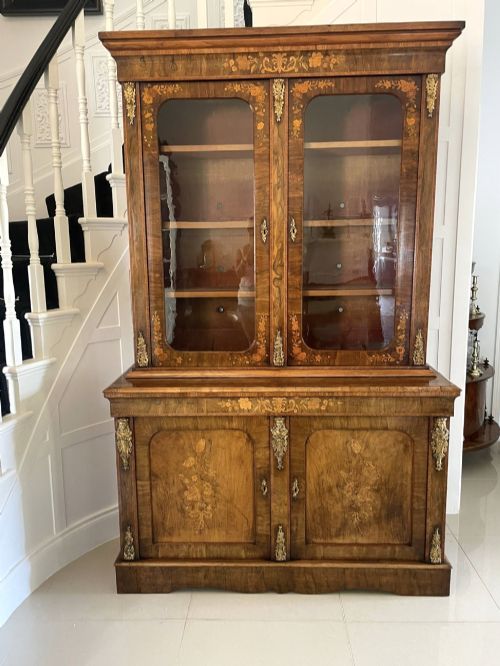
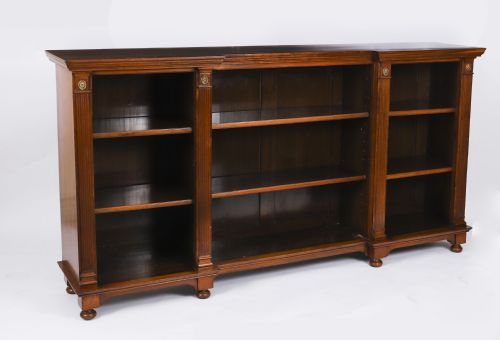
An ormolu mounted walnut bookcase is a substantial piece of furniture designed for housing volumes while displaying decorative objects behind glass doors or upon open shelves. The form typically emerges from Victorian and nineteenth century workshops, drawing heavily on French styles such as Louis XV Revival.
Materials and construction
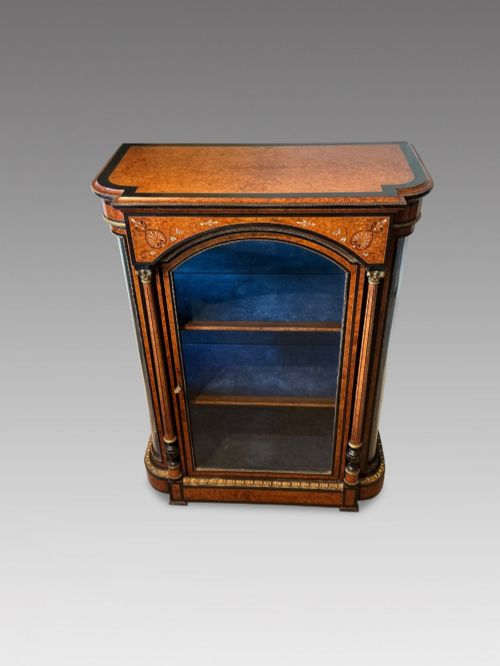
Makers utilised walnut, burr walnut, and figured walnut veneers applied to carcase timbers, often accenting the surfaces with boxwood, ebony, and kingwood stringing. Marquetry panels display intricate floral or geometric patterns set into the timber grain.
Cast brass or ormolu mounts provide structural definition and decorative enrichment along corners, friezes, and feet. Glass panels enclose display sections, while velvet linings occasionally furnish the interiors of cabinets and vitrines.
Cabinets occasionally conceal delicate velvet linings behind their glass doors to cushion fragile antique porcelain displays.
Distinguishing quality
Quality rests upon the selection of timber veneers, where highly figured burr walnut and balanced marquetry layout elevate a piece above simpler plain walnut surfaces. The crispness and weight of the cast ormolu mounts also indicate the level of craftsmanship invested in the construction.
Cohesion between the architectural proportions of the bookcase and the refinement of its decorative details separates standard production from exhibition pieces. Superior examples demonstrate meticulous hand-fitting of veneers, inlays, and mounts across every surface.
Johnstone and Jeanes
The Ormolu Mounted Walnut Bookcase Glossary
- Ormolu
- Gilded bronze mounts applied for decorative effect on furniture. This technique creates a bright metallic contrast against dark timber.
- Burr Walnut
- Timber taken from the warted growths of walnut trees, yielding highly swirling grain patterns. Cabinetmakers prize this wood for feature panels.
- Marquetry
- Inlaid patterns formed by fitting pieces of various veneers into a background panel. Floral motifs frequently appear on nineteenth century cabinet doors.
- Pier Cabinet
- A low cabinet designed to fit against the wall space between windows. These pieces often feature glazed doors and elaborate mounts.
- Vitrine
- A glass-fronted display cabinet intended for porcelain and small ornaments. These tall display cases emphasise internal visibility.
Ormolu Mounted Walnut Bookcase: Frequently Asked Questions
How do I identify a Victorian walnut bookcase?
Victorian walnut bookcases exhibit characteristic timber grain, deep warm tones, and often elaborate marquetry or boxwood stringing. The presence of cast ormolu mounts along the friezes and corners points directly to mid to late nineteenth century production.
Examining the interior construction, drawer linings, and glass quality helps confirm the period. Many examples also align with French Louis XV styles popular during the eighteen-fifties and sixties.
Where should I place a pier cabinet?
A pier cabinet fits well against narrow wall spaces between windows or within a formal drawing room setting. Their shallow depth allows them to furnish smaller areas without dominating the room.
These cabinets serve effectively for displaying ceramics, glass, or small collections behind their glazed doors. Pairing them with other walnut furniture maintains period consistency within the interior.
How do open bookcases differ from glazed cabinets?
Open bookcases provide immediate access to book collections through exposed shelving without front doors. Glazed cabinets and pier cabinets enclose the contents behind glass panels to protect delicate volumes and display pieces from dust.
While open variants emphasise library utility, glazed versions function equally as display furniture for decorative objects. Both forms frequently share matching walnut veneers and ormolu mount details.