


Victorian Chiffonier Bookcase
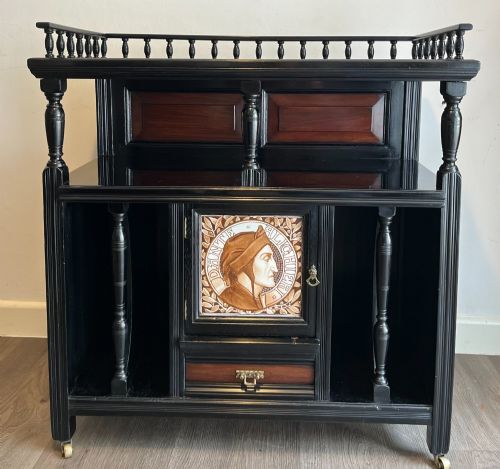
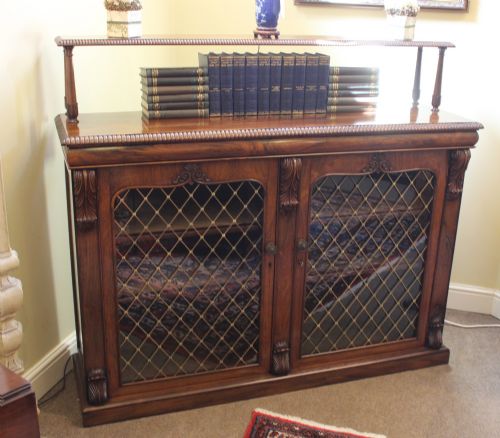
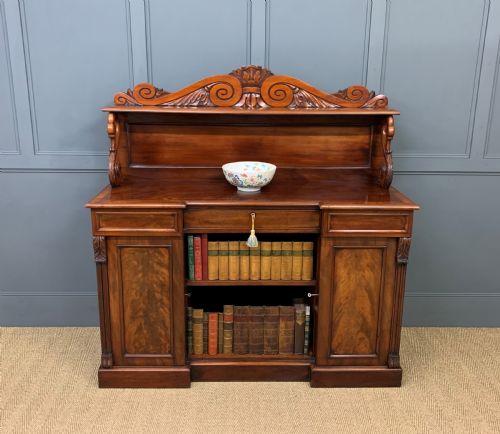
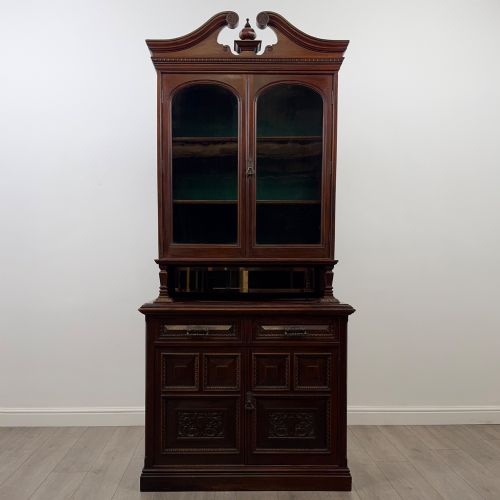
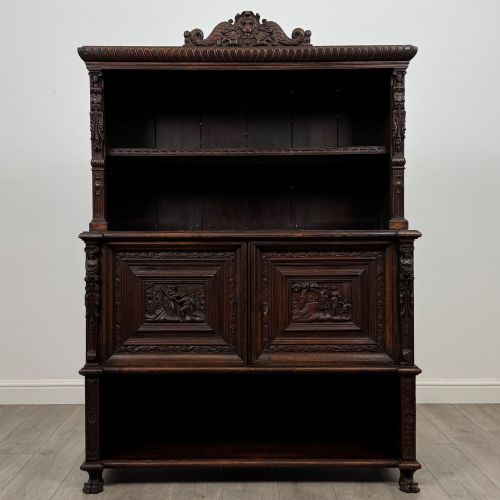
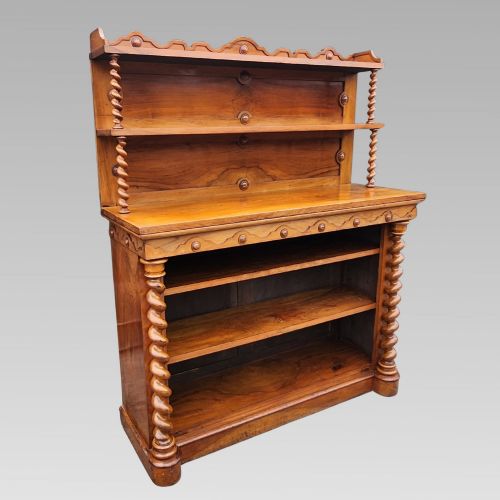
A victorian chiffonier bookcase combines lower cupboards with upper display shelves, offering both storage and a formal display space.
Victorian Chiffonier Bookcase
When you search for a victorian chiffonier bookcase, you are looking at nineteenth-century furniture that merges enclosed lower storage with upper shelving for books and display. These hybrid pieces evolved from earlier sideboards and chiffoniers, adapting to domestic needs for organised libraries and parlour display.
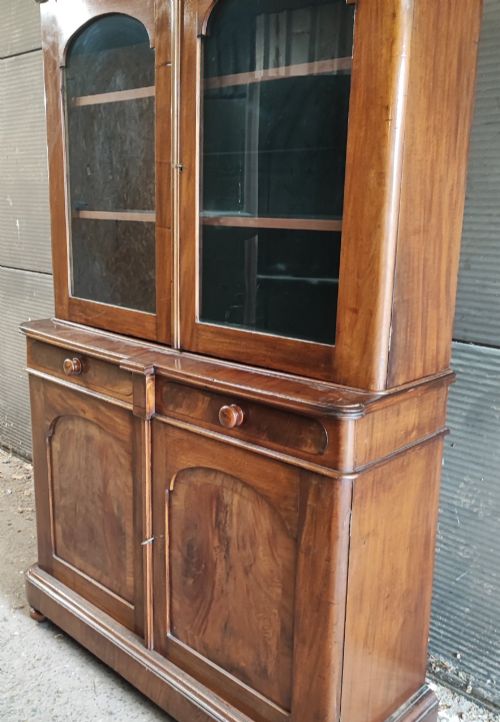
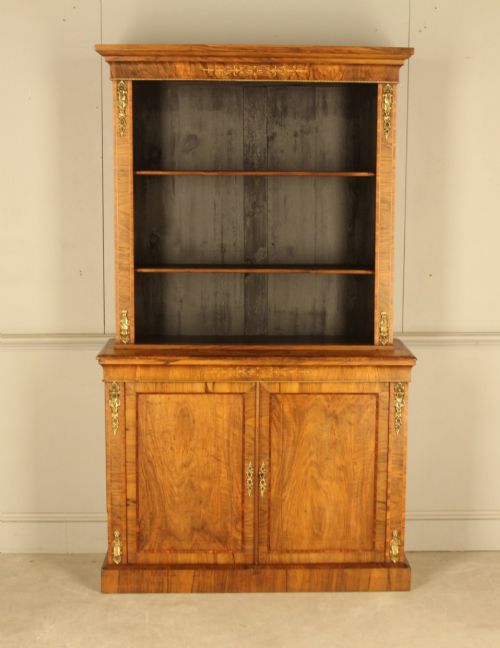
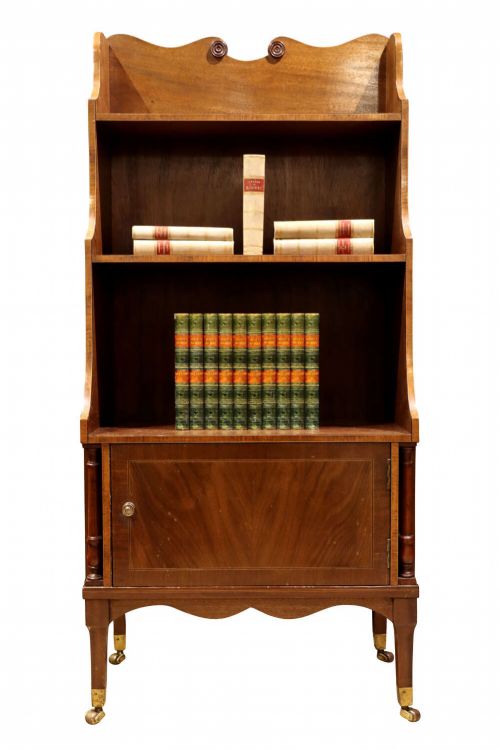
The versions you meet most often on this page date from the mid-to-late nineteenth century, spanning the Victorian, William IV, and Regency periods. They appear in forms ranging from two-door mahogany cupboards with glazed upper tiers to open waterfall shelves mounted above cabinet bases.
Makers designed these pieces for principal rooms, utilising substantial timbers to project status and order. Their proportions vary from neat, compact side cabinets to large breakfront configurations intended for country houses.
Materials and Construction
Cabinet makers built these pieces using dense hardwoods such as mahogany, rosewood, and walnut, frequently selecting flame veneers for primary surfaces. Secondary timbers provided structural stability within the internal shelving and carcass frames.
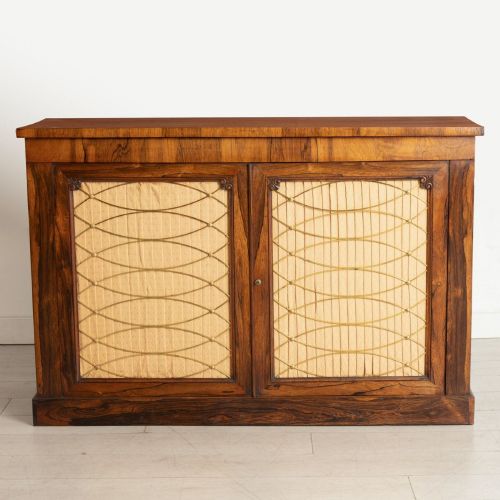
Decorative detailing involved contrasting wood inlays, marquetry, and gilt mounts of brass or ormolu. Glazed doors used individual glass panes held in wooden bars, while some variations incorporated mirrored panels or fabric backs within the upper sections.
Listings span the nineteenth century, featuring Victorian, Regency, and William IV periods constructed in mahogany, rosewood, walnut, and coromandel.
Assessing Quality and Execution
Quality rests in the selection of timber veneers, where continuous grain patterns and matched flame mahogany or burr walnut elevate the visual impact. The precision of the joinery in the door frames and the crispness of carved details separate standard production from superior workshops.
Hardware and secondary materials indicate grade, with solid brass castors, heavy lock mechanisms, and fine marquetry inlay marking the upper tier of execution. The integrity of the original glass and the stability of the carcass frame determine the durability of the piece.
Robert Strahan·Lamb of Manchester·Gillows·Edwards & Roberts·R Crook Barnstaple
The Victorian Chiffonier Bookcase Glossary
- Chiffonier
- A low sideboard or cabinet, typically featuring a combination of drawers and doors beneath a raised shelf or superstructure.
- Marquetry
- Decorative patterns formed by inserting pieces of contrasting wood into a veneer layer to create pictorial or geometric designs.
- Ormolu
- Gilded bronze mounts applied to furniture surfaces for decorative effect during the nineteenth century.
- Waterfall bookcase
- A set of open shelves arranged in a descending stepped progression, where each shelf is narrower than the one below it.
- Flame mahogany
- A veneer cut from the fork of the mahogany tree, producing a distinctive flickering flame-like grain pattern.
Victorian Chiffonier Bookcase: Frequently Asked Questions
What is a victorian chiffonier bookcase?
A victorian chiffonier bookcase is a nineteenth-century storage unit that combines a lower enclosed cupboard base with an upper tier of open or glazed shelves for books.
These hybrid forms served utility and display functions in parlours and morning rooms, utilising dense timbers like mahogany and rosewood.
Were these pieces used for books?
Owners used the upper shelves to house portable libraries, bound volumes, and decorative ornaments during the nineteenth century.
The lower cupboards provided concealed storage for household goods, papers, and dining accessories.
What woods were commonly used?
Makers predominantly employed mahogany, rosewood, and walnut for both solid construction and decorative veneer work.
Secondary woods like oak and pine formed the internal carcass structures and drawer linings.