

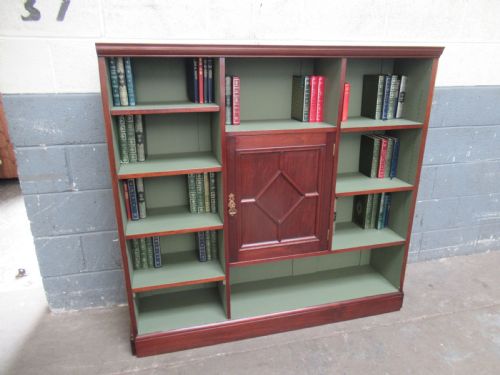
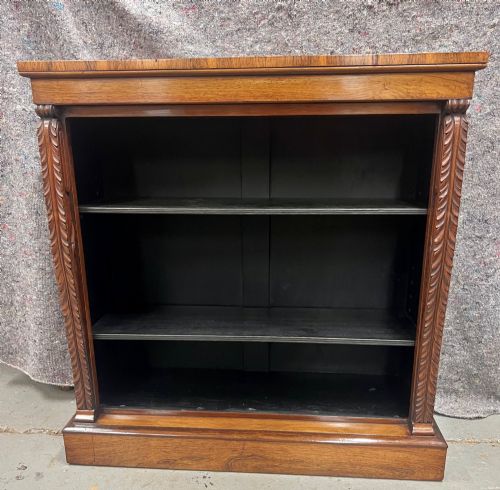


Carved Mahogany Book Cabinet
A carved mahogany book cabinet brings heavy timber, fitted shelves and glazed or open display together to organise volumes.
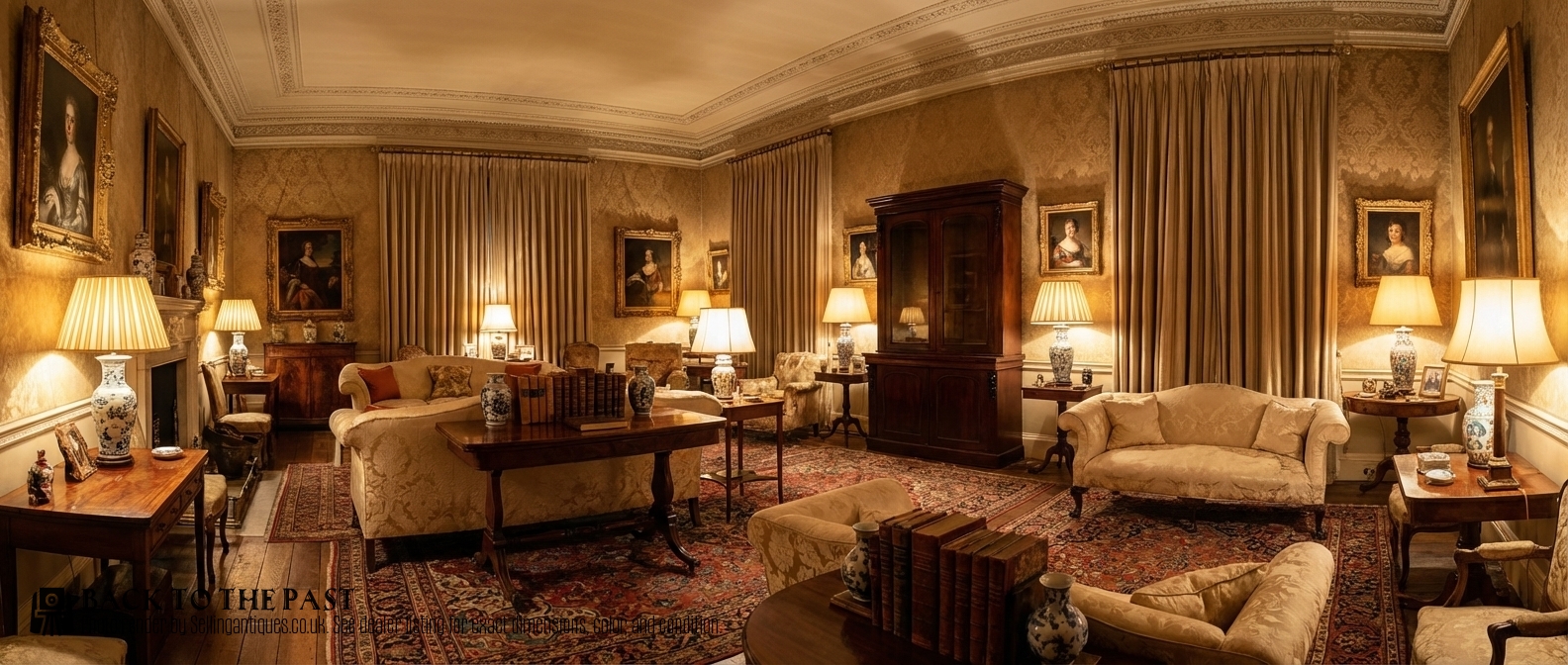
Carved Mahogany Book Cabinet
A carved mahogany book cabinet serves to store volumes while displaying collections behind glass doors or upon open shelves. When searching this phrase, you encounter forms spanning the Regency, Victorian, and Edwardian eras, alongside Georgian pieces and early 20th-century revivals.
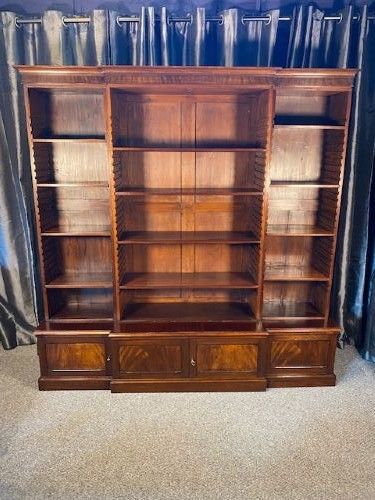
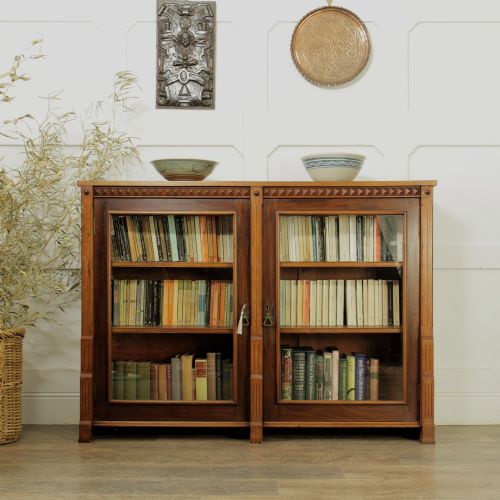
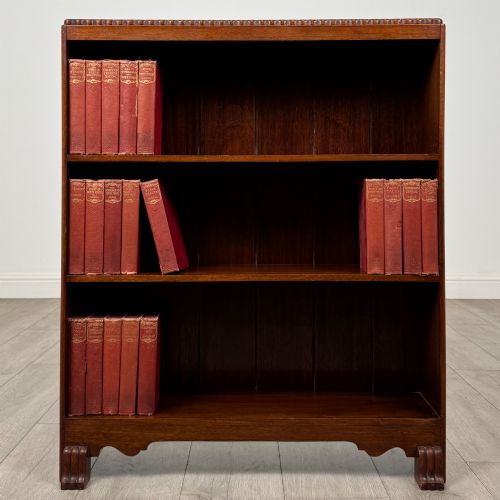
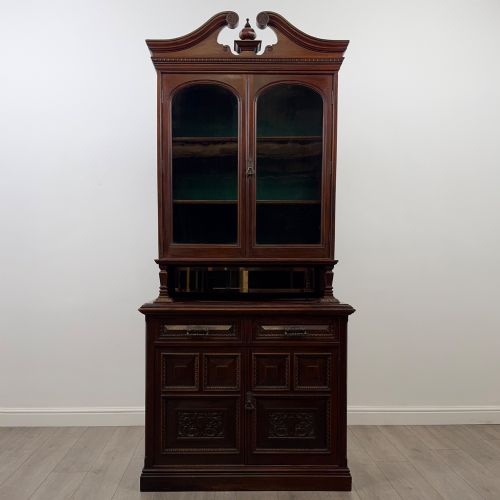
The pieces on this page appear as tall two-part library bookcases, narrow cabinets, open adjustable library shelves, and chiffoniers with open top tiers. Many incorporate glazed doors, while others remain entirely open for immediate access to books.
Makers such as Gillows and Shapland & Petter occasionally appear alongside unlabelled workshop pieces created in various regional centres. The predominant material is solid mahogany or flame mahogany veneer, often paired with glass, brass fittings, and occasional secondary timbers like oak.
Materials and construction methods
Cabinet makers utilised solid mahogany and flame mahogany veneers applied to structural carcass timbers such as oak. Timber selection dictated the visual weight of the cabinet, with figured grains chosen for prominent doors and panels.
Glazing bars divided large glass panes into geometric patterns on upper cabinet sections, whilst brass fittings secured doors and supported adjustable shelving. Carved details appeared along cornices, pilasters, and bracket feet, drawing upon Regency, Chippendale, and Arts & Crafts vocabularies.
Listings feature mahogany, glass, brass, rosewood, flame mahogany veneer, oak, metal, and paint across Victorian, Regency, Edwardian, and Georgian periods.
Judging quality and proportion
Quality rests upon the selection of timber figures, the crispness of carved wooden details, and the integrity of the cabinet joints. Pieces constructed with dense Spanish mahogany or well-matched flame veneer demonstrate superior workshop standards.
Proportion and functionality also separate standard cabinet work from finer examples, seen in smooth-running adjustable shelving systems and original brass hardware. The integration of glazed doors with secure locks reflects the care taken during initial construction.
Gillows·Shapland & Petter·Wylie and Lochhead Ltd
The Carved Mahogany Book Cabinet Glossary
- Flame mahogany veneer
- A decorative timber sliced from wood harvested at branch junctions to create a swirling flame pattern. This veneer was applied to primary surfaces like doors and drawer fronts.
- Glazing bar
- A narrow wooden strip forming the framework that holds individual panes of glass within a cabinet door. These bars divide large openings into smaller geometric lights.
- Chiffonier
- A low sideboard or cabinet often fitted with additional open book shelves on the upper tier. This hybrid form gained popularity during the Victorian period.
- Adjustable shelving
- Shelves supported on moveable pegs or ratchets allowing variable heights between tiers. This system accommodated volumes of differing sizes within library cabinets.
- Breakfront
- A cabinet facade where the central section projects forward from the flanking wings. This architectural arrangement creates depth and shadow across large library pieces.
Carved Mahogany Book Cabinet: Frequently Asked Questions
How do I date a mahogany bookcase?
Dating relies upon architectural styles, construction methods, and secondary timbers visible within the carcass. Pieces from the Regency era display classical restraint, whereas Victorian examples often incorporate heavier moulded cornices and deep plinths.
Hardware and glass characteristics also offer clues, with hand-blown cylinder glass and original brass locks pointing towards earlier periods. Comparing joinery techniques helps distinguish original Georgian and Regency work from later Edwardian revivals.
Are the shelves adjustable on these cabinets?
Many library bookcases and open cabinets feature adjustable shelving systems supported by wooden ratchets, metal pins, or brass tracks. This flexibility allowed owners to rearrange shelf heights for folios and smaller octavo volumes.
Some smaller or earlier pieces retain fixed shelves secured directly into the cabinet sides during initial workshop construction. Checking the interior uprights reveals whether the shelving height can be altered.
What is the difference between a cabinet bookcase and an open bookcase?
A cabinet bookcase incorporates enclosed upper sections with glazed or solid wooden doors to protect valuable texts from dust and light. These two-part pieces often feature a bureau section or enclosed cupboards beneath the main shelving.
An open bookcase lacks doors entirely, offering immediate access to the contents across fixed or adjustable tiers. These open variants served primarily in private libraries and studies rather than formal reception rooms.
How do I care for antique mahogany furniture?
Maintaining mahogany requires stable indoor humidity levels away from direct heat sources and strong sunlight that can fade timber tones. Regular dusting with a soft, dry cloth prevents particulate build-up upon carved surfaces and glazed panels.
Occasional application of appropriate wax polish nourishes the timber and preserves the natural lustre of the polished grain. Avoid silicone sprays or damp cloths which can degrade historic finishes over time.