
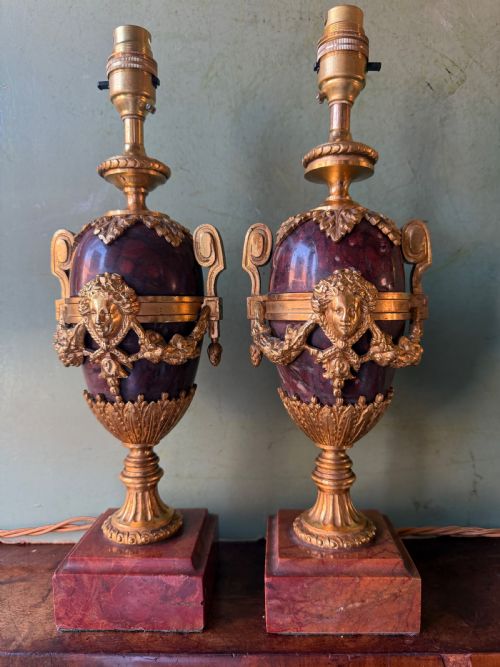
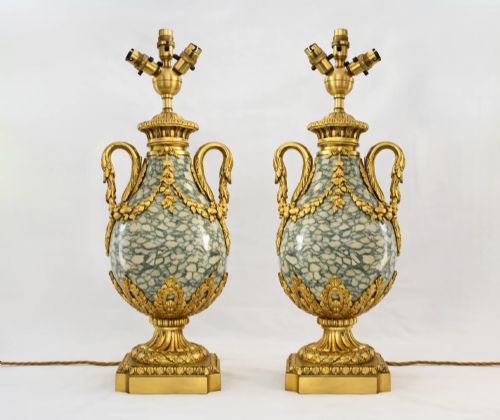


Ormolu Marble Table Lamps
Ormolu marble table lamps combine cast gilt metal with carved stone columns or urns, bringing nineteenth-century French design into domestic interiors.
Ormolu Marble Table Lamps
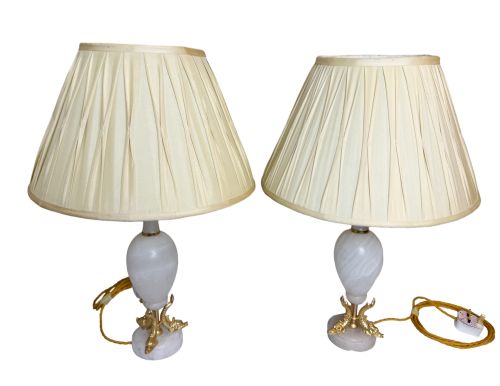
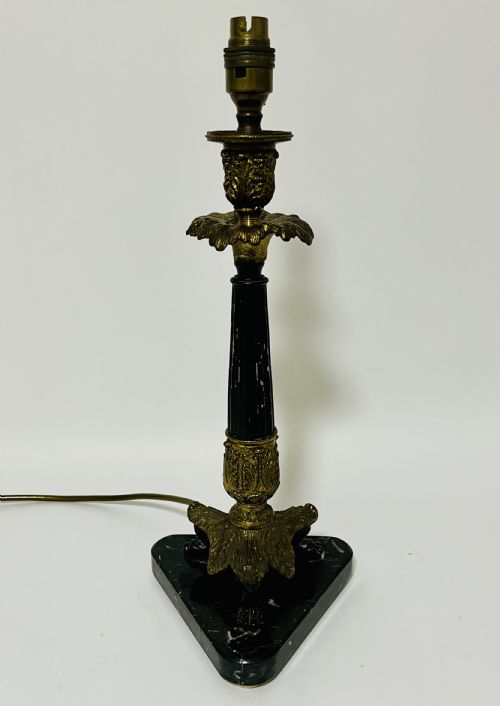
When searching for ormolu marble table lamps, buyers encounter decorative lighting and converted garnitures dating primarily from the nineteenth century. These items frequently originate from French workshops adhering to Neoclassical, Louis XVI, and Empire design principles.
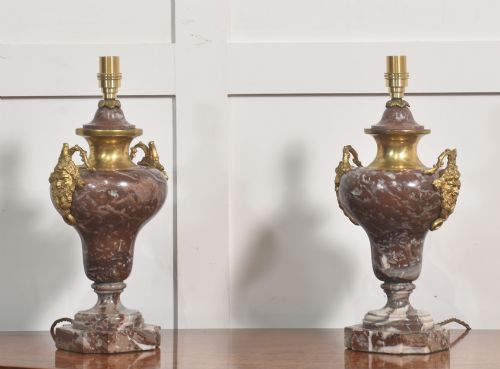
The dominant forms on this page include paired urns, cassolettes, and classical columns featuring contrasting stone bodies and metallic mounts. Many examples reflect revivalist movements spanning the Victorian era through the early twentieth century.
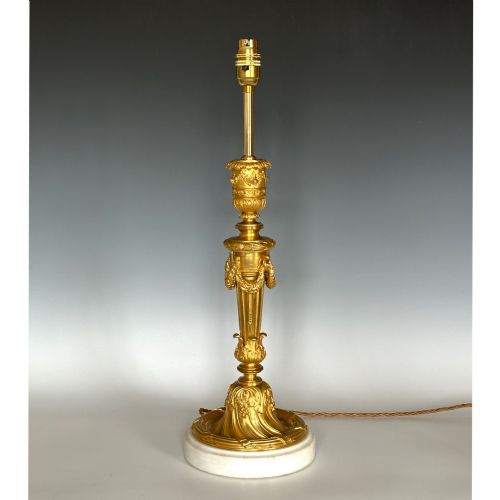
Makers often adapted earlier architectural urns or candelabras into functional lighting during subsequent decades, preserving the original silhouette while incorporating electrical wiring. Such pieces function as focal points on side tables, pedestals, and mantelpieces.
What varies in quality
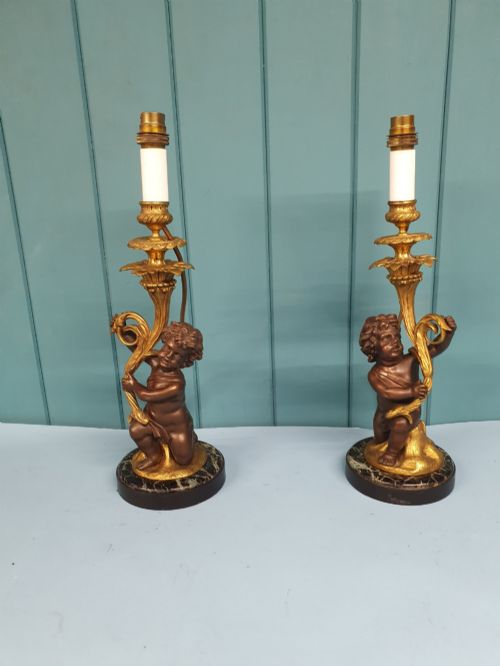
The standard of execution in the metal mounts distinguishes finer examples from simpler production, with superior pieces displaying deep chisel work and sharp definition in foliate or figurative ormolu details. Lower-tier items often feature softer casting marks and shallower surface chasing.
The selection and preparation of the stone body also dictate overall merit, as uniform mineral veining and flawless turning command greater regard than repaired fractures or heavily patched material.
Listings feature extensive nineteenth-century French manufacturing, utilising white, rouge, and Siena marble alongside cast ormolu and bronze.
The Ormolu Marble Table Lamps Glossary
- Ormolu
- Gilt bronze produced by applying a gold and mercury amalgam to cast bronze, which was then heated to drive off the mercury. This technique creates a durable, warm metallic finish characteristic of French decorative arts.
- Cassolette
- A dual-purpose decorative vessel featuring a reversible lid that transforms a covered urn into a candleholder or lamp base. These classical forms frequently incorporate stone bodies with decorative metal handles.
- Gueridon
- A small circular table often utilised as a support for lamps or decorative objects. Originating in seventeenth-century France, these tables frequently employ marble tops and gilt mounts.
- Neoclassical
- A style spanning the eighteenth and nineteenth centuries that draws inspiration from classical antiquity. It emphasises symmetry, restrained proportion, and architectural motifs such as acanthus leaves and fluting.
Ormolu Marble Table Lamps: Frequently Asked Questions
How do I clean ormolu marble table lamps?
Dust stone surfaces gently with a soft, dry cloth to prevent accumulation within carved recesses. Avoid abrasive cleaning agents or harsh chemical solvents that strip the historical gilding from the metal mounts.
For the ormolu components, a light application of microcrystalline wax protects the bronze surface without leaving residue. Professional conservation is recommended if deep tarnish or structural restoration becomes necessary.
Were these lamps originally electrified?
Most nineteenth-century examples began life as oil lamps, candelabras, or decorative garnitures before conversion to electricity during the twentieth century. Original wiring is rarely present on authentic antique pieces.
Conversion methods vary, with some past alterations utilising drilled channels through the stone and others employing discreet cord paths. Modern rewiring ensures compliance with contemporary electrical safety standards.
How can I identify French Louis XVI style?
Louis XVI style relies on strict geometric symmetry, straight tapered legs, and classical architectural vocabulary rather than the asymmetrical curves of earlier Rococo design. Look for motifs such as laurel wreaths, bead reels, and fluted columns.
Ormolu mounts on these pieces typically accentuate structural junctions rather than overwhelming the stone body. The overall visual effect prioritizes order and archaeological revival.
What is the difference between marble and onyx?
Marble is a metamorphic rock formed from recrystallized carbonate minerals, displaying dense crystalline structures and varied opaque veining. It provides heavy, stable foundations for tall lighting fixtures.
Onyx is a banded variety of chalcedony quartz that possesses translucent qualities when exposed to light. Pieces incorporating onyx often transmit a warm glow through the stone body.