
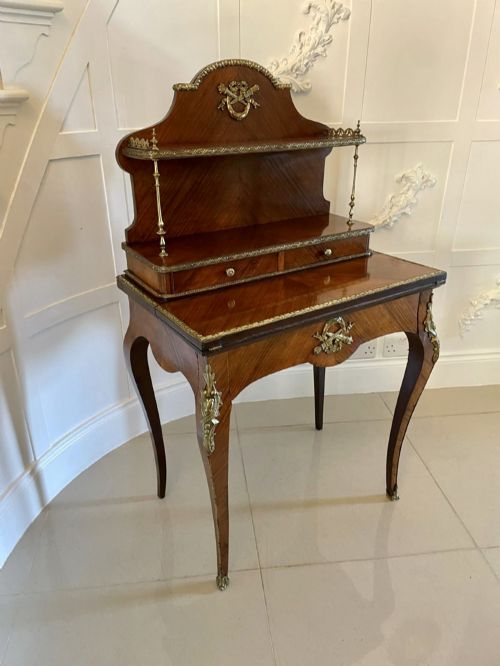
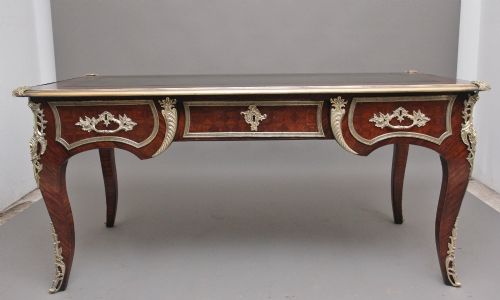
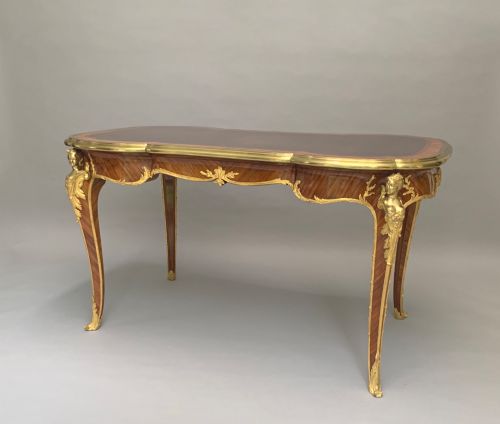
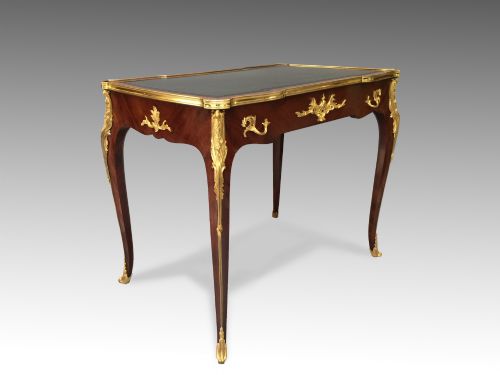
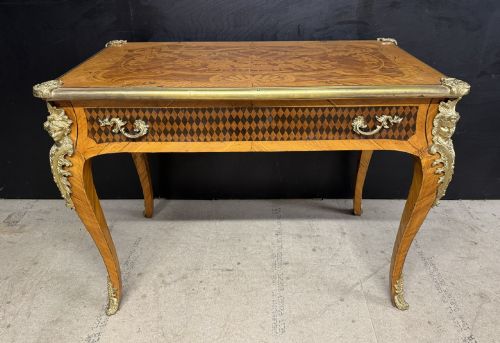
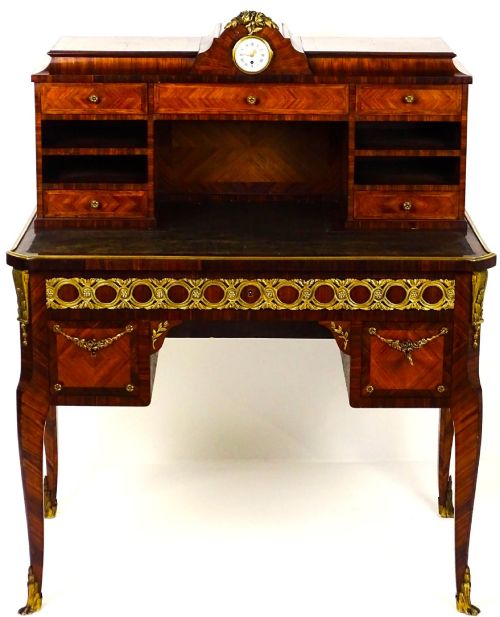
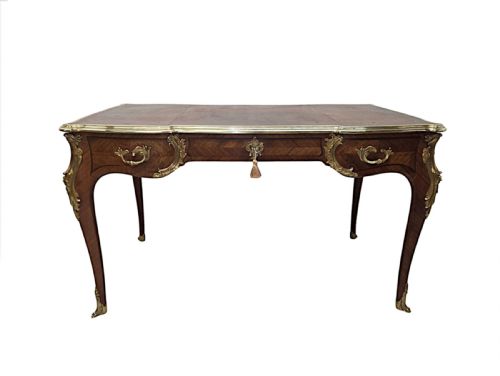
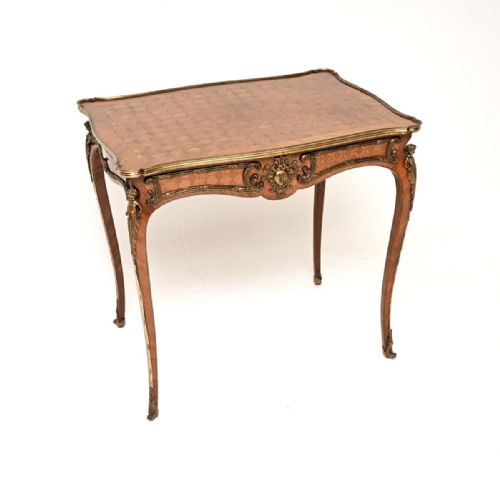
Ormolu Kingwood Writing Table
An ormolu kingwood writing table brings rich French cabinet-making traditions into a room through figured veneers and gilt cast bronze mounts.
Ormolu Kingwood Writing Table
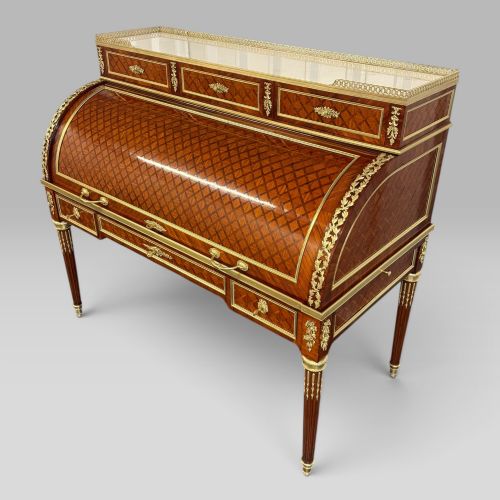
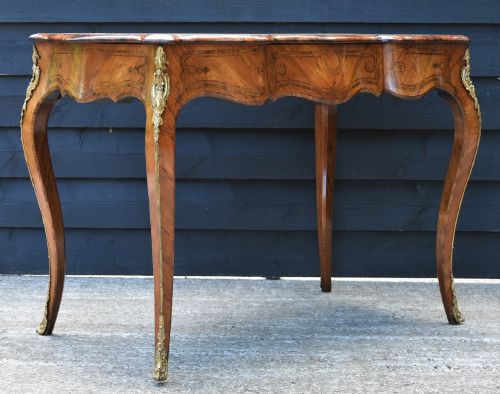
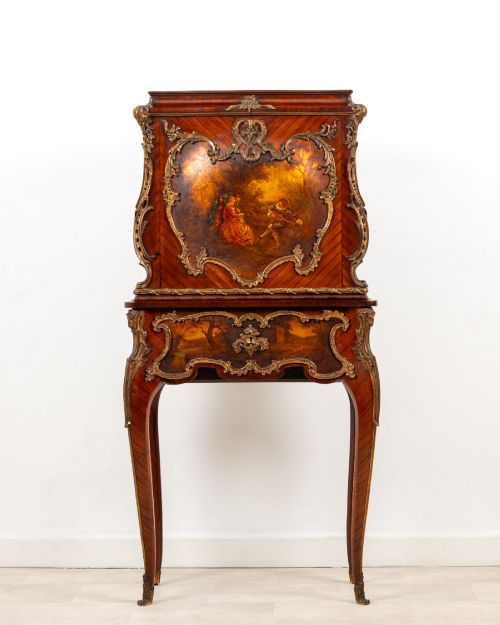
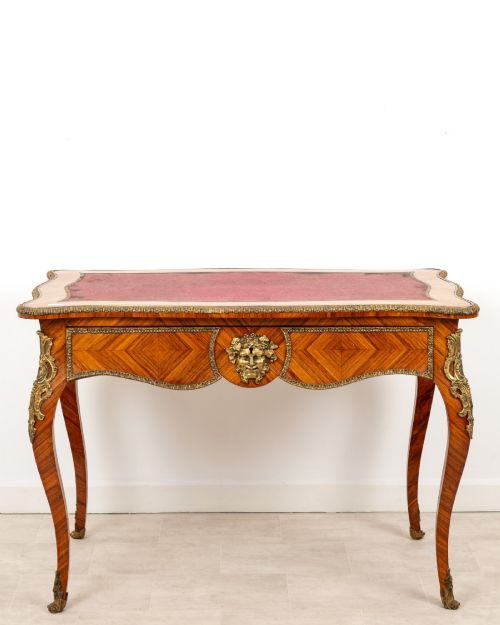
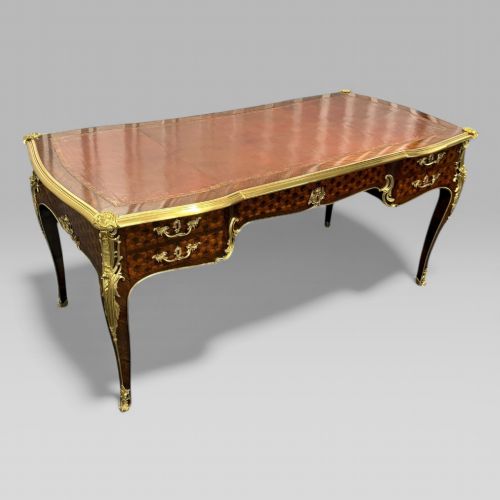
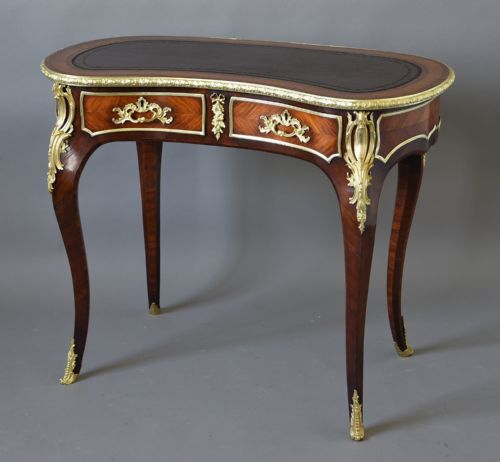
An ormolu kingwood writing table typically takes the form of a bureau plat, a bonheur du jour, or a kidney-shaped ladies desk drawing on French revival styles. These pieces function as freestanding desks, centre tables, or writing cabinets designed for display in principal rooms rather than office work.
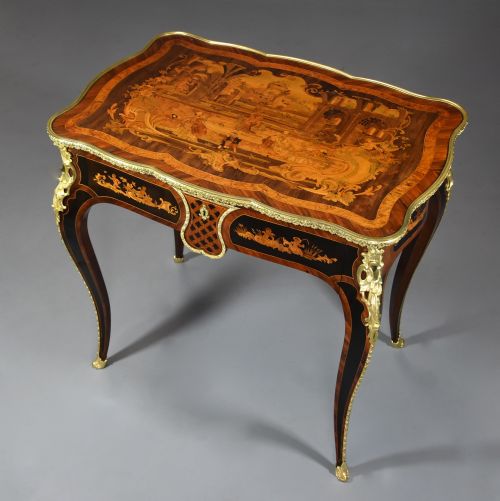
The evidence shows a strong concentration of 19th-century interpretations alongside mid-18th-century examples, adhering predominantly to Louis XV and Louis XVI aesthetics. Makers working in these periods adopted serpentine outlines, parquetry patterns, and applied porcelain plaques to elevate standard writing surfaces into decorative statements.
How they were made
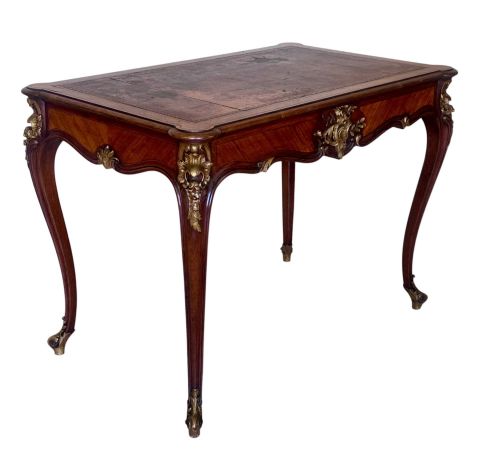
Cabinet-makers laid striking kingwood, rosewood, and tulipwood veneers in intricate marquetry or geometric parquetry patterns over heavier underlying timber carcases. These wooden surfaces were combined with leather writing inserts and detailed ormolu or gilt-bronze mounts cast and chased by hand.
Makers integrated structural bronze sabots, corner mounts, and banding to protect vulnerable edges while framing the wood grain. Certain models incorporated Vernis Martin panels or hand-painted porcelain plaques set directly into the desk superstructure.
Listings feature 18th-century origins alongside 19th-century revival periods, incorporating kingwood, tulipwood, porcelain, and leather.
What varies in quality
Quality rests in the crispness of the ormolu chasing and the depth of the timber figuring across the top and drawer fronts. High-end workshops employed thicker gilt bronze mounts with sharply defined details, whereas simpler pieces relied on shallower castings.
The precision of the marquetry layout and the integrity of the underlying carcase construction differentiate standard production desks from signed pieces by master makers like François Linke or Paul Sormani.
François Linke·Edwards & Roberts·Paul Sormani·CH. Jeanselme & Co·Millet
The Ormolu Kingwood Writing Table Glossary
- Ormolu
- Gilt bronze mounts applied to furniture. This technique involves coating cast bronze with gold amalgam to create a durable, golden finish that accents the wooden structure.
- Kingwood
- A dense, richly figured Brazilian timber prized for its violet-brown colouring and dark striping. Cabinet-makers used it extensively for veneering elaborate French desks.
- Bureau plat
- A freestanding writing table fitted with drawers across the frieze. These desks were traditionally finished on all sides so they could sit in the centre of a room.
- Bonheur du jour
- A light lady's writing desk featuring a small cabinet or shelving superstructure above the main writing surface. They appeared frequently during the 18th century and later revival periods.
- Parquetry
- Geometric wood inlay patterns resembling mosaics. Craftsmen arranged contrasting veneers like tulipwood and kingwood to create cubes, lozenges, and herringbone designs.
- Vernis Martin
- A simulated Japanese lacquer developed in France during the 18th century. It utilised multiple resin coats to produce glossy, translucent decorative panels.
Ormolu Kingwood Writing Table: Frequently Asked Questions
Where do I put a bureau plat?
A bureau plat is designed as a freestanding piece intended to sit in the middle of a study or drawing room rather than pushed against a wall. Its finished back and ornamented sides allow it to be viewed from any angle.
Ensure the surface receives indirect natural light to highlight the kingwood grain and gilt ormolu mounts without fading the leather insert.
How do I clean ormolu mounts?
Dust the gilt bronze regularly with a soft, dry brush to prevent dirt accumulation in the recessed areas of the casting. Avoid harsh metal polishes or liquids, which can strip the original gilding.
Professional conservation is recommended if the bronze requires deep cleaning or if the surface shows signs of verdigris.
Are these desks suitable for daily writing?
Many of these tables feature original or replacement leather skivers that provide a smooth, practical surface for writing by hand. The height and knee clearance match historical seating standards, though some smaller bonheur du jour models offer limited legroom.
Protect the leather and wood surfaces from spills and heavy moisture by using appropriate desk pads.
How can I tell a 19th-century revival desk from an 18th-century original?
Examine the construction methods visible inside the drawers, including dovetailing techniques and secondary timber choices such as oak or pine. Nineteenth-century revival pieces made by makers like Linke often display mechanical precision and heavier, crisper ormolu casting.
Compare the style of the mounts and the cut of the veneers against documented examples from the Louis XV and Louis XVI periods.