


Kingwood Fall Front Desk
A kingwood fall front desk brings rich quarter-cut veneers and concealed workspace into a room, offering both display space and a secure writing surface.
Kingwood Fall Front Desk
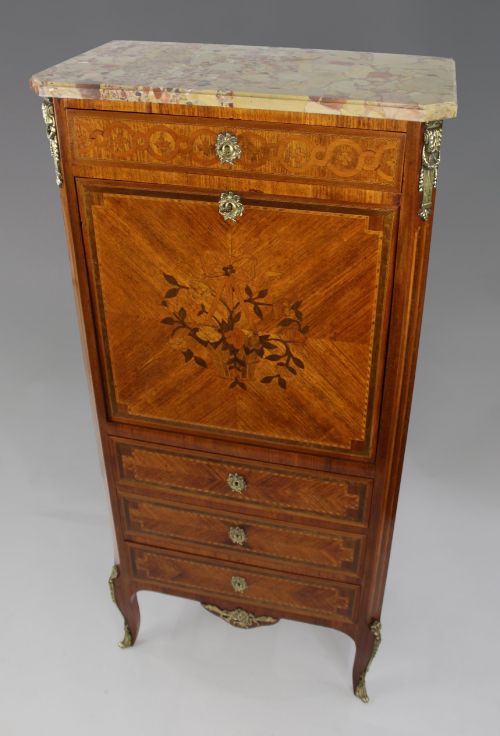
A kingwood fall front desk presents a vertical cabinet face that drops down to form a writing ledge, concealing internal compartments and small drawers. These pieces emerge chiefly from nineteenth-century French workshops influenced by Louis XV and Louis XVI revivals.
The form appears under several names in the evidence, including secrétaire abattant, escritoire, and bureau de dame. Most examples on this page date from the nineteenth century into the early twentieth century, spanning periods from Victorian to the nineteen-twenties.
Makers and cabinetmakers draw upon established continental styles, combining the slope-front writing surface with tall cabinetry. Buyers encounter variations ranging from grand marble-topped escritoires to smaller bureau de dame writing desks.
Assessing quality in construction and ornament
Quality rests upon the crispness of the ormolu mounts and the precision of the kingwood veneers. Finer pieces demonstrate careful matching of timber grains across the fall front and drawer fronts.
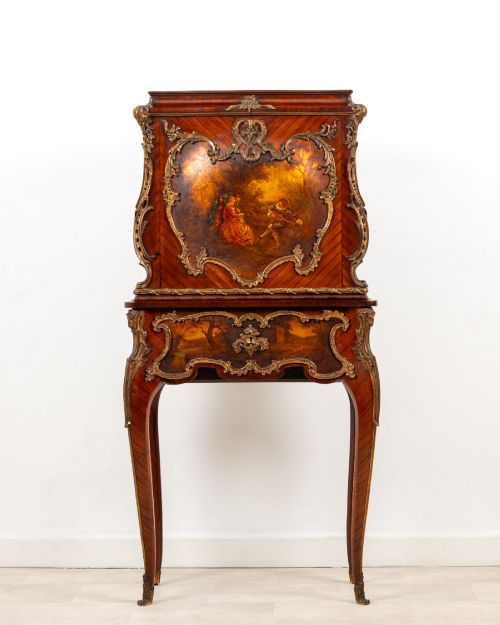
The integration of secondary materials, such as genuine marble slabs and hand-painted Vernis Martin panels, separates standard production from superior examples. The execution of interior stationery compartments further indicates the skill of the workshop.
Several desks manage to hide entire writing suites behind vertical panels that look like tall bookcases until you drop the front.
Blake, London·BVRB
The Kingwood Fall Front Desk Glossary
- Kingwood
- A dense, heavily figured South American timber prized for its rich brown colour and distinct darker striping. Cabinetmakers use it extensively for veneering fine French desks.
- Ormolu
- Gilded bronze ornamentation applied to the mounts, handles, and feet of nineteenth-century furniture. It provides bright metallic contrast against dark timber.
- Secrétaire à abattant
- A tall upright desk featuring a hinged fall-front writing flap. This French form conceals internal pigeonholes and small drawers.
- Vernis Martin
- A type of simulated Japanese lacquer developed in eighteenth-century France and revived later. It often decorates the lower panels of writing cabinets.
- Marquetry
- The art of applying pieces of veneer to a structure to form decorative patterns. Craftsmen utilise varied timbers to create pictorial or geometric designs on desk fronts.
Kingwood Fall Front Desk: Frequently Asked Questions
What is a fall front desk?
A fall front desk is a vertical cabinet with a hinged writing panel that folds down into a horizontal surface. This design keeps writing materials and correspondence hidden away when not in use.
Inside the drop panel, makers built small drawers and pigeonholes for stationery storage. The upright cabinet structure takes up less floor space than a traditional pedestal desk.
How do I identify the period?
Dating relies upon the revival styles, construction timbers, and mounting details recorded in the piece. Nineteenth-century examples frequently reference Louis XV or Louis XVI designs through their mounts and veneer work.
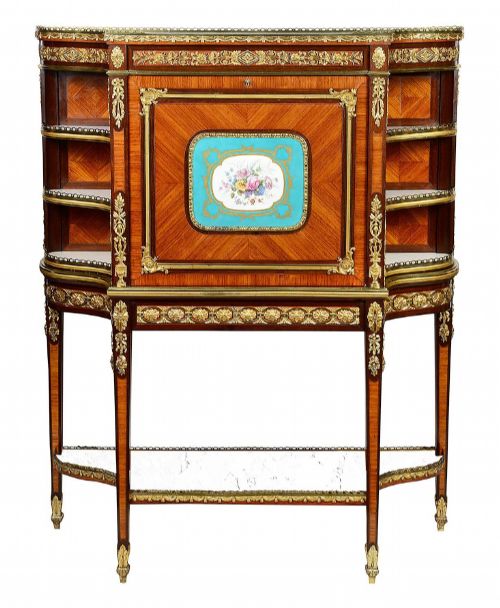
Materials like ormolu, marble tops, and porcelain plaques appear across specific decades of the Victorian era. Examining the interior secondary woods and joinery helps confirm the manufacturing timeframe.
Where should I place it?
These vertical writing cabinets suit reception rooms, studies, or bedrooms where floor space is limited. Their finished backs and decorative veneers allow them to stand against prominent walls.
Keep the timber away from direct sunlight and heat sources to protect the kingwood veneer and polish. The marble tops and gilt bronze mounts require only simple dusting with a soft cloth.