


Ormolu Hearth Chenets
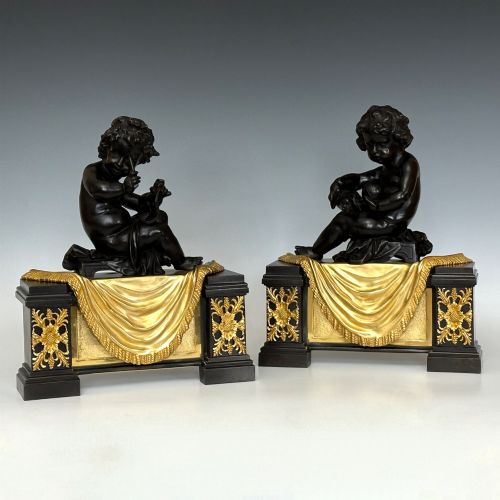
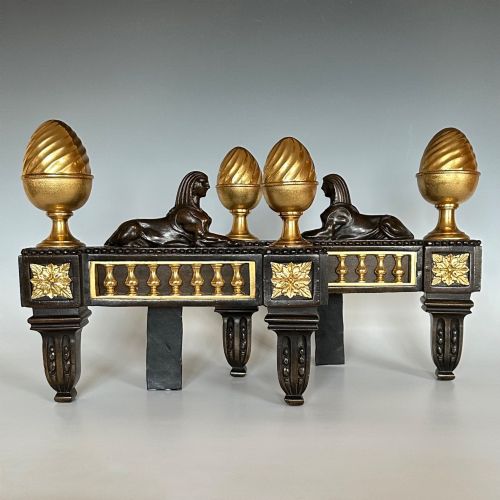
These ormolu hearth chenets are decorative fireplace furnishings that hold logs in place, bringing French styling and warm metallic highlights to a hearth.
Ormolu Hearth Chenets
When searching for ormolu hearth chenets, a buyer encounters heavy fireplace furnishings designed to support logs while elevating the aesthetic of a hearth. These metalwork items serve both a practical function for the fire grate and a decorative role within the room.
The versions most commonly met on this page span the eighteenth and nineteenth centuries, taking the form of figural andirons, fire dogs, and adjustable fender surrounds. Styles lean heavily towards French Rococo, Louis XIV and Louis XV revivals, and Regency designs.
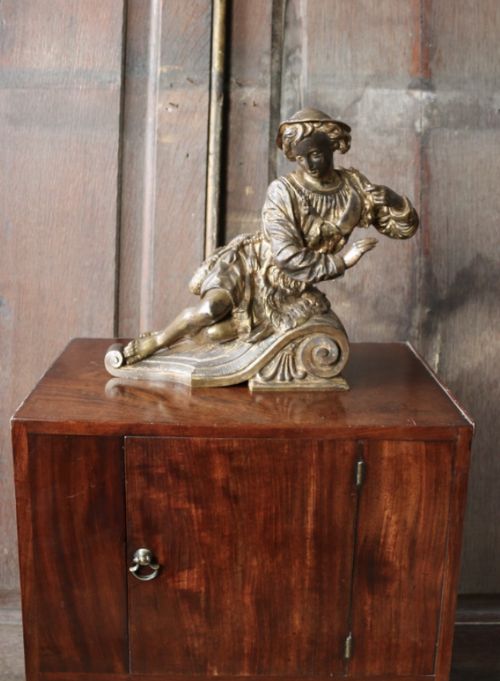
Originating largely from French workshops, these pieces often incorporate cherubs, scrolls, and sculptural figures alongside standard fire tool rests. Buyers find pairs constructed to flank the fireplace opening, balancing the visual weight of the hearth.
How they were made
The construction of these items relies primarily on cast bronze, iron, and brass, which provide the heavy structural foundation needed for a hearth. Artisans employed casting techniques to shape intricate figures, animal motifs, and scrolling supports.
Surface decoration involves ormolu, gilt bronze, and gilt brass, applying a layer of gold to the metal substrate to catch the firelight. Patinated bronze details are frequently combined with this gilding to create contrast between dark metallic tones and bright golden highlights.
The inventory records French Rococo Revival styles alongside Regency period designs and Louis XIV aesthetics.
What varies in quality
The depth and application of the gilding also separate the grades of metalwork. Thick, even ormolu retention across high-relief surfaces indicates a higher standard of manufacture compared to patchy or faded gilt finishes.
The Ormolu Hearth Chenets Glossary
- Ormolu
- A method of applying finely ground high-carat gold to a bronze object using a mercury amalgam. This technique creates a rich, warm golden surface finish that resists tarnishing near the hearth.
- Chenet
- A French term for an andiron or fire dog. These objects sit within the fireplace to support firewood and improve the draft.
- Patinated bronze
- Bronze that has been treated with chemical solutions to darken its surface colour. This dark tone provides visual contrast against the brighter gilded sections.
- Regency
- An English design period spanning the early nineteenth century. Pieces from this era often feature classical motifs influenced by ancient Greece and Rome.
- Rococo Revival
- A nineteenth-century design movement that emulates the asymmetrical curves, C-scrolls, and naturalistic shell motifs of the eighteenth-century French style.
Ormolu Hearth Chenets: Frequently Asked Questions
How were ormolu hearth chenets used?
These metal supports sat inside the hearth to hold logs slightly above the floor of the fireplace. This elevation improved air circulation beneath the wood to help maintain a steady fire.
Beyond their utility, they served as decorative centerpieces for the fireplace when no fire burned. Their gilded surfaces reflected ambient room light and the glow from the hearth.
What is the difference between chenets and andirons?
The words are largely interchangeable terms for the same hearth furniture. Chenet is the French term, while andiron is more common in English contexts.
Both refer to the decorative metal supports placed on either side of a fireplace grate. Some regional variations include integrated tool rests or adjustable fender bars.
How do I clean ormolu hearth chenets?
Gilded bronze surfaces require gentle dusting with a soft, dry cloth to remove soot and surface grime. Avoid abrasive cleaners or metal polishes that can wear away the thin layer of gold.
Moisture should be kept away from the metal to prevent corrosion on exposed iron or bronze sections. Professional conservation is recommended for deep cleaning.
How can I tell a Rococo Revival piece from an 18th-century original?
Nineteenth-century revival pieces often feature heavier casting techniques and standardised assembly methods suited to industrial-era production. They frequently exhibit the slight mechanical clean-up marks typical of later manufacturing.
Eighteenth-century examples tend to show hand-chiselling across the bronze surfaces after casting, reflecting the working methods of earlier metalworkers. Weight and the specific composition of the underlying bronze alloy also offer clues to the period.