



Ormolu Dressing Table
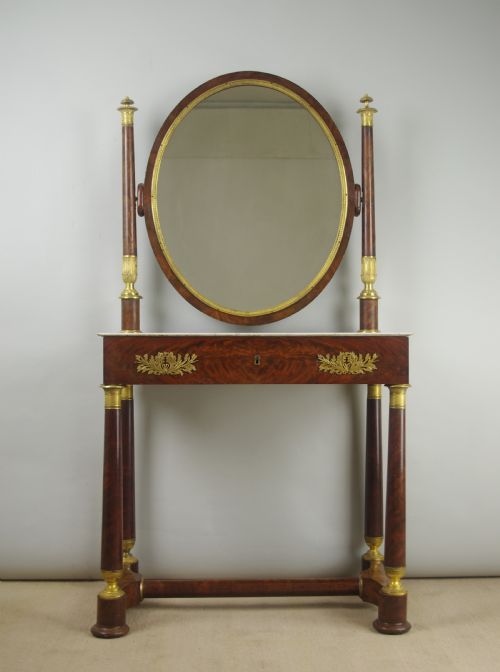
An ormolu dressing table brings nineteenth-century French elegance to a room through gilded bronze mounts and rich timbers.
Ormolu Dressing Table
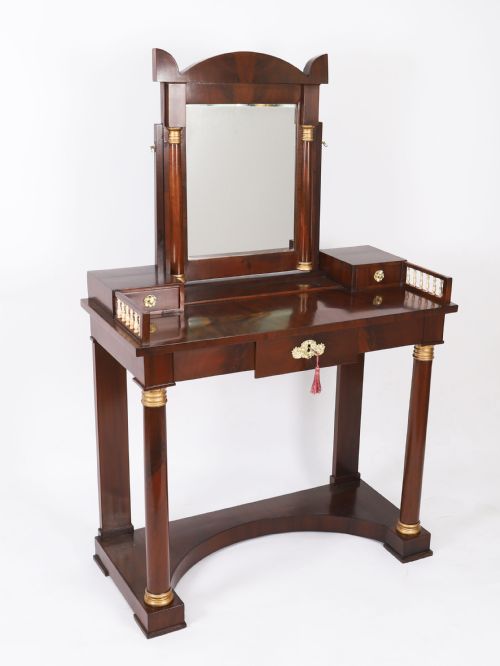
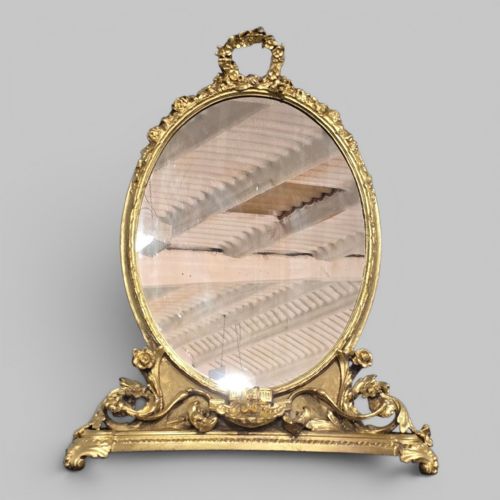
An ormolu dressing table combines a functional nineteenth-century vanity or poudreuse with decorative gilt-metal mounts, often paired with matching table mirrors or writing compartments.
Most examples found in these listings trace back to French workshops of the nineteenth century, spanning periods from the Empire and Charles X eras through to Napoleon III and Louis XVI revival styles.
The form varies widely from full dressing tables with mirrors to smaller poudreuses, work tables, and side tables fitted with secret compartments and ormolu details.
How they were made
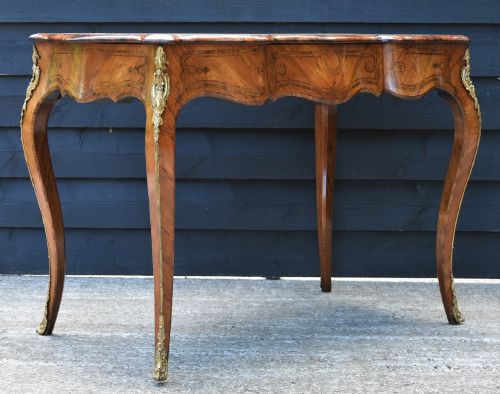
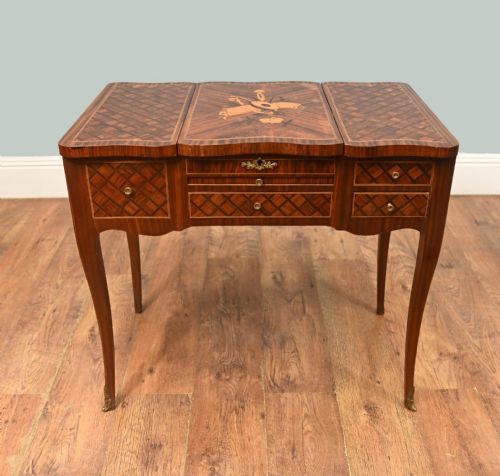
Cabinetmakers constructed the carcases using dense timbers such as mahogany, walnut, kingwood, and tulipwood, frequently adding intricate marquetry or satinwood inlay.
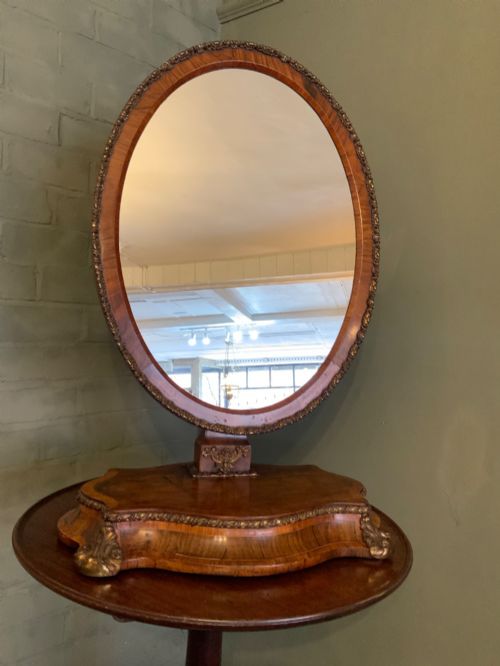
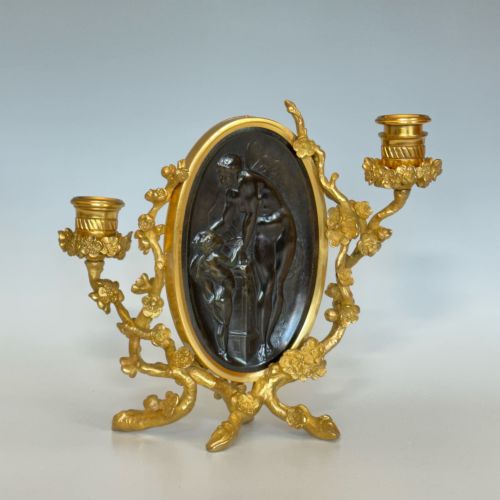
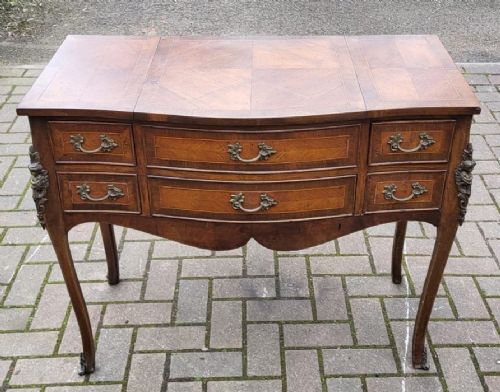
Craftsmen cast and gilt bronze to create the ormolu mounts, which were then meticulously fitted around drawers, legs, and mirror frames to accent the timber grain.
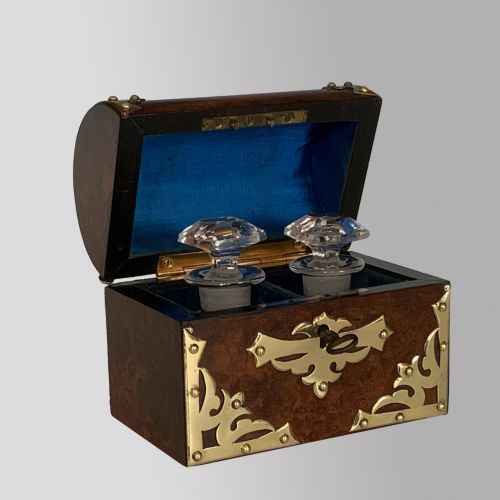
Many nineteenth-century dressing tables hide tiny velvet-lined compartments once meant for clandestine love letters and rouge.
What varies in quality
The crispness of the bronze chasing distinguishes superior ormolu mounts from simpler, flatter castings, while the depth and warmth of the original gilding indicate finer workshop output.
Cabinetwork quality shows in the precision of the marquetry, the seamless matching of wood veneers, and the substantial weight of the underlying mahogany or walnut carcase.
Thiebaut Freres·Maison Pretot Paris·Alphonse Tahan·Joseph Meissonnier·F.Bienvue
The Ormolu Dressing Table Glossary
- Ormolu
- Gilded bronze used for decorative mounts on furniture and decorative objects during the eighteenth and nineteenth centuries. The technique involves applying a mercury and gold amalgam to cast bronze before heating.
- Poudreuse
- A French dressing table or vanity equipped with folding lids, internal compartments, and a mirror for cosmetics. These pieces date frequently from the nineteenth century.
- Marquetry
- Decorative patterns formed by fitting contrasting veneers of wood into a prepared timber surface. Cabinetmakers utilised kingwood, tulipwood, and satinwood for these intricate designs.
- Champlevé
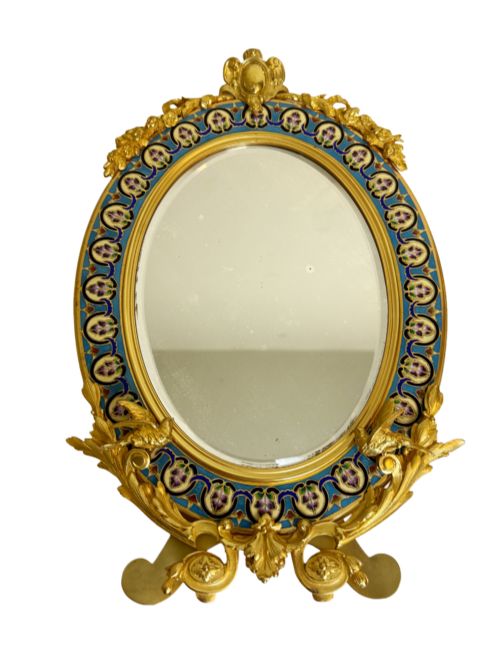
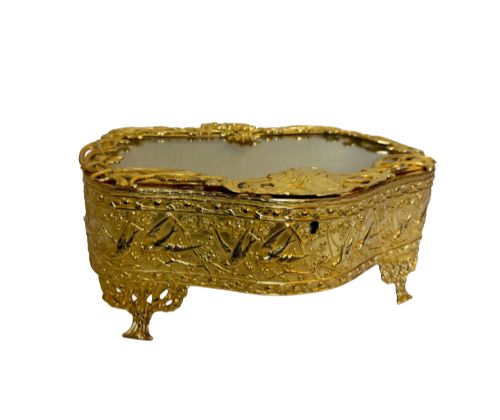
- An enamelling technique where troughs are dug into a metal surface and filled with vitreous enamel before firing. It appears frequently on nineteenth-century mirror frames and small boxes.
- Bonheur du Jour
- A light lady's writing desk featuring a small tiered superstructure with drawers or shelves above the main writing surface. They frequently incorporate ormolu mounts and delicate veneers.
Ormolu Dressing Table: Frequently Asked Questions
What is a poudreuse?
A poudreuse is a specialised nineteenth-century French dressing table designed with folding top panels that open to reveal a mirror and compartments for cosmetics and grooming tools.
These compact items often double as work tables or small desks, making them adaptable for modern living spaces as side tables or bedroom accents.
How do I care for ormolu?
Ormolu requires gentle dusting with a soft, dry cloth to prevent the accumulation of dirt within the chased recesses of the gilded bronze mounts.
Avoid commercial metal cleaners or abrasive cloths, as these can strip away the original fire-gilding and expose the base bronze metal underneath.
Where were these tables made?
The vast majority of these pieces originated in French workshops and Parisian cabinet-making houses during the nineteenth century. Makers utilised traditional regional timbers and classic revival styles.
Cabinetmakers drew inspiration from earlier Louis XVI and Empire designs, adapting them for nineteenth-century drawing rooms and boudoirs.
How do I identify a revival piece?
Nineteenth-century revival pieces combine eighteenth-century aesthetic vocabulary, such as Louis XV curves or Louis XVI symmetry, with the denser secondary timbers and machine-assisted construction typical of the period.
Examining the internal drawer linings and the joining techniques helps differentiate these nineteenth-century interpretations from original eighteenth-century furniture.