
Ormolu Console Table
When you search for an ormolu console table, you are looking at nineteenth-century furniture defined by gilded bronze mounts and rich timber frames designed for formal rooms.
Ormolu Console Table
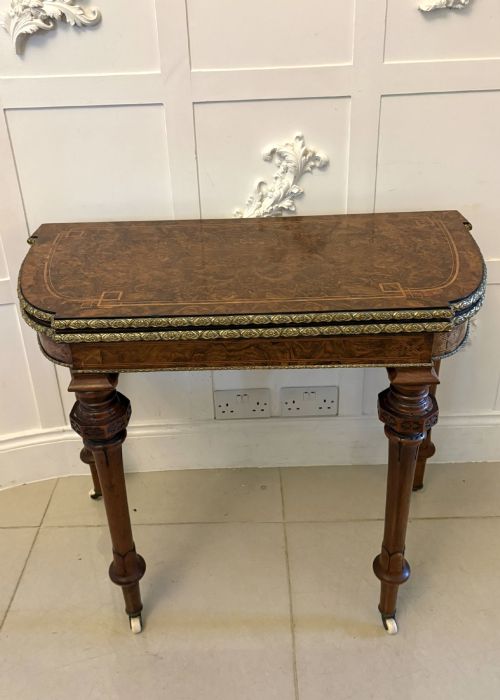
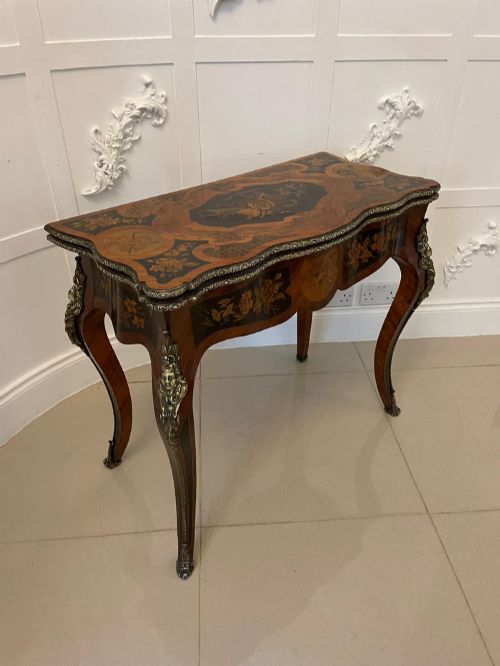
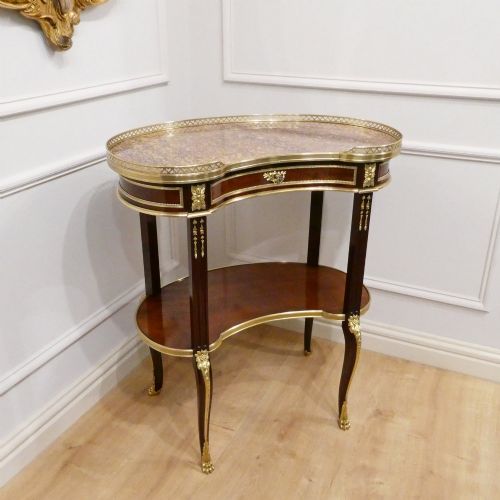
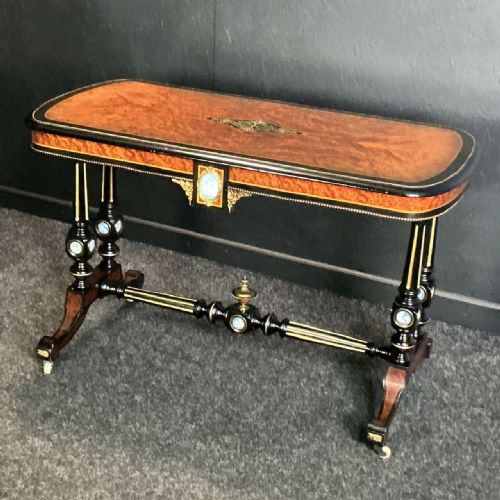
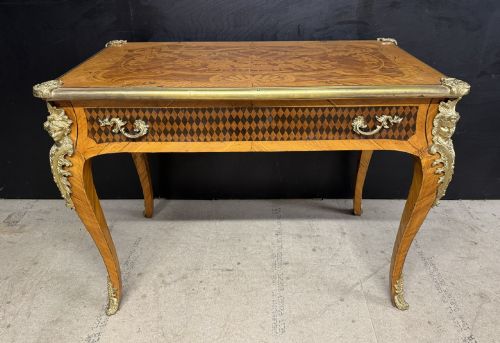
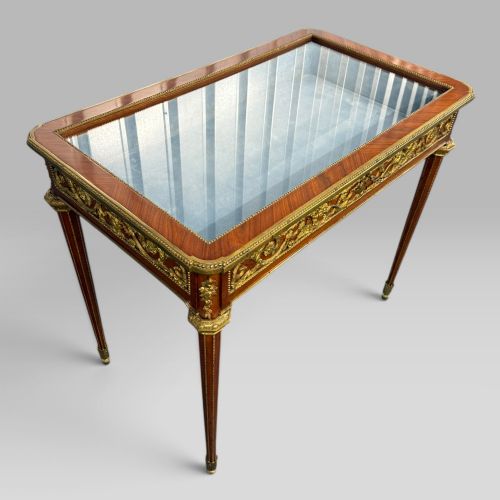
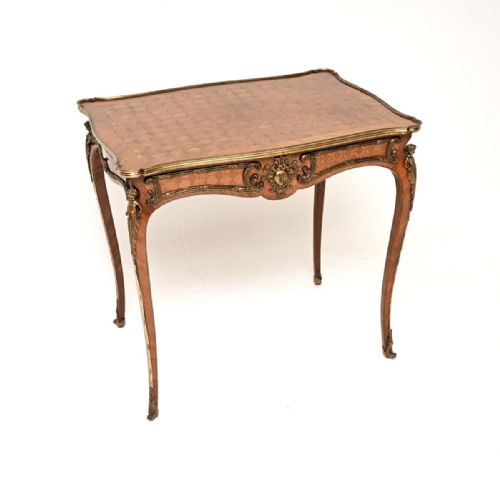
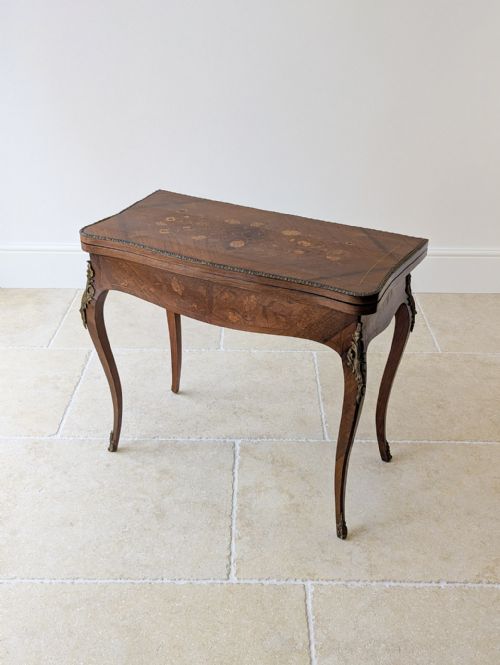
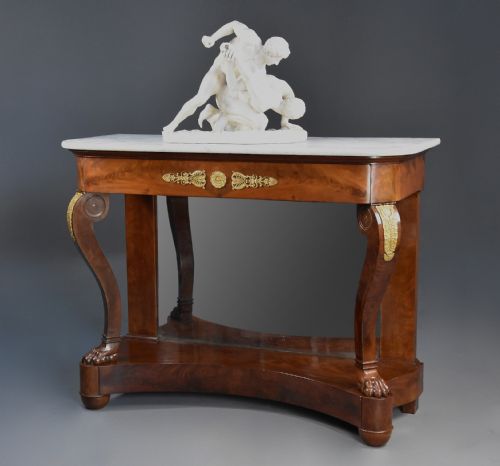
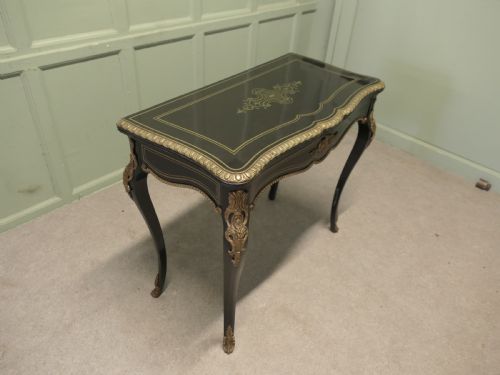
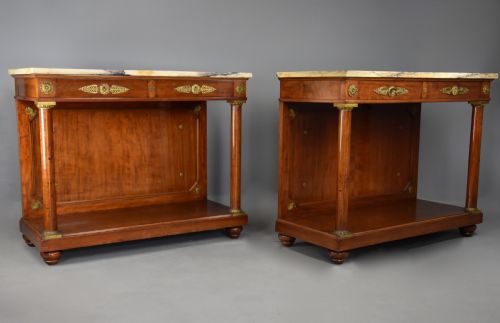
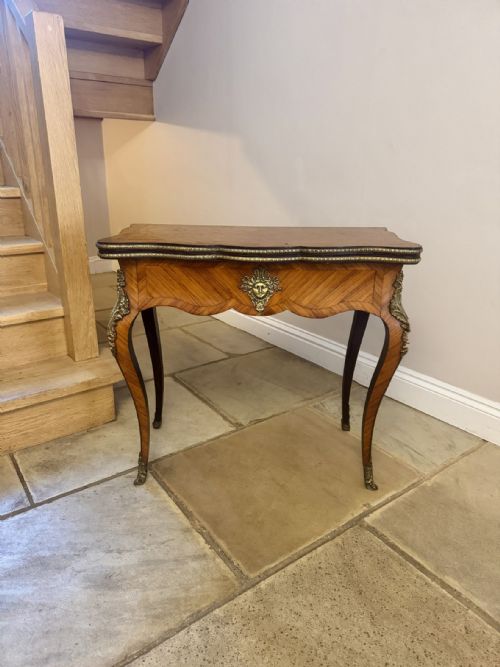
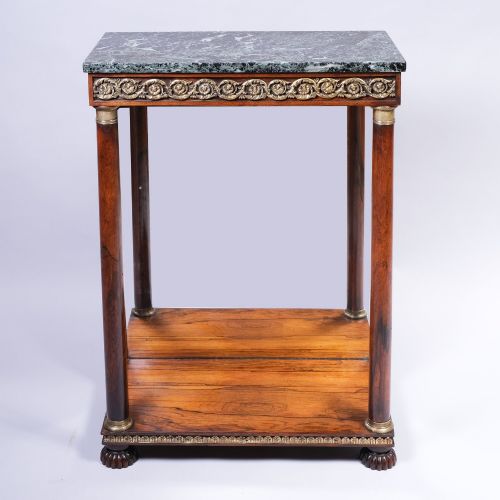
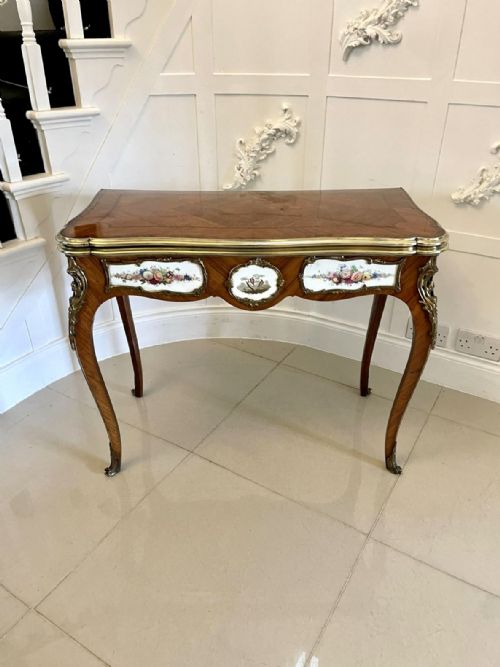
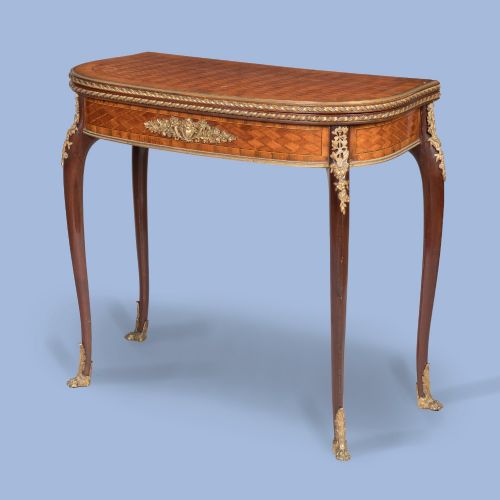
An ormolu console table combines a sturdy timber body with cast and gilded bronze ornaments, frequently featuring marble tops or folding surfaces for card and games use. The versions you meet most often on this page date from the nineteenth century, spanning Victorian interpretations and French revival styles.
Makers constructed these forms in mahogany, kingwood, walnut, and ebonised wood, often incorporating intricate marquetry or parquetry inlays. They served as decorative side furniture in grand interiors, designed to anchor against a wall or sit centrally within a reception room.
The selection ranges from French Empire designs to Louis XV and Louis XVI revivals, reflecting a widespread nineteenth-century enthusiasm for historical continental aesthetics. Many pieces double as card, games, or side tables, demonstrating the multi-functional nature of domestic furniture from the period.
How They Were Made
Craftsmen built the foundational carcasses using dense hardwoods like mahogany, walnut, and kingwood, frequently applying decorative veneers in geometric parquetry or floral marquetry patterns. Ebonised wood and satinwood also appear, providing contrasting dark or light surfaces for brass and ormolu applications.
The characteristic ormolu mounts consist of bronze cast by hand, chased to refine surface details, and then gilded. These metal elements were secured to the wooden frames around corners, aprons, and legs to accentuate the structural lines.
Marble tops, particularly white Carrara varieties, were cut and polished to fit precisely onto the wooden console bases. Joinery techniques included cross-banding and precise veneer matching, ensuring stable surfaces that supported the weight of stone and metal.
Listings feature nineteenth-century pieces spanning the Victorian era, the Second Empire, and revival movements inspired by Louis XV and Louis XVI aesthetics.
What Varies in Quality
The crispness of the bronze chasing separates standard mounts from exceptional examples, as sharp casting details require skilled handwork after the metal leaves the mould. Gilt surfaces retain depth and varied lustre when the original mercury or electroplated gilding remains intact.
Timber selection and veneer execution dictate the refinement of the body, with dense kingwood, burr walnut, and complex multi-timber marquetry indicating higher workshop ambitions. Secondary woods used internally and the tightness of the joinery reveal the underlying standard of construction.
The Ormolu Console Table Glossary
- Ormolu
- Gilded bronze used for decorative mounts on furniture, clocks, and decorative objects. The technique involves applying a gold amalgam to bronze and heating it to drive off the mercury.
- Marquetry
- A decorative technique where thin slices of various coloured woods, shells, or ivory are applied to a wooden structure to form pictorial or floral patterns. It differs from parquetry through its pictorial complexity.
- Parquetry
- Geometric wood inlay work arranged in repeating patterns such as cubes, lozenges, or squares. It provides a structured textural surface across tabletops and friezes.
- Console Table
- A table designed to stand against a wall, historically supported by wall brackets or decorative legs. Nineteenth-century versions frequently incorporated front legs while relying on the wall for balance.
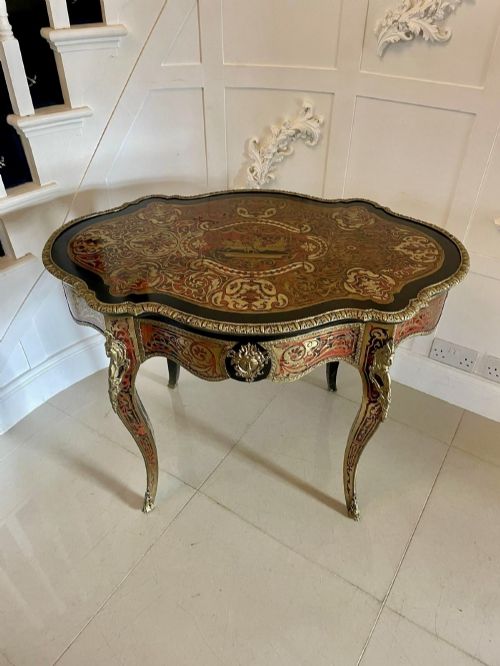
- Boulle
- A form of marquetry developed in France using tortoiseshell and brass inlaid together in contrasting positive and negative patterns. It takes its name from the master cabinetmaker André-Charles Boulle.
Ormolu Console Table: Frequently Asked Questions
What is an ormolu console table?
An ormolu console table is a decorative nineteenth-century table featuring a wooden frame adorned with cast and gilded bronze mounts. These pieces frequently incorporate marble tops or fold-over surfaces for versatile domestic use.
Craftsmen built them during periods like the Victorian era and the French revivals, drawing on earlier royal styles. They functioned primarily as decorative furniture placed against walls in formal reception rooms.
How do I tell Louis XV and Louis XVI styles apart?
Louis XV style furniture relies on asymmetrical curves, cabriole legs, and naturalistic rococo ornamentation. The lines flow organically without rigid symmetry.
Louis XVI style shifts toward classical restraint, featuring straight tapered legs, fluting, and geometric symmetry. Ormolu mounts on Louis XVI pieces often incorporate urns, ribbons, and neoclassical motifs rather than scrolls.
Were these tables used for dining?
These tables served primarily as display furniture, side tables, or occasional gaming surfaces rather than dining tables. Many examples open up to reveal green baize for card games.
Their narrow proportions and delicate veneered or marble surfaces suited them for holding ornaments, lamps, or serving drinks in drawing rooms.
How should I care for an ormolu console table?
Protect the timber and ormolu mounts by keeping the table away from direct sunlight and sudden temperature fluctuations. Dust the surfaces regularly with a soft, dry cloth.
Avoid commercial metal cleaners on the ormolu, as abrasive compounds can strip the historic gilding. Consult a professional conservator for deep cleaning or timber maintenance.