


Walnut Marquetry Games Table
A walnut marquetry games table brings intricate floral veneers and clever folding surfaces together for cards, chess, and sewing in one piece.
Walnut Marquetry Games Table
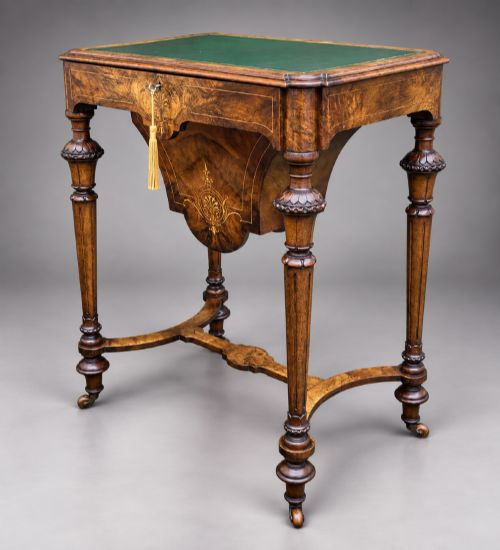
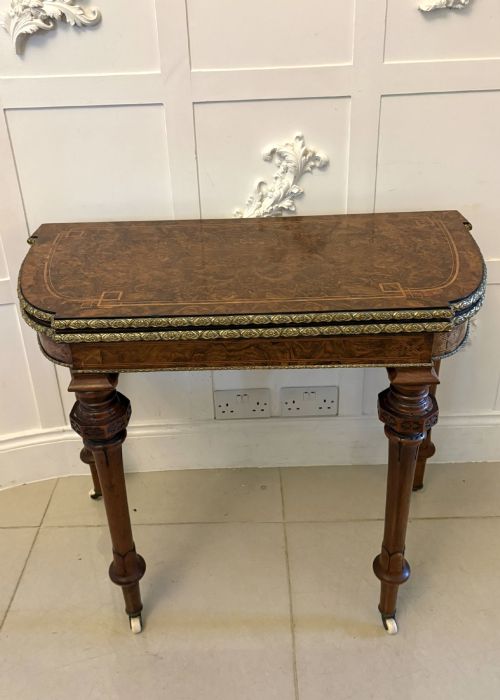
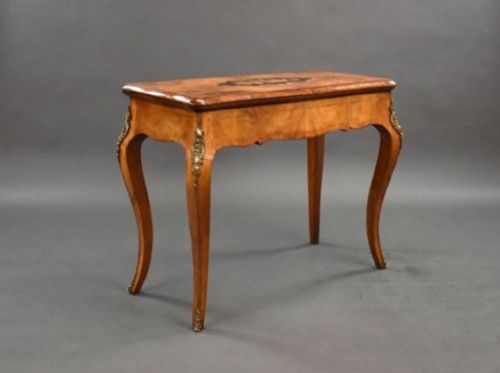
A walnut marquetry games table is primarily a Victorian creation, heavily represented on this page by 19th-century burr walnut card and work tables featuring inlaid floral patterns. These pieces were designed for drawing rooms, serving as occasional console tables that fold open to reveal baize-lined playing surfaces or fitted interiors for chess and sewing.
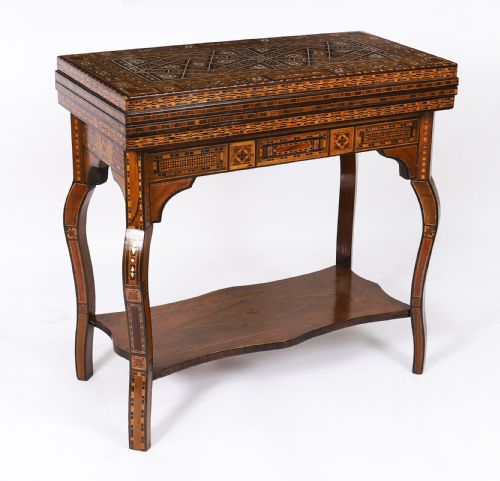
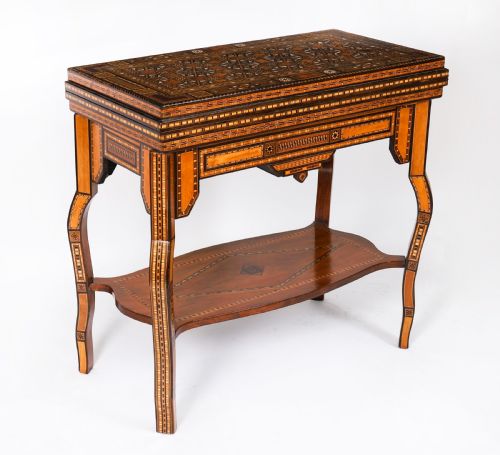
Beyond the standard Victorian examples, the selection includes Dutch Baroque and 18th-century pieces displaying elaborate floral marquetry, alongside French Rococo Revival and Louis XV style tables with ormolu mounts. Collectors also encounter Syrian Ottoman and Levantine pieces featuring intricate geometric bone and wood inlay for backgammon and chess.
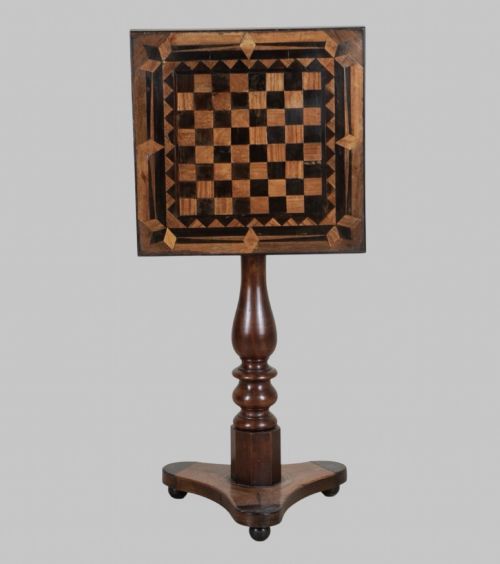
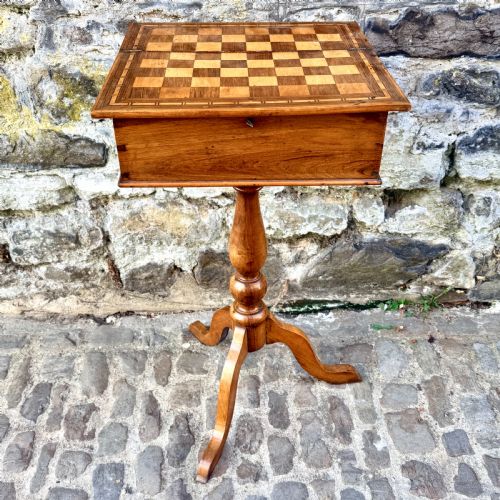
Most items function as multi-purpose furniture, combining card playing with sewing storage or writing compartments. The forms range from tripod pedestal bases and pillar tables to fold-over console tables and compact work tables.
Materials and Technique
The foundation of these tables relies on walnut and burr walnut, chosen for their rich grain and figured movement, often accented with exotic wood inlays like tulipwood, kingwood, and fruitwood. Marquetry inlay techniques involve cutting fine veneers of contrasting woods and sometimes bone to create detailed floral, foliage, or geometric patterns across the top and sides.
Metalwork plays a structural and decorative role, with ormolu mounts and gilt bronze highlighting the curves of French and Victorian designs, while brass hinges secure the folding leaves. Secondary materials such as maple and ebonised wood provide structural contrast within the frames and interiors.
Materials span burr walnut, ormolu mounts, fruitwood marquetry, and bone inlay across card, chess, and sewing table forms.
Assessing Quality
The distinction between ordinary and superior pieces rests on the crispness of the marquetry and the choice of veneer, where highly figured burr walnut and dense floral inlay command greater attention. The precision of the cabinetmaking shows in the alignment of the fold-over top, the seamless integration of hinged leaves, and the complexity of fitted interiors containing chess boards and sewing wells.
Maker attribution and decorative hardware elevate certain examples, particularly when matched with fine ormolu mounts, intricate Tunbridge Ware banding, or specialised multi-game boards. Tables that retain their original fitted compartments and stable folding mechanisms without warping represent the upper tier of the craft.
Gillows
The Walnut Marquetry Games Table Glossary
- Marquetry inlay
- A decorative technique where small pieces of contrasting wood veneer are fitted together to form pictorial or geometric designs. This differs from simpler inlay by covering the entire surface in a mosaic pattern.
- Burr walnut
- A prized timber harvested from walnut tree growths, known for its swirling, highly figured grain patterns. It provides a rich, textured background for floral marquetry tops.
- Ormolu
- Gilded bronze used for decorative mounts, feet, and edge banding on 19th-century furniture. It adds metallic contrast to the dark walnut timber.
- Tunbridge Ware
- A distinct type of British wood mosaic decoration made from thousands of tiny tinted wood blocks arranged to form geometric or floral pictures. It frequently appears as decorative banding on Victorian table edges.
- Fold-over top
- A hinged table surface that opens outward to double its size, revealing a baize or felt-lined playing area beneath. This mechanism allows a console table to transform into a card table.
Walnut Marquetry Games Table: Frequently Asked Questions
What is a walnut marquetry games table used for?
These tables served multiple functions in the 19th-century drawing room, acting as decorative console pieces that could quickly transform for card games, chess, or backgammon. Many doubled as work tables, incorporating fitted interior compartments for sewing and needlework.
By folding open the top leaf, a compact side table became a sturdy surface for evening entertainment. The integration of storage wells allowed owners to keep gaming pieces and sewing accessories neatly contained within the furniture itself.
How do you tell Victorian tables from Dutch 18th-century examples?
Victorian walnut marquetry tables typically feature burr walnut veneers with refined floral sprays, often mounted on pillar and tripod bases or sophisticated cabriole legs. They date from the mid to late 19th century and lean towards French revival or English parlour styles.
In contrast, 18th-century Dutch pieces generally display dense, pictorial marquetry covering the entire body, sometimes including dog-eared corners and heavier, darker walnut carcases. The overall silhouette and the specific species of secondary woods help pinpoint the geographical origin and era.
Are Syrian and Levantine games tables different from European ones?
Syrian and Levantine tables constructed in the 19th and early 20th centuries rely on distinct geometric wood and bone inlay rather than floral wood marquetry. They frequently incorporate multi-game boards for backgammon and chess into Damascene designs.
These pieces showcase Arabic and Damascan craftsmanship, utilising intricate mosaic patterns made from contrasting light and dark materials. Their construction reflects Middle Eastern joinery traditions distinct from contemporary Victorian workshop methods.
How should I care for a burr walnut games table?
Burr walnut veneer requires stable indoor humidity and protection from direct sunlight to prevent the thin decorative woods from drying out or splitting. Gentle dusting with a dry cloth keeps the surface clean without stripping the historic finish.
When opening fold-over tops or lifting interior compartments, support the moving parts evenly to avoid stressing the antique hinges and joints. Avoid placing damp items or hot cups directly on the polished walnut surface.