



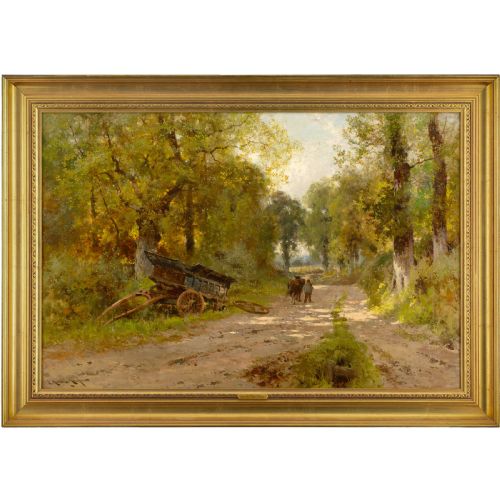
Original Victorian Landscape Art
Original victorian landscape art brings the fields, rivers and coastlines of the nineteenth century into a room through the hands of period painters.
Original Victorian Landscape Art
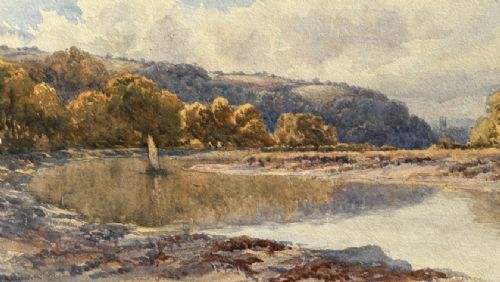
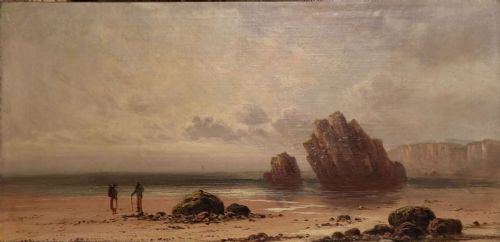
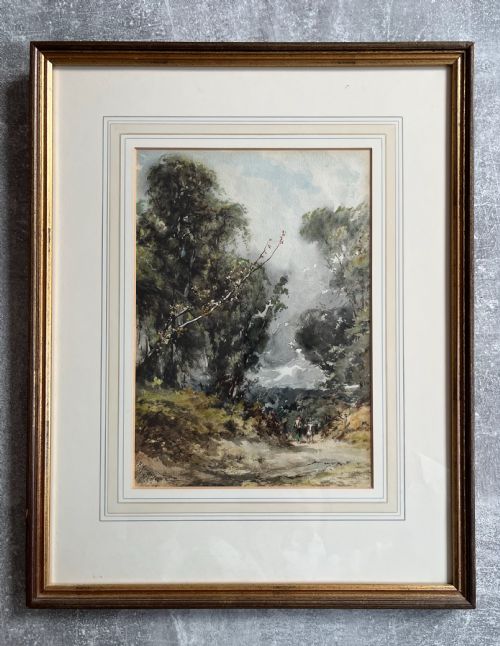
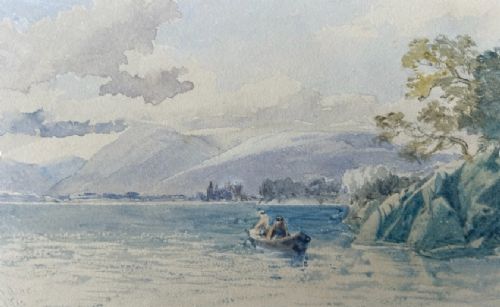
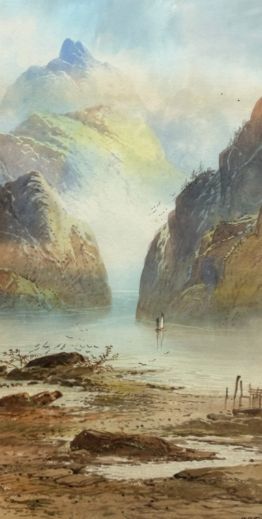
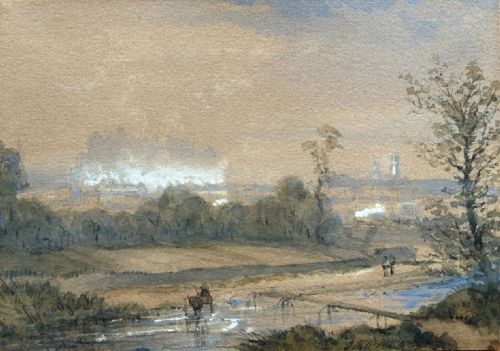
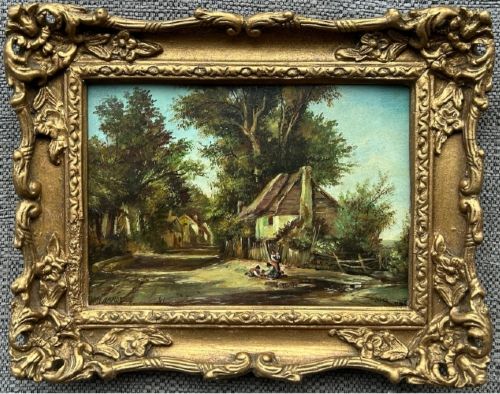
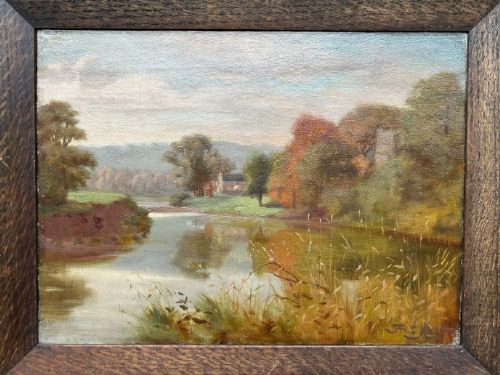
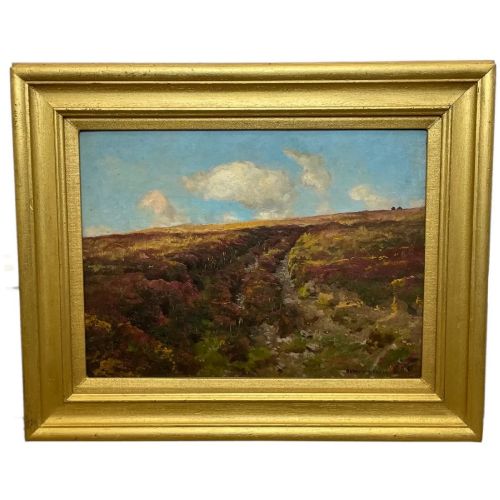
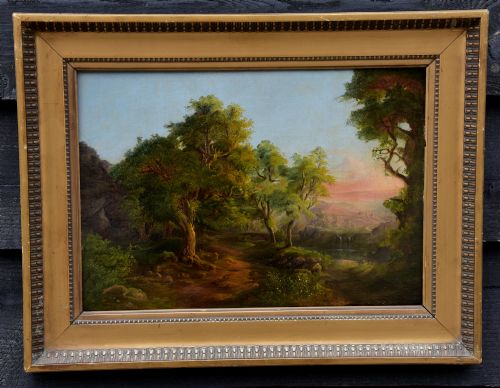
Original victorian landscape art captures the natural scenery, rural farms, rivers and coastal views produced during the nineteenth century and the early twentieth century. Buyers seeking this style will encounter framed works created by named artists working in oil and watercolour.
The selections span mid to late nineteenth-century romanticism, pastoral scenes, realism and early tonalism. Most examples depict British countryside, Scottish rivers, coastal harbours and continental scenes.
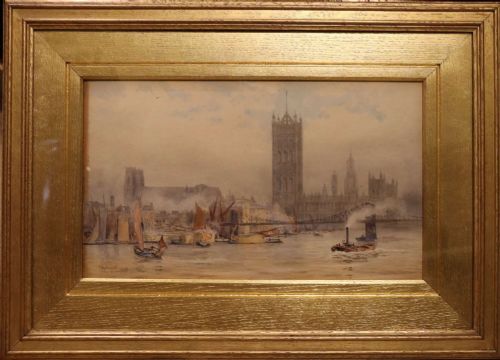
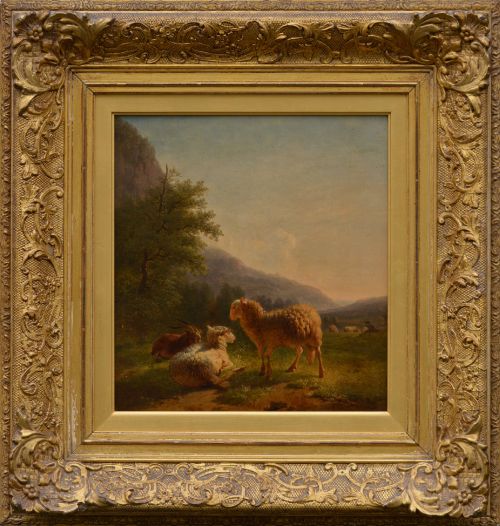
Works appear on canvas, paper, wood panels and boards, often preserved in original giltwood frames. The subjects range from quiet woodland paths and river banks to bustling rural markets and pastoral farming life.
Materials and techniques
Artists painted primarily with oil on canvas, wood panels and board, or applied watercolours onto heavy paper sheets. These mediums allowed painters to capture changing light across skies, water and foliage.
Framing often involved carved gilt wood and plaster frames that complemented the tonal depth of the paintings. Charcoal drawings on paper and canvas also appear, showing tonal influences characteristic of the period.
Listings feature nineteenth-century and early twentieth-century works, spanning Victorian and Edwardian periods through oil, watercolour and charcoal.
What determines quality
Quality rests in the artist's ability to handle light, atmosphere and perspective within the natural scene. Works by recognised Royal Academy exhibitors or listed nineteenth-century painters display superior brushwork and compositional balance.
The preservation of the original surface, pigment stability and the presence of a period giltwood frame contribute to the desirability of a piece. Finer works capture specific geographical locations with distinct atmospheric moods rather than generic formulas.
Eugène Verboeckhoven·Thomas Miles Richardson Jnr·James Orrock·William Henry Earp·John R Prentice·Alfred Young Nutt·William Howard Hardy·Frederick Marriott·Arthur Wardle·John Horace Hooper·John McDougal·Alfred Fontville de Breanski Jr·William Banks Fortescue·Thomas W Lascelles·Robert A Nottingham·David Bates·Alfred Pollentine·Robert W Macbeth·Th Thibault·Francis Moltino·Hector Caffieri·Thomas Sidney Cooper·Ernest Arthur Rowe·Frederick James Kerr·Albert Rieger
The Original Victorian Landscape Art Glossary
- Oil on Canvas
- Pigment mixed with drying oil applied to a stretched woven fabric support. This traditional medium allowed artists to build rich textures and deep tones.
- Watercolour
- Pigment ground in a water-soluble binder applied to paper. It created transparent washes of colour ideal for light-filled skies and river views.
- Giltwood
- Wood carved and coated with gold leaf or gold paint. Frames of this material defined nineteenth-century presentation.
- Pastoral
- Art depicting country life, farms, shepherds and agricultural landscapes. These scenes emphasised peaceful rural existence.
- Tonalism
- A style focusing on shadow, atmosphere and subdued shadow rather than sharp detail. It created moody, evocative landscapes.
Original Victorian Landscape Art: Frequently Asked Questions
How do I care for antique watercolours?
Keep watercolours away from direct sunlight to prevent the pigments from fading over time. Ensure they hang in rooms with stable humidity to protect the paper.
Use UV-filtering glass when framing works on paper to provide an extra layer of conservation. Professional framing protects the sheet from touching the glass directly.
Were these paintings always framed?
Most finished nineteenth-century landscapes received contemporary gilt wood frames chosen by the artist or gallery. These housings formed an integral part of the finished presentation.
Original frames show period construction techniques like corner mitres and plaster mouldings. Surviving with the original frame enhances the historical context of the artwork.
What subjects are most common?
Rural scenes featuring rivers, woodland paths, farm animals and shepherds dominate the available selection. Coastal views of harbours and fishing boats also appear frequently.
Scottish and English countryside locations remain the primary geographic subjects recorded by nineteenth-century painters. Continental scenes like Venetian canals also feature among the works.
How do I identify the date?
Dates often appear written on the reverse of the canvas, board or paper, or inscribed alongside the artist signature. Contemporary exhibition labels attached to the frame provide further evidence.
Stylistic markers such as nineteenth-century romanticism or Edwardian tonalism help narrow the creation window. Costume details on figures within the landscape also date the production period.