
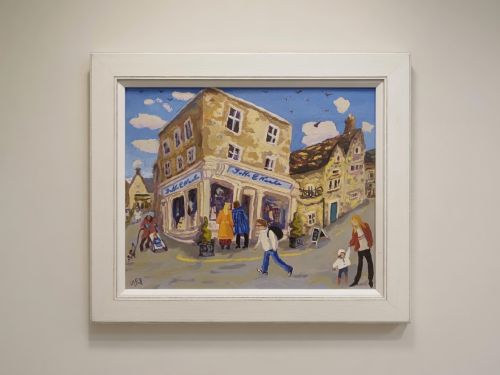
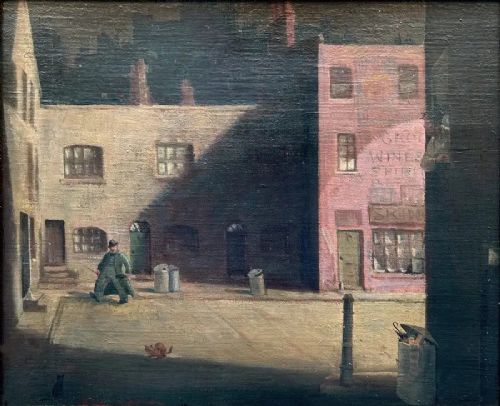
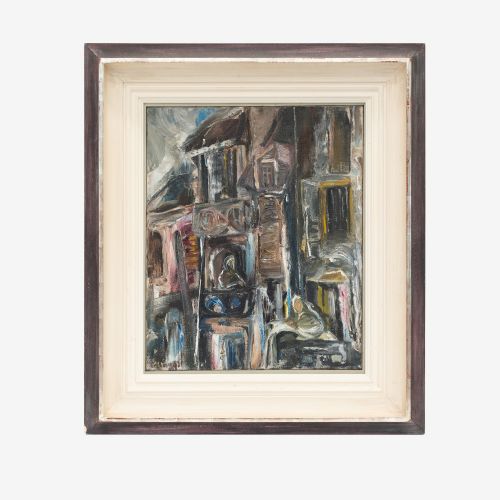


Original Urban Street Scene
An original urban street scene captures the movement of city life on canvas, paper, or panel, bringing historic streets directly into a room.
Original Urban Street Scene
When searching for an original urban street scene, collectors encounter works spanning the nineteenth century through to the modern era, capturing architectural views, bustling city pavements, and quiet metropolitan twilight hours. These depictions range from detailed architectural studies by artists like Lewis J Wood to atmospheric interpretations of London and Paris.
The pieces on this page appear in various mediums, including oil paint on canvas, oil on board, watercolours, and pastel drawings on paper. Creators capture specific localities, from Chipping Norton and Scarborough to European capitals, presenting distinct urban moments.
Buyers meet works categorized under styles such as Victorian, British Impressionism, Post-Impressionism, and Mid-Century Modern. Each period brings a distinct palette and handling of light, recording the shifting character of city life over generations.
Materials and technique
Artists record cityscapes primarily through oil paint on canvas or wood panel, alongside watercolours and pastels applied to paper. Oil paint allows for rich, layered textures that build up the dense atmosphere of a cold day or a winter twilight.
Watercolour and pastel works rely on swift, sure application to capture the momentary play of light and movement on bustling streets. Paper provides a receptive ground for these lighter mediums, preserving the immediacy of the sketch.
Listings feature works created across multiple eras, ranging from the nineteenth century to pieces produced later than 1960.
Distinctions in quality
The strength of a composition lies in how effectively the artist manages perspective, light, and the convincing movement of figures within an architectural setting. Superior pieces demonstrate a confident handling of medium, whether through the bold impasto of an oil painting or the delicate washes of a watercolour.
The distinction between works rests on the artist's ability to evoke the specific atmosphere of a location, transforming a simple street view into a compelling record of time and place.
Lucy Pratt·Francisco Sancha·Lilian Colbourn·Lewis J Wood·Rowland Henry Hill·Fred Lawson·Matthew Hale
The Original Urban Street Scene Glossary
- Oil painting
- A work created using pigments bound in a drying oil, typically applied to canvas or wood panel. This medium allows for deep colour saturation and rich surface texture.
- Watercolour
- A painting method where fine pigments are suspended in a water-based solution, traditionally applied to paper. It yields translucent washes that capture fleeting atmospheric effects.
- Pastel drawing
- Artworks created using dry powdered pigment sticks applied to paper. The technique offers vibrant colour application and a soft, immediate finish.
- Impressionism
- A nineteenth-century artistic movement characterised by relatively small, thin, yet visible brush strokes and an emphasis on accurate depiction of light. Artists working in this style prioritize the visual impression of the moment.
Original Urban Street Scene: Frequently Asked Questions
What periods do these street scenes cover?
The collection spans from the nineteenth century through the 1920s, 1930s, 1950s, and 1960s, extending to works created later than 1960.
Each era reflects distinct artistic approaches to recording metropolitan life and architecture.
What surfaces are these artworks painted on?
Paintings utilise canvas, wood panels, and wood boards for oil mediums, whilst works on paper incorporate watercolours and pastels.
Support materials vary according to the artist's chosen medium and the period in which the piece was created.
How do I care for a watercolour street scene?
Works on paper require framing behind glass with acid-free mounts to protect the delicate pigments from atmospheric damage.
Displaying them away from direct sunlight preserves the original tones of the watercolour or pastel.
What styles are represented in cityscapes?
Listings feature Victorian pieces, British Impressionism, Post-Impressionism, Mid-Century Modern, and contemporary British works.
These styles demonstrate how artistic interpretations of urban environments evolved over the decades.