
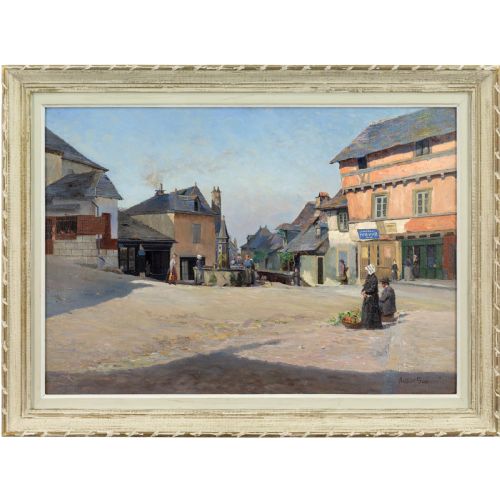
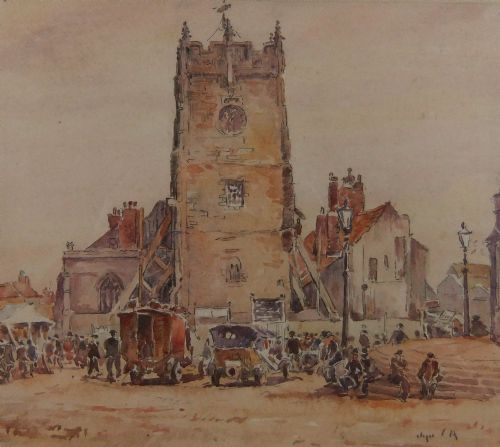


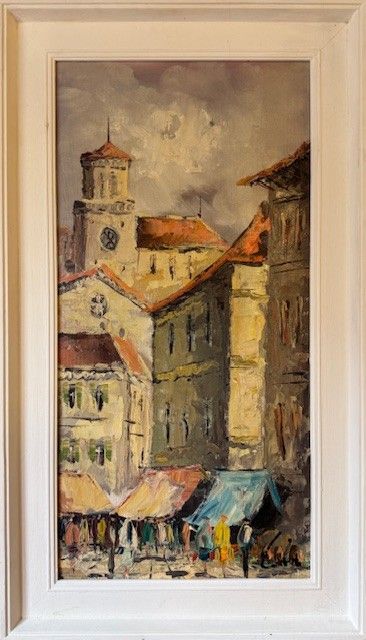


Framed Architectural Townscape
A framed architectural townscape captures streets, squares and civic buildings through oil, watercolour or pencil.
Framed Architectural Townscape
A framed architectural townscape depicts urban views, market squares, streets and civic buildings, anchored by the built environment rather than open countryside. When searching for a framed architectural townscape, buyers encounter works executed in oil paint, watercolour, ink, pencil and charcoal.
The selections available span from the Georgian and Regency periods through the nineteenth century and into the twentieth century. British and continental subjects appear frequently, recording townscapes from England, France and the Netherlands.
Watercolour paintings on paper and oil paintings on canvas, board or panel represent the primary forms met on this page. These works range from detailed topographical studies of specific bridges and market crosses to looser post-impressionist street scenes.
Materials and Techniques
Artists record these urban views using oil paint, watercolour, pencil and charcoal applied to supports of paper, card, wood panel and canvas. Watercolour watercolours often employ pencil outlines underneath translucent washes to define masonry and street layouts.
Oil paintings utilise board, canvas or panel, building up pigments to describe the textures of stone facades, tiled roofs and bustling market squares. Framing is typically executed in wood, including giltwood and gilt wood, protecting the works behind glass where paper supports are used.
Listings feature works from the Georgian period, the nineteenth century, and twentieth-century decades including the 1900s, 1920s, and 1950s.
Factors of Quality
Quality rests upon the artist's ability to render perspective, light and the specific character of urban architecture rather than generic buildings. Works by named painters with documented exhibition histories or distinctive handling of townscapes elevate the tier of the piece.
The strength of the composition, the preservation of the paper or canvas support, and the harmony of the framing contribute to the overall standing of the work. Skilled draughtsmanship in delineating architectural elements such as arches, spires and market crosses separates finer examples from simpler illustrations.
John Smith Atherton·Paul-Élie Gernez·Stanley Orchart·Cornelis Christian Dommersen·Joseph W. Milliken·Fred Lawson·Ludwig Hermann·Annie L. Lee·Henry Schafer·Letitia Marion Hamilton
The Framed Architectural Townscape Glossary
- Townscape
- A painting, drawing or print depicting a city, town or urban street scene. These works focus primarily on buildings, streets and civic spaces rather than natural landscapes.
- Watercolour
- A painting method in which the paints are made of pigments suspended in a water-based solution. Paper serves as the standard support for this medium.
- Giltwood
- Wood carved and covered with a thin layer of gold leaf or gilt. This material appears frequently in the frames housing these works.
- Oil on Board
- A painting executed with oil-based pigments upon a rigid card or wooden board rather than a stretched canvas. This support offers a firm surface for detailed street studies.
Framed Architectural Townscape: Frequently Asked Questions
What is a framed architectural townscape?
A framed architectural townscape is a work of art depicting city streets, market squares, buildings and historical urban views. These pieces focus heavily on the built environment.
They are presented ready to hang, framed in materials such as wood or giltwood, often protected behind glass.
How were these townscapes used?
These works served as domestic wall art, recording travels, hometowns or notable continental buildings for private homes. They allowed owners to display views of familiar British streets or foreign town squares.
Today, they function as historical records of urban architecture and interior decoration.
How do I live with these pieces?
Living with these artworks requires keeping them away from direct sunlight to protect watercolours and oil paints from fading. Stable room temperatures prevent warping in wooden panels and paper supports.
Display them on walls with balanced lighting to highlight the architectural details and framing.
How do I tell periods apart?
Periods are identified through the clothing of figures, the architectural styles depicted, and the framing materials used. Georgian and Regency works show different artistic conventions compared to twentieth-century post-impressionist or Edwardian pieces.
Signatures, dates, and inscriptions written by the artist on the work also help determine the era of creation.