
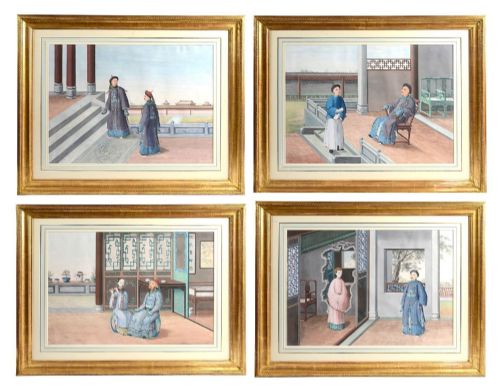
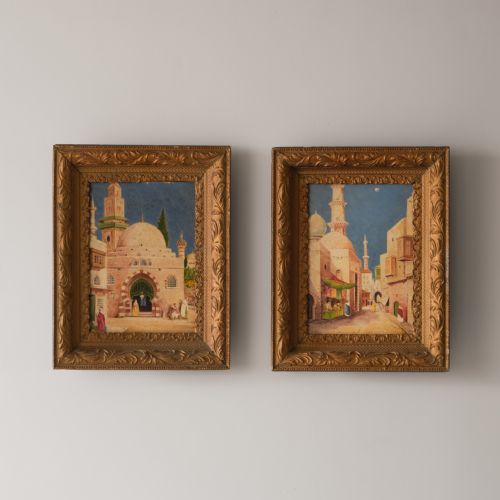

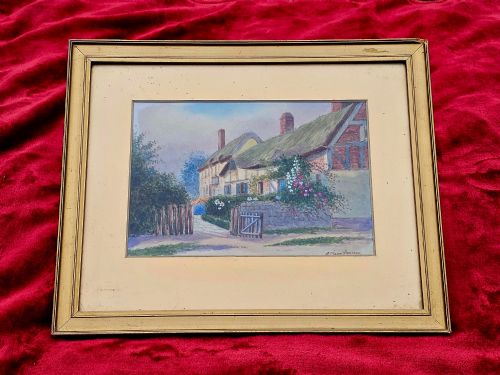
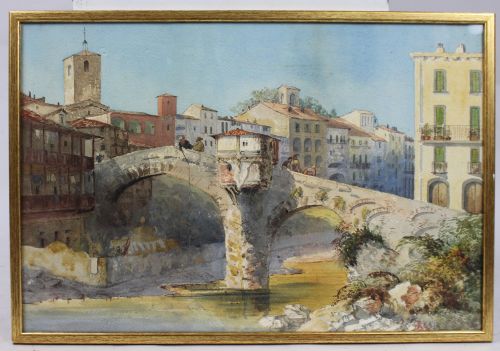


Framed Architectural Watercolour
These framed architectural watercolour paintings bring historic townscapes, grand ruins and domestic facades straight to your walls.
Framed Architectural Watercolour
A framed architectural watercolour captures historic buildings, street scenes, castles and monuments through delicate washes of pigment on paper. You will most commonly encounter pieces originating from the nineteenth and early twentieth centuries, reflecting Victorian, Edwardian and Grand Tour sensibilities.
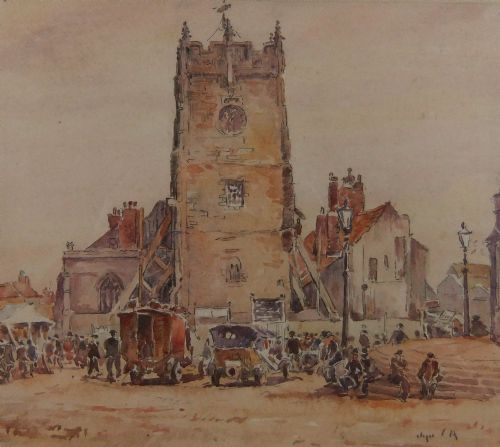
These works range from detailed studies of Italianate facades and Venetian canals to charming depictions of English market crosses, castles and country houses. Artists often worked on location during travels across Europe and the British Isles, recording specific structures with careful perspective and line.
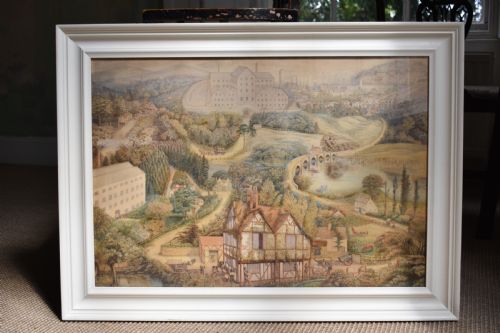
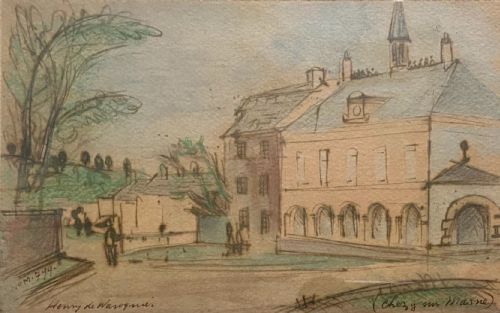
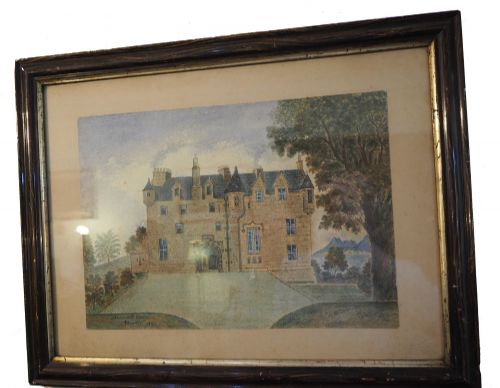
The presentation typically includes a wooden frame and protective glass, often with an internal mount surrounding the paper sheet. Many examples bear signatures, dates or inscriptions identifying the exact street, town or monument depicted.
Materials and Technique
Makers applied watercolour pigment mixed with water onto absorbent paper sheets, frequently laying down preliminary outlines in pencil or ink. Wash techniques allowed artists to build translucent layers of colour for skies and masonry, while finer ink lines defined architectural details and brickwork.
Finished sheets were secured behind glass within wooden frames, occasionally enhanced with gilt wood mouldings to complement the tonal range of the painting. The combination of paper support, water-based pigment and protective framing has ensured the survival of these delicate works across successive centuries.
Travellers returning from nineteenth-century tours ensured every foreign ruin came home neatly boxed under glass.
Judging Quality
Quality rests upon the precision of the draughtsmanship and the artist's command of perspective when rendering complex masonry, arches and fenestration. Stronger works demonstrate confident brushwork and ink control that bring depth to stone surfaces without overworking the pigment.
The handling of light and shadow distinguishes finer compositions, where transparent washes create realistic atmosphere around architectural landmarks rather than flat, uniform colour. Original frames and period mounts that suit the era of the painting also contribute to the overall integrity of the piece.
Thomas Ellison·A. Marie Parsons·Henry de Waroquier·Alfred George Morgan·Fred Lawson·Anne Dorrien Smith·Rowland Henry Hill·Stanley Orchart·J W Hogley·Louie Stanley Maurice Prince·G Villiers Stuart·George Whyatt·Vittore Zanetti Zilla·Joseph W. Milliken·Edith E Caswall·Hercules Brabazon Brabazon·Pio Panfili·Tom Dudley·David Law·Noel Harry Leaver
The Framed Architectural Watercolour Glossary
- Watercolour pigment
- Finely ground colour particles mixed with a water-soluble binder, used to create transparent washes on paper.
- Grand Tour
- A traditional trip through Europe undertaken by upper-class travellers during the eighteenth and nineteenth centuries, often resulting in commissioned views of classical ruins.
- Gilt wood
- Wood coated with a thin layer of gold leaf or metallic paint, frequently used for traditional picture framing.
- Mixed media
- An artwork combining more than one medium, such as ink lines beneath transparent watercolour washes on paper.
Framed Architectural Watercolour: Frequently Asked Questions
Where were these watercolours painted?
Artists produced these watercolours both locally within Britain and abroad during travels to European cities, classical ruins and distant colonies.
Subjects range from Yorkshire market towns and London thoroughfares to Venetian canals, Roman monuments and Indian temples.
How should I hang these framed watercolours?
Paper and water-based pigments are sensitive to direct sunlight, so select an interior wall away from harsh, continuous rays to prevent fading.
Keep them away from damp areas like unheated bathrooms to protect both the historic paper and the wooden frame.
Are these works usually signed?
Many examples feature the artist's signature, monogram or initials, often inscribed in the lower corner of the paper sheet.
Inscriptions on the front or reverse frequently note the specific title, location or date of the architectural subject depicted.
How do I identify the period of the artwork?
Stylistic clues within the architecture, clothing of incidental figures and framing materials help indicate the era in which the piece was created.
Nineteenth-century examples often lean towards romantic or classical interpretations, while twentieth-century works may display looser impressionistic brushwork or modernist ink lines.