



Edwardian Architectural Painting
Edwardian architectural painting brings together period street scenes, watercolours of buildings and hand-painted glass panels that record the built environment of the early twentieth century.
Edwardian Architectural Painting
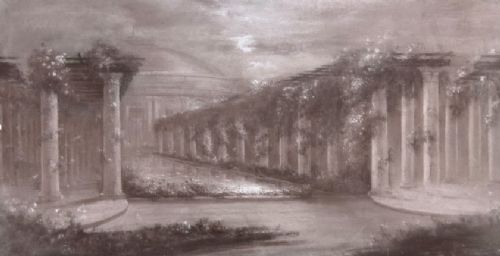
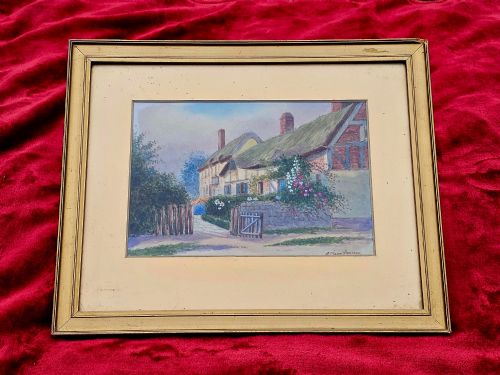
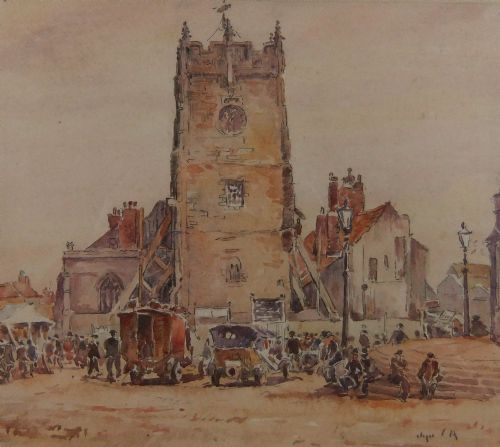
Edwardian architectural painting encompasses watercolours, oils and charcoal works depicting cityscapes, markets and country houses, alongside hand-painted leaded glass windows featuring buildings and landscapes. These pieces record the streetscapes, townscapes and structures of the late nineteenth and early twentieth centuries.
The selection here brings together works from the Edwardian period and adjacent decades, spanning watercolours of London squares and Venetian markets as well as leaded glass panels incorporating painted countryside scenes.
How they were made
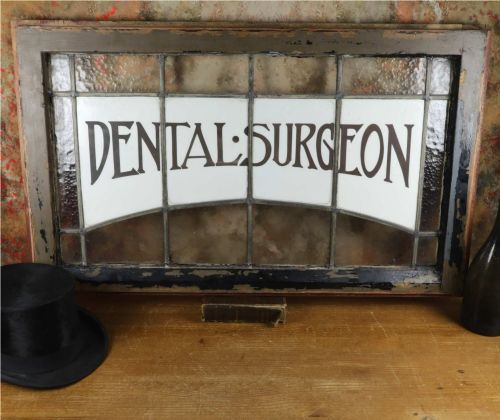
Works on paper and board utilise watercolour, oil or charcoal media, capturing light and atmosphere across townscapes and architectural studies. Paint is applied to glass panels held together with lead cording, combining vitreous pigments with metalwork to create transparent or translucent architectural glazing.
Timber frames, overmantle mirrors and wooden stretches support these works, while glass panels integrate lead and timber components to form structural units designed for placement in buildings.
Matchsticks serve as the surprising construction material for a detailed medieval house model from the early twentieth century.
What varies in quality
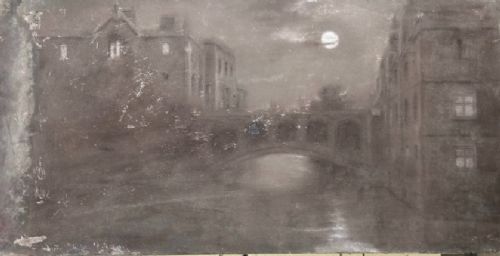
Quality depends upon the precision of the draughtsmanship in capturing architectural detail and perspective, alongside the skill demonstrated in handling paint upon paper, canvas or glass. Works that successfully convey atmospheric qualities, such as tonalist townscapes or detailed street scenes, stand apart from simpler decorative items.
The integrity of the supporting materials, from lead cording in stained glass windows to timber stretchers on oil and charcoal paintings, influences the overall standard of the surviving piece.
Sir Clough Williams-Ellis·A Marie Parsons·Charles James Lauder·Rowland Henry Hill·David Small
The Edwardian Architectural Painting Glossary
- Watercolour
- A paint consisting of pigment suspended in a water-based solution, frequently applied to paper to create transparent architectural and landscape studies.
- Leaded glass
- Individual panes of glass held within a network of lead strips, often incorporating hand-painted sections depicting scenes or floral motifs.
- Tonalism
- An artistic style focusing on shadow, atmosphere and shade rather than sharp outlines, seen across various landscape and townscape paintings.
- Overmantle mirror
- A large framed mirror designed to hang above a fireplace mantel, sometimes incorporating decorative painted elements or architectural mouldings.
- Charcoal painting
- An artwork created using carbonised wood sticks on paper or canvas, producing stark contrasts and expressive lines.
Edwardian Architectural Painting: Frequently Asked Questions
What is an Edwardian architectural painting?
It is a work of art from the early twentieth century or related decades that depicts buildings, street scenes, townscapes or structures.
These pieces include watercolours, oils and hand-painted glass panels designed to record architectural subjects.
How were painted glass windows used?
Hand-painted glass panels and leaded windows served as decorative architectural glazing in domestic and commercial buildings of the period.
They allowed light into interior spaces while displaying painted countryside scenes, floral designs or birds.
Where should I hang a watercolour?
Watercolours on paper benefit from placement away from direct sunlight to prevent the fading of pigments over time.
Displaying them in interior rooms with stable environmental conditions helps preserve the paper and framing materials.
How do I identify an Edwardian painting?
Identification relies on examining the recorded periods, artist signatures, stylistic traits such as Arts and Crafts influences, and framing materials.
Comparing the subject matter, such as townscapes or street scenes, with documented artists from the era aids verification.