


English Townscape Painting
An English townscape painting captures streets, markets and stone bridges, offering a direct view into urban life from centuries past.
English Townscape Painting
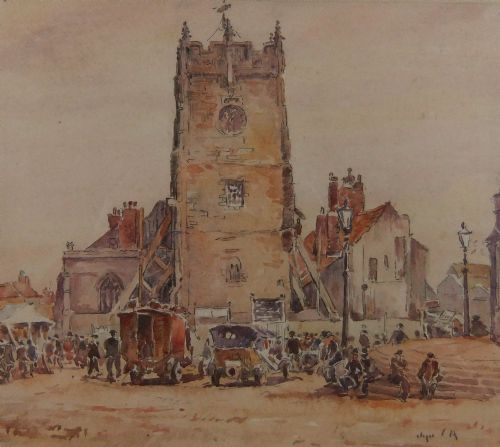
An English townscape painting records specific streets, market crosses and civic buildings across the country, from Yorkshire to Cornwall. These works document recognisable locations such as York City Walls, Whitby and rural market towns.
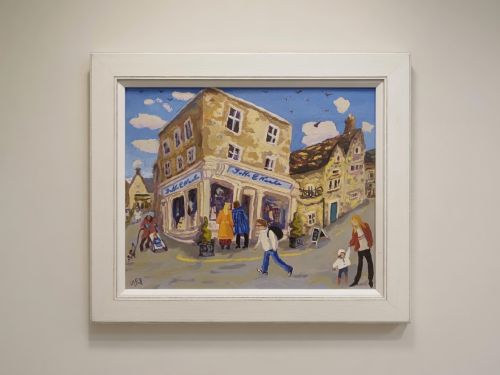
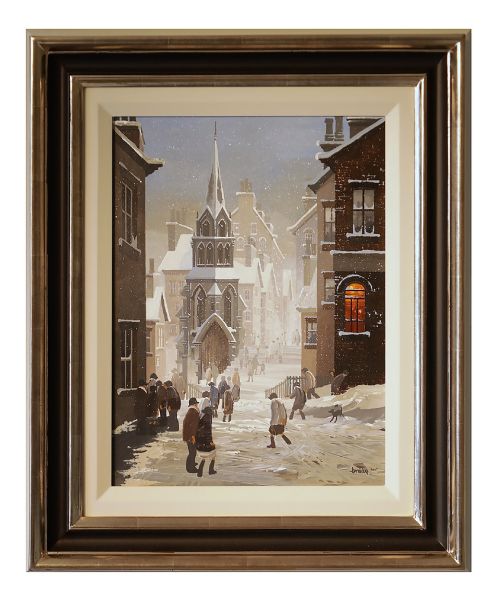
The pieces on this page appear in watercolours on paper and oil paintings on canvas or board. Artists capture local architecture and daily life through mediums that range in date from the nineteenth century to contemporary periods.
Materials and methods
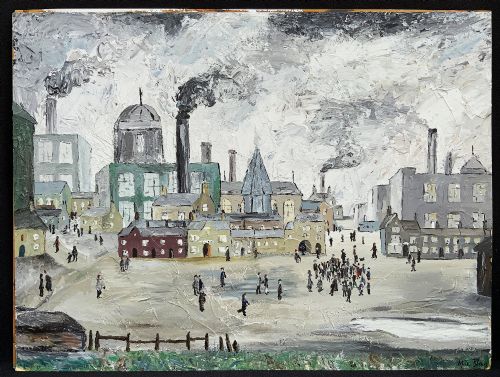
Painters utilise watercolours on paper or watercolour drawing to build delicate washes of tone and ink lines that map historic streets and church steps. Others apply oil paint directly onto canvas or wood panels, working up heavier textures for industrial scenes.
The physical support dictates the character of each piece, with paper works offering fine detail and canvas or board allowing for bolder brushwork and richer layers of pigment.
Listings feature works spanning the nineteenth century through to contemporary periods, executed in oil and watercolour on paper, canvas and wood.
Assessing quality
Top-tier examples demonstrate a confident command of perspective and architectural detail, capturing the distinct atmosphere of a specific northern town or southern market square. Weaker pieces rely on formulaic compositions and dull colour palettes that flatten the scene.
The skill of the brushwork and the precision in rendering stone, brick and figures separate a skilled topographical record from a generic street scene.
Brian Shields Braaq·Stanley Orchart·Angus Rands·Walter Emsley·George Willis Pryce·Fred Lawson·John Ward Knowles
The English Townscape Painting Glossary
- Watercolour painting
- A work executed with water-soluble pigments on paper. This medium allows for transparent washes and fine line work.
- Oil painting
- A piece created using pigments bound in a drying oil, typically applied to canvas or wood. It yields rich depth and texture.
- Townscape
- A visual representation of urban scenery, streets and buildings. It forms the central subject of these topographical works.
- Modern British
- An artistic classification covering twentieth-century works produced in Britain. These pieces often embrace contemporary approaches to traditional subjects.
English Townscape Painting: Frequently Asked Questions
How do I date an English townscape painting?
Examine the style of clothing, street architecture, and vehicles depicted in the composition, as these change distinctly across the nineteenth and twentieth centuries.
Signatures, framing materials, and inscriptions on the reverse of the canvas or paper often provide further clues to the exact period.
Where should I hang a townscape painting?
These works suit dining rooms, studies, or hallways where natural light enhances the pigments of the watercolour or oil.
Keep them away from direct sunlight and damp conditions to protect the paper or canvas over time.
What is the difference between oil and watercolour townscapes?
Watercolour works on paper offer a lighter, translucent quality that suits detailed street views and architectural studies.
Oil paintings on canvas or wood provide heavier textures and deeper tones, often chosen for industrial or busier urban scenes.
How do I identify a regional townscape?
Look for titled inscriptions on the mount, stretcher bars, or the reverse of the work naming specific locations like Whitby or York.
Landmarks such as local market crosses, bridges, and specific inns often confirm the exact English town depicted.