
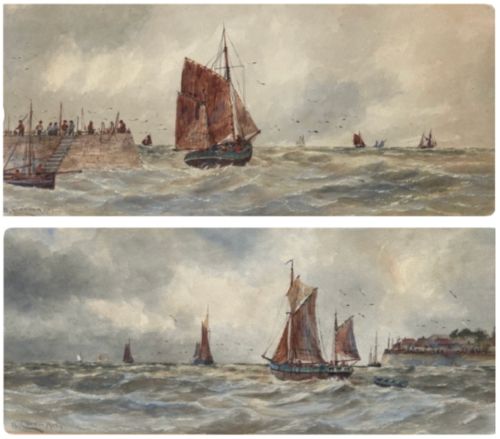

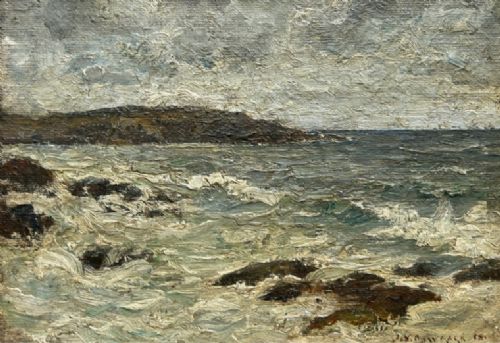
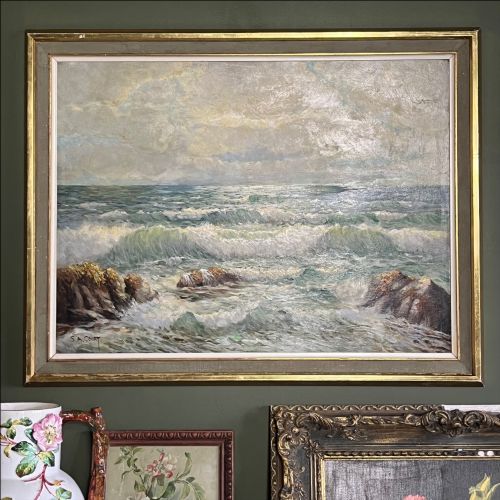

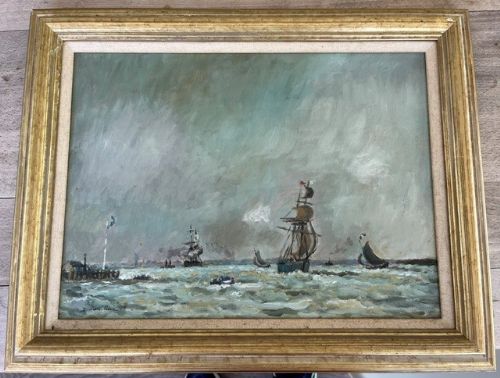


Original Signed Ocean Painting
An original signed ocean painting brings the raw motion of the sea onto canvas or paper through the hand of a known artist.
Original Signed Ocean Painting
An original signed ocean painting captures coastal scenes, harbours, and open waters through distinct historical periods including the Victorian era, the Edwardian years, and the mid-twentieth century. Buyers searching this phrase encounter unique works of fine art rather than mass-produced prints, bearing the authentic signature of the artist.
The pieces listed on this page span watercolours, gouache, and oil paintings executed on various supports such as paper, board, and traditional canvas. Subject matter ranges from British seascapes and Cornish fishing boats to French coastal views and even desert ocean landscapes.
Most examples originate from British and European traditions, incorporating styles like British Impressionism, Modern British, and Mid-Century Maritime. Collectors often find framed works ready for display, capturing specific moments of maritime history through the painter's direct observation.
Materials and technique
Artists utilise traditional mediums including oil paint and watercolour, applying pigment to prepared wood panels, heavy paper, or rigid board. Oil paint allows for thick impasto strokes that build texture in turbulent waves, while watercolour provides fluid transparency for atmospheric skies.
Works on paper require protective glass and framing to prevent environmental degradation, whereas oil on board or canvas offers greater durability. Many historical pieces employ gilt framing that complements the maritime subject matter and secures the perimeter of the painting.
One unexpected desert landscape painting proves that an ocean artist occasionally needs a camel to reach the shore.
Determinants of quality
Quality rests upon the artist's ability to render light, movement, and atmosphere convincingly within the chosen medium. Confident brushwork and accurate proportion in vessels and coastal geography separate accomplished works from lesser amateur efforts.
The clarity and legibility of the signature, alongside the preservation of the paint surface and the support, dictate the standing of an individual piece. Works that retain their original framing and exhibition or provenance markers carry additional historical weight.
William Cannon·Sidney A Court·William Banks Fortescue·John Bell·Kate E Booth·Frank Wood·S J Lamorna Birch·Alastair Flatterly·Frank Holme
The Original Signed Ocean Painting Glossary
- Impasto
- Paint applied thickly to a canvas or board, standing out in relief from the surface. This technique allows the artist to capture the physical texture and churning motion of water.
- Gilt
- A gold-coloured leaf or metallic finish applied to frames. It enhances the visual presentation of maritime watercolours and oil paintings.
- En plein air
- Painting outdoors in direct contact with the subject matter. Artists using this method capture natural coastal light and changing weather conditions rapidly.
- Seascape
- A work of fine art that depicts the sea, ocean, or coastal shoreline. These compositions focus on maritime subjects, boats, and coastal topography.
Original Signed Ocean Painting: Frequently Asked Questions
How do I identify a genuine signature?
Signatures are typically inscribed by the artist directly into the wet paint using a fine brush, or written in pencil or ink on watercolour paper. Examining the handwriting under magnification can reveal consistency with the surrounding pigment.
Comparing the signature style to known examples from the same period helps confirm authenticity. Fading should match the age of the rest of the artwork.
What is the difference between oil and watercolour?
Oil paint uses a drying oil binder to suspend pigments on canvas or board, creating rich colours and tactile textures. Watercolour relies on water-soluble pigments applied to paper, producing luminous and translucent washes.
Oils generally require sturdy wooden boards or stretched canvas supports. Watercolours need protection behind glass to prevent moisture damage.
How should I hang a coastal painting?
Keep maritime works away from direct sunlight and damp environments to protect the paper, canvas, and wooden frames. Stable indoor temperatures prevent the expansion and contraction of board or canvas.
Use secure picture hooks rated for the weight of the framed piece. Ensure the wall structure can support heavy gilt frames safely.
What periods do these paintings come from?
The available selection includes Victorian works, Edwardian pieces, and mid-twentieth century creations up to the modern era. Each period brings distinct stylistic approaches to maritime subjects.
Victorian pieces often show detailed realism, while mid-century works embrace broader impressionistic brushwork. Examining the framing materials can also offer clues to the creation date.