
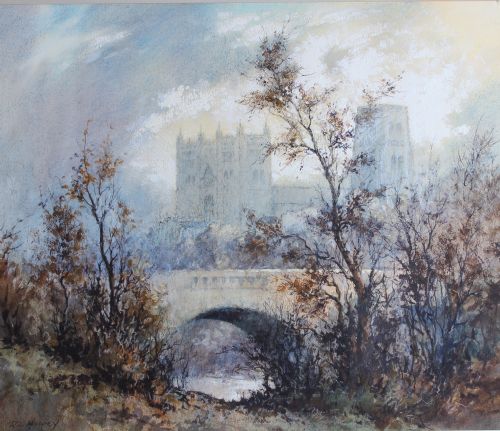


Original Sepia Watercolour Painting
An original sepia watercolour painting brings direct contact with historic draughtsmanship, offering monochrome or earth-toned depth through fluid pigment on paper.
Original Sepia Watercolour Painting
An original sepia watercolour painting comprises works on paper executed in monochrome or restrained earth tones, spanning periods from the Georgian era through the nineteenth and twentieth centuries.
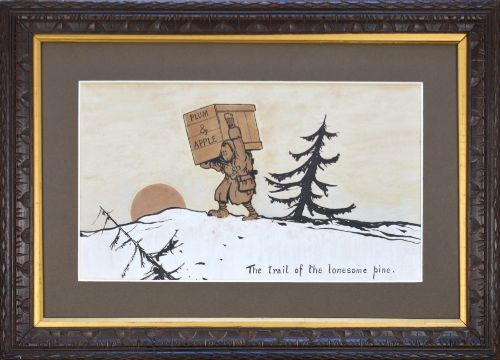
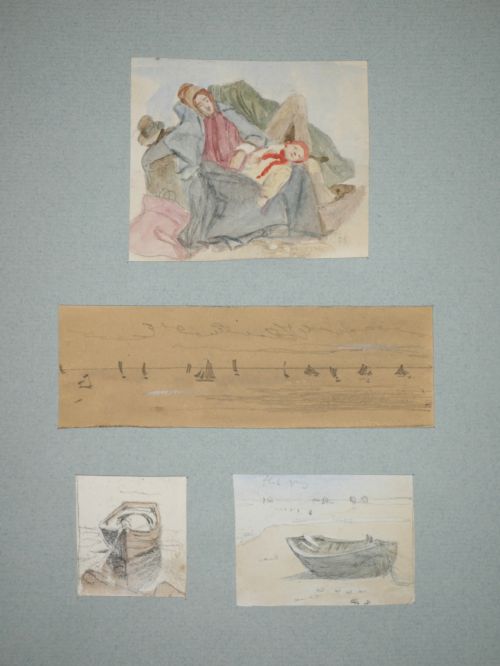
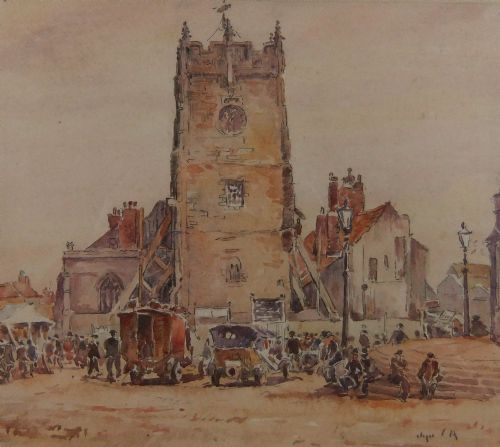
Buyers encounter subjects ranging from military scenes and maritime views to architectural studies and landscapes, often framed under glass in wood.
The selection includes pieces associated with named artists and specific British and continental locations, capturing historical moments and everyday topography.
How they were made
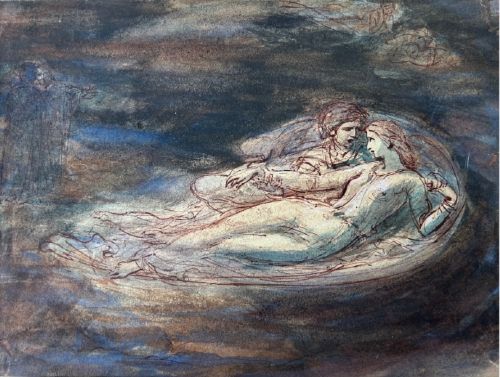
Artists laid watercolour pigment and ink onto paper, frequently combining washes with pencil underdrawings to define contours and architectural details.
Framed works utilised glass for protection, housed within wooden surrounds appropriate to the period of creation.
Combat horses and cavalry hussars share these historic pages with quiet Yorkshire landscapes and bustling dockyards.
What varies in quality
The standard of an original sepia watercolour painting depends on the surety of the brushwork and the precision of the draughtsmanship across the paper surface.
Compositional balance and the preservation of the tonal gradations within the monochrome pigment separate masterly execution from routine topographical records.
Bruce Bairnsfather·James Smetham·John Smith Atherton·Robert Leslie Howey·Richard Harry Carter·William Frederick Settle·Charles James Lauder·J W Hogley·John Augustus Atkinson·George Arthur Fripp·Frederick William Booty·Leslie Rackham·Henry Barlow Carter·Hercules Brabazon Brabazon·Samuel Palmer·W. Tatton Winter·Amos Green·Snaffles·Frank W. Scarborough·Thomas Clavering Alder·George Graham·Walter Emsley·Arthur Netherwood·Tom Dudley·Fred Lawson
The Original Sepia Watercolour Painting Glossary
- Sepia
- A dark brown pigment traditionally derived from the ink sac of the cuttlefish, widely utilised for monochrome watercolour paintings and ink sketches.
- Wash
- A thin, fluid layer of diluted watercolour pigment spread evenly across paper to create smooth background tones or skies.
- Gouache
- An opaque watercolour paint containing pigment mixed with a binding agent and white filler, providing solid highlights alongside transparent washes.
- Pre-Raphaelite
- A nineteenth-century artistic style characterised by detailed observation, bright colours or careful tonal control, and serious literary or historical subjects.
- Works on paper
- A collective category encompassing watercolours, drawings, sketches, and prints executed upon paper supports.
Original Sepia Watercolour Painting: Frequently Asked Questions
How should I hang an original sepia watercolour painting?
These works on paper require positioning away from direct sunlight to prevent the watercolour pigment from fading over time.
Maintaining stable indoor humidity levels helps preserve the paper support and any accompanying wooden frame.
How do I identify the date of a watercolour?
Dates often appear inscribed by the artist alongside signatures, or are indicated by the stylistic conventions of the period.
Framing materials like burr wood surrounds and paper characteristics further assist in establishing the era of creation.
Are these works always framed under glass?
Most watercolours on this page retain their protective glass covering, which shields the delicate pigment and paper surface from atmospheric dust.
Frames vary from simple period wooden mouldings to decorative surrounds selected to complement the artwork.