



Classical Landscape Watercolour
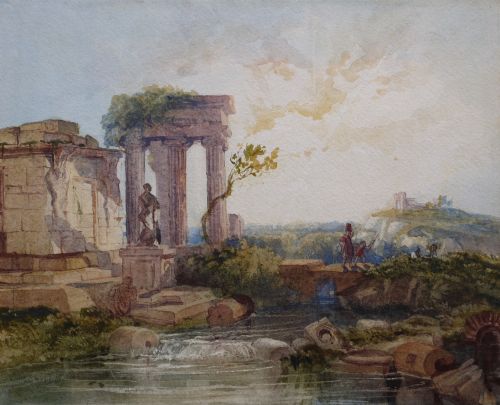
A classical landscape watercolour captures ancient ruins, temples and distant hills on paper, bringing the grand vistas of Italy directly into a room.
Classical Landscape Watercolour
A classical landscape watercolour depicts ruins, architectural structures and pastoral scenes rooted in the traditions of the Grand Tour and the ancient world. These works typically feature pigment and ink applied to paper, capturing subjects such as the Roman Campagna, classical arches and picturesque pavilions.
The examples found here range from Georgian sketches to later Victorian interpretations, including specific topographical views and idealised compositions. Buyers encounter both signed works by known artists and accomplished pieces by the English School or continental hands.
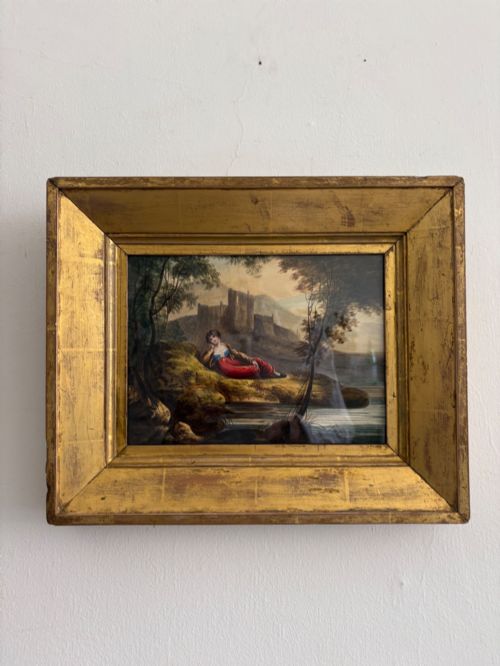
Framed presentation is common, often utilising gilt wood and glass to protect the delicate works on paper. These paintings serve as historical records of travel and artistic interpretations of classical antiquity.
Materials and technique
The foundation of these works is paper, upon which artists applied watercolour pigments, gouache or monochrome wash and ink. Sepia tones and subtle washes create the atmospheric depth characteristic of architectural prints and landscape studies.
Framing traditionally involves wood and gilt mouldings, sometimes incorporating gold leaf to enhance the presentation of the artwork. The combination of water-soluble pigments and fine ink line work allows for both broad atmospheric skies and precise architectural detail.
Classical Landscape Watercolour Retail Price Guide 2026
Typical asking prices for classical landscape watercolour among the pieces listed under this phrase on Sellingantiques today, from the lower quarter to the upper quarter. They describe what is for sale here now, not the wider market.
Listings feature paper, wood, glass, gilt, gold leaf, pigment and ink across pieces dated from the eighteenth century into the twentieth century.
Assessing quality and execution
Quality rests in the precision of the draughtsmanship and the handling of atmospheric perspective, distinguishing accomplished architectural rendering from stiffer academic exercises. The confidence of the brushwork in vegetation, stone textures and sky creates a convincing sense of place.
Provenance and attribution elevate certain pieces, particularly when a work bears a signature or a direct connection to a documented artist or specific archaeological site. The integrity of the original paper and the retention of pigment vibrancy also separate superior examples from faded or heavily restored works.
Richard Principal Leitch·Franz Knebel·Augustus Jules Bouvier·William Crouch·Henry Edridge·Ralph Leslie Swinden
The Classical Landscape Watercolour Glossary
- Grand Tour
- An extended journey through Europe, particularly Italy, undertaken by wealthy young men in the 18th and 19th centuries to study classical art and architecture.
- Capriccio
- An architectural fantasy placing together archaeological ruins, buildings and other architectural elements in a fictional and pleasing composition.
- Gouache
- An opaque watercolour paint consisting of pigment, water, and a binding agent such as gum, often used to add highlights and solid colour to a painting on paper.
- Wash
- A thin, transparent layer of diluted watercolour pigment or ink applied across paper to create smooth backgrounds, shadows or skies.
- Sepia
- A brown pigment derived from the ink sac of the cuttlefish, widely used for monochromatic landscape drawings and sketches during the Georgian and Victorian eras.
Classical Landscape Watercolour: Frequently Asked Questions
What is a classical landscape watercolour?
It is a painting on paper depicting ancient ruins, Italian scenery and classical architecture, produced primarily during the eighteenth and nineteenth centuries.
These artworks often recorded the travels of artists and tourists exploring historical sites across Europe.
How do I care for these watercolours?
Protect the paper from direct sunlight and high humidity to prevent fading and foxing.
Display the framed artwork in stable indoor environments away from direct heat sources.
Are these works signed?
Some pieces bear artist signatures, initials or dates, while others are attributed to specific schools or remain unsigned.
Attributions are typically determined by stylistic analysis, historical context and subject matter.
What framing is typically used?
Many examples are presented in period wooden frames, frequently finished with gilt or gold leaf.
Glass glazing is essential to protect the delicate paper surface and pigments from atmospheric dust and damage.