



Original Pastoral Landscape Art
Original pastoral landscape art brings the quiet rhythm of the countryside, featuring shepherds, cattle, and rivers, directly into a room.
Original Pastoral Landscape Art
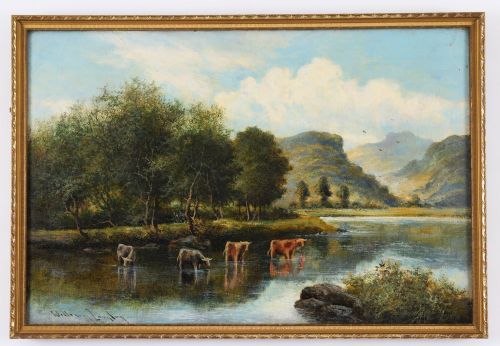
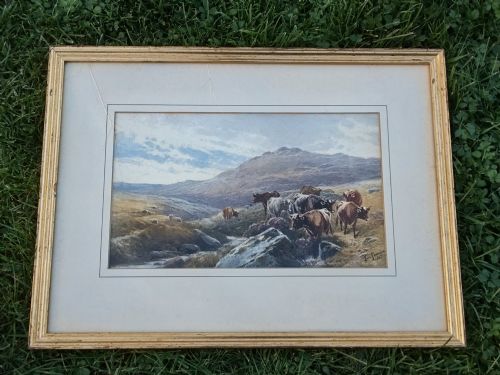
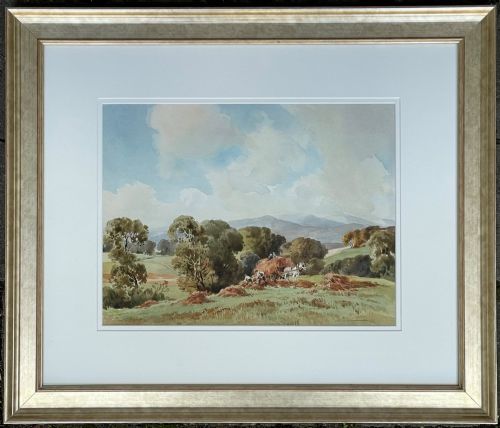
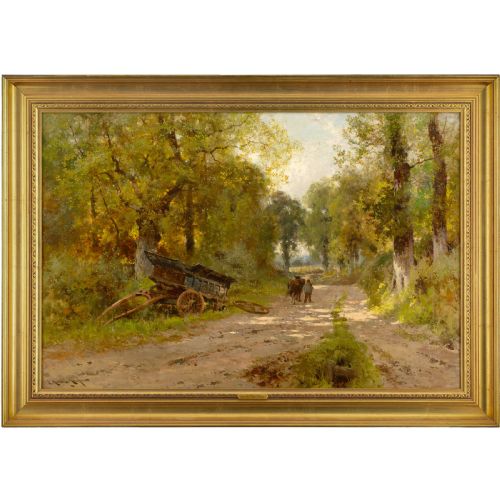
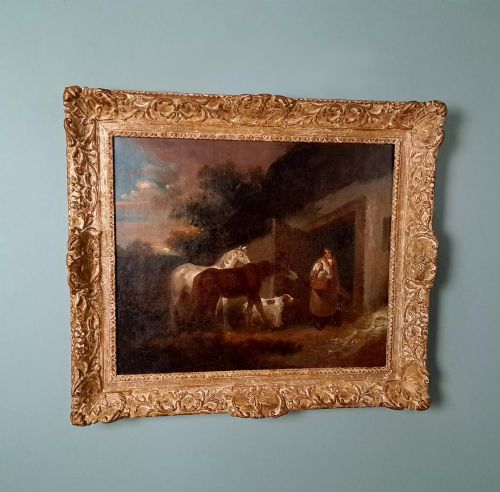
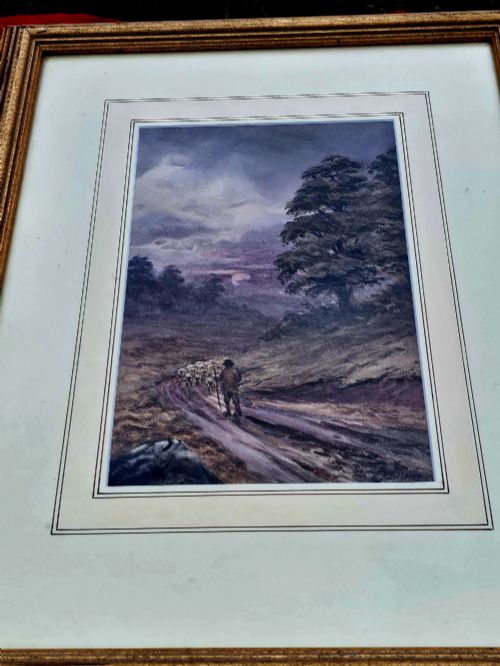
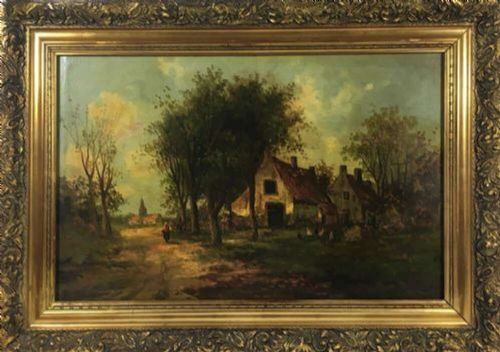
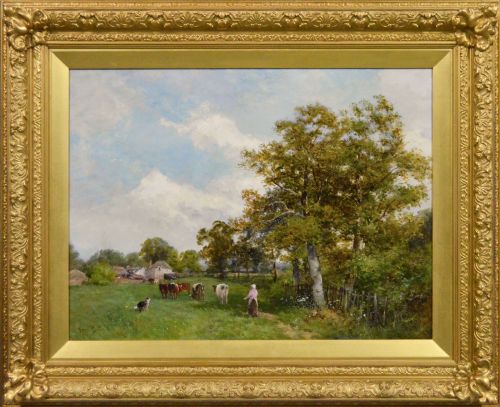
Original pastoral landscape art captures scenes of rural life, agricultural work, and quiet countryside views from the nineteenth and early twentieth centuries. These works frequently depict figures herding sheep, cattle grazing by rivers, or farmyards bathed in morning light.
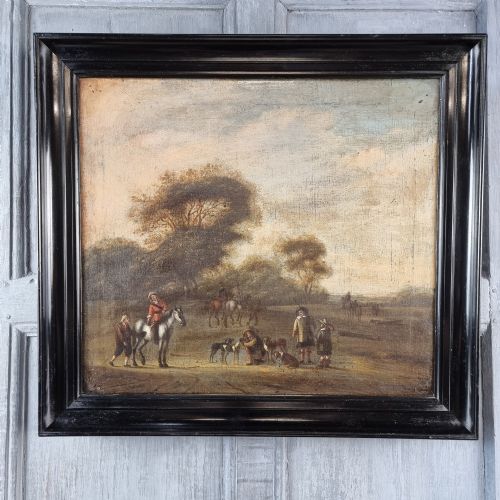
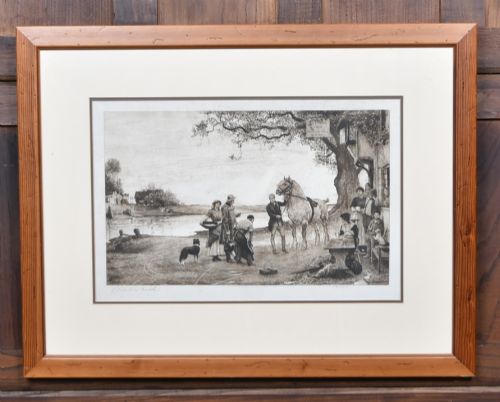
Buyers will most commonly encounter framed watercolours and oil paintings on canvas or wood panels dating from the Victorian and Edwardian periods. British and European artists dominate the selection, bringing traditional realism and impressionist influences to domestic walls.
Canvas, wood and pigment
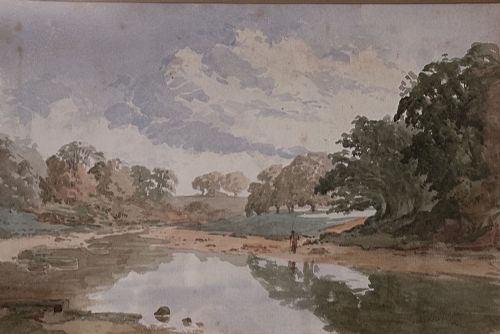
Painters applied oil and watercolour pigments to prepared canvas, textured paper, and wooden boards. Many works rely on rich oil paint to build depth in foliage and skies, whilst watercolours utilise transparent washes on paper to capture softer atmospheric light.
Framing typically involves period wood moulding, often finished in giltwood to complement the tonal balance of the composition. Support panels range from sturdy canvas stretched over wooden frames to solid timber boards.
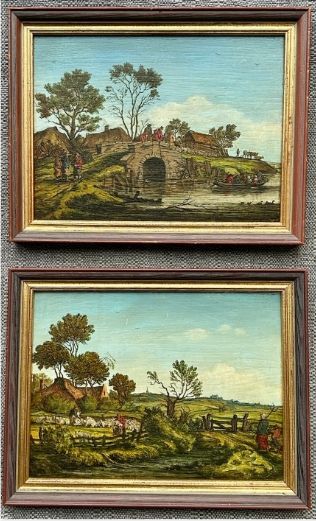
Listings span the nineteenth and early twentieth centuries, featuring oil on canvas, watercolour on paper, and oil painted on wood panels.
Brushwork and atmosphere
Quality rests upon the artist's ability to render natural light and anatomical accuracy in animals and human figures. Superior examples display confident, varied brushwork that creates convincing textures in wool, water, and foliage rather than flat, mechanical application.
The resonance of the composition also dictates value, with skilled spatial arrangement drawing the eye naturally through the rural scene. Condition of the pigment and the originality of the accompanying frame contribute significantly to the standing of each piece.
Eugène Verboeckhoven·Tom Campbell·David Bates·George Oyston·Ernest Higgins Rigg
The Original Pastoral Landscape Art Glossary
- Oil on canvas
- Pigment mixed with drying oil applied to a woven fabric support stretched over a wooden frame. This medium allows for rich colour blending and textured impasto work.
- Watercolour painting
- Pigments suspended in a water-soluble vehicle applied to paper. It creates luminous, transparent washes characteristic of nineteenth-century British landscape traditions.
- Wood panel
- A rigid wooden support used instead of canvas for painting. Panels often display fine detail and possess a smooth ground suitable for precise nineteenth-century brushwork.
- Giltwood
- Carved wood treated with gold leaf or metallic gilt finish. It forms the decorative framing typical of nineteenth and early twentieth-century fine art.
- Barbizon School
- A French movement focused on plein-air painting and realist rural scenes. Its naturalistic approach heavily influenced later British and European landscape artists.
Original Pastoral Landscape Art: Frequently Asked Questions
What defines pastoral art?
Pastoral art focuses specifically on rural subjects, agricultural labour, and idealized country life. Common motifs include shepherds, livestock, rivers, and remote cottages.
These compositions emphasise a harmonious relationship between humans, animals, and the natural environment. The genre offers a deliberate escape into quiet, agrarian scenery.
How do I care for antique watercolours?
Antique watercolours require protection from direct sunlight to prevent the pigments from fading over time. Acid-free mounting and framing behind UV-filtering glass help preserve the paper.
Keeping the artworks in rooms with stable humidity levels prevents foxing and mould growth on the paper support. Regular inspection of the backing board ensures no trapped moisture damages the pigment.
Are oil paintings on wood rare?
Painters frequently used wood panels throughout the nineteenth century for smaller, highly detailed landscape compositions. These rigid supports provide a stable surface that resists the cracking sometimes seen on aged canvas.
Wood panels require similar environmental controls to prevent warping from humidity changes. They often feature delicate brushwork due to the smooth resistance of the prepared wood surface.
How do I identify Victorian landscapes?
Victorian landscape paintings often feature narrative elements such as farm workers, cattle, or travellers journeying along rural pathways. The palette tends towards naturalistic earthy tones, capturing specific times of day like morning light or eventide.
Signatures, framing styles, and backend inscriptions frequently provide clues to the exact decade of creation. Examining the canvas weave and stretcher construction also helps confirm nineteenth-century origins.