


Paper Pastoral Painting
When you seek a paper pastoral painting, you enter a sphere of rustic scenes preserved on fragile sheets.
Paper Pastoral Painting
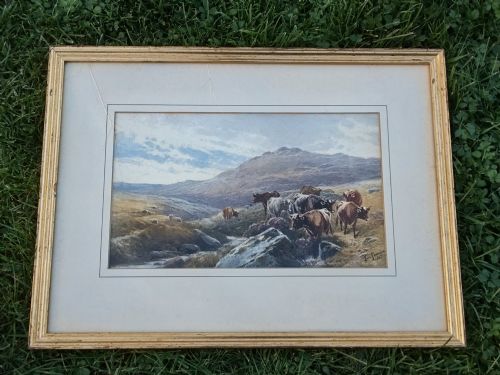
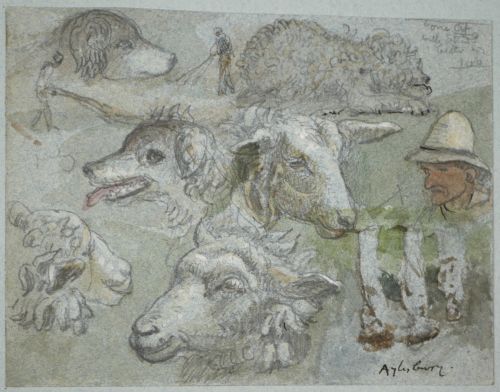
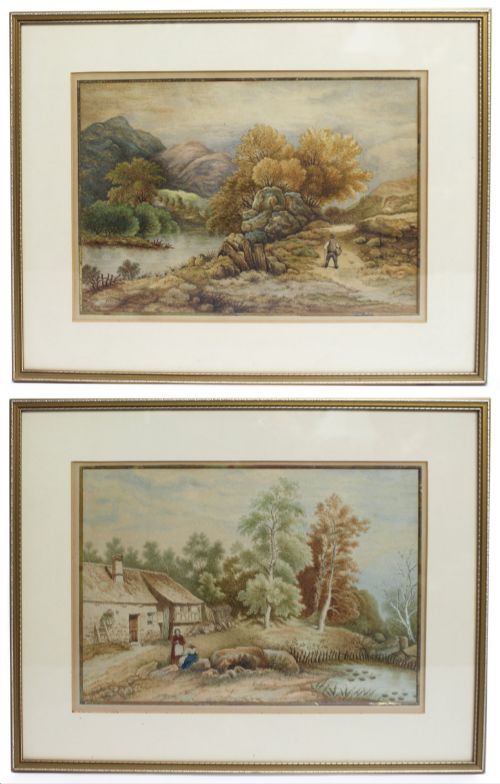
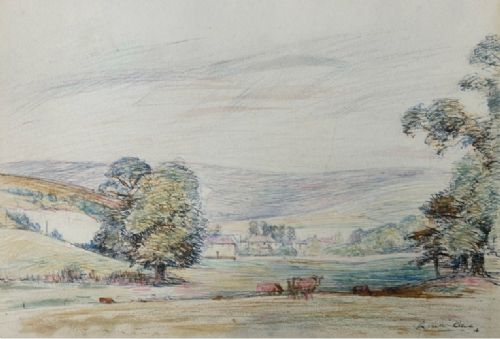
A paper pastoral painting depicts rural life, agricultural scenes, and countryside views executed on a paper support. These works focus on traditional country subjects such as farm hands, cattle, cottages, and river landscapes.
The selections span from the eighteenth century through the Victorian and Edwardian eras into the early twentieth century. Works frequently take the form of framed fine art paintings and wall art created by named British artists.
Materials and Technique
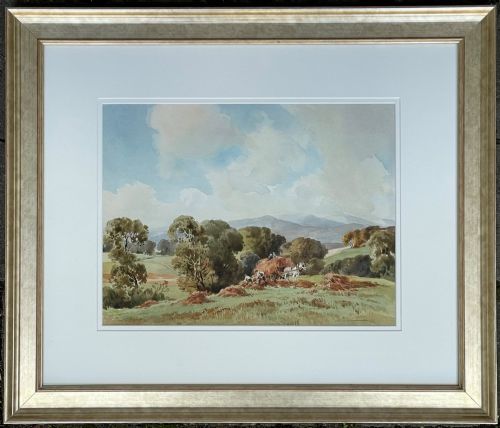
The primary technique relies on watercolour pigment applied to paper, occasionally supplemented with graphite markings. Artists utilised these mediums to capture light and atmosphere across rural English and Welsh scenery.
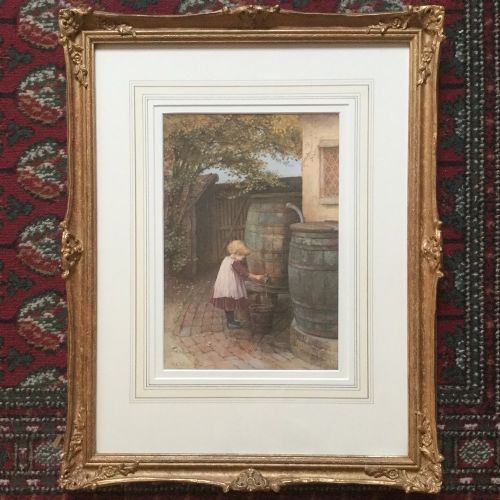
Finished works are typically housed behind glass within wooden frames to protect the delicate paper base from environmental damage. Lithographic reproductions also appear among the material records of the period.
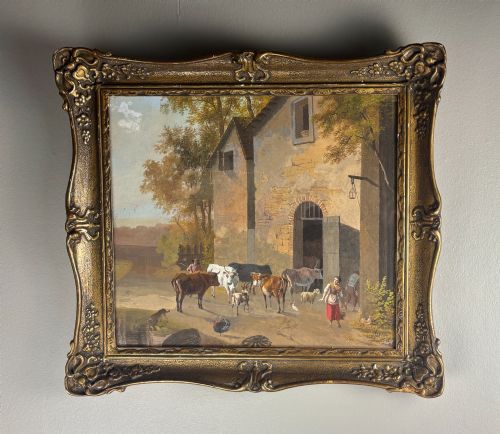
A young foal takes fruit from a basket while farm hands bring in the harvest.
Factors of Quality
Quality rests upon the artist's ability to render atmosphere, composition, and detail within the rustic subject matter. Hand-signed original watercolours by recognised practitioners command greater attention than unsigned or secondary items.
The condition of the paper support and the vibrancy of the pigment dictate the preservation state. Intricately detailed depictions of pastoral life demonstrate superior draftsmanship compared to simpler landscape sketches.
Percy Lancaster·James Smetham·Th Thibault·Russell Sidney Reeves·Charles Edward Wilson·Philip Richard Morris·Cornelius Pearson·Henry Charles Fox·Henry John Kinnaird·James William Booth·Thomas Hunn·James Hardy Junior·Francis Wheatley·Helena Maguire·George Soper·Harold Lawes·Bernard Walter Evans·William Stephen Coleman·Harry Sylvester Stannard·Robert Hollands Walker·Augustus Jules Bouvier·James H Hulse·William Lucas·John R K Duff·Frederick George Coleridge
The Paper Pastoral Painting Glossary
- Watercolour
- A paint consisting of a pigment suspended in a water-soluble vehicle, typically applied to paper. This medium allows for translucent washes and delicate colour blending.
- Pastoral
- A genre of art depicting the rural life of shepherds, farmers, and country folk in an idealized or natural setting. These scenes often feature cottages, livestock, and tranquil rivers.
- Lithograph
- A print made from a flat stone or metal plate on which the image to be printed is ink-receptive. This technique enabled the mechanical reproduction of original painted works.
- Graphite
- A crystalline form of carbon used for preliminary sketching and underdrawing on paper before the application of paint. Traces of this material often remain visible beneath pigment layers.
Paper Pastoral Painting: Frequently Asked Questions
What periods do these paintings cover?
The works originate primarily from the nineteenth and early twentieth centuries, with examples spanning from the eighteenth century up to the 1930s.
Victorian and Edwardian pieces form a large portion of the available artistic output.
How should I frame these works?
Framing typically involves placing the paper behind protective glass within a wooden frame to shield the delicate medium from moisture and light.
Original presentations often retain their historical framing methods from the nineteenth or early twentieth century.
Are these works signed by the artists?
Many examples feature signatures from listed historical painters, while others remain attributed to specific artistic circles or periods.
Signed pieces often provide documented exhibition histories and known operational dates for the creator.
What subjects are depicted in these scenes?
The imagery centres on rural British landscapes, agricultural labour, farm animals, and country cottages by streams.
Common motifs include shepherds, cattle in fields, harvest time, and Welsh or English river estuaries.