
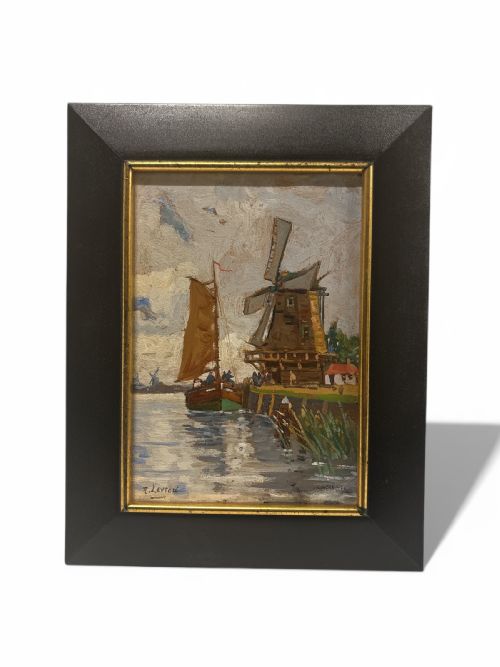

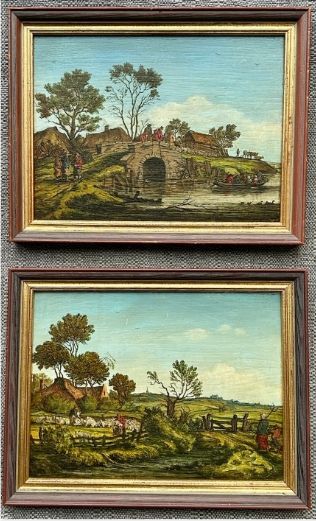
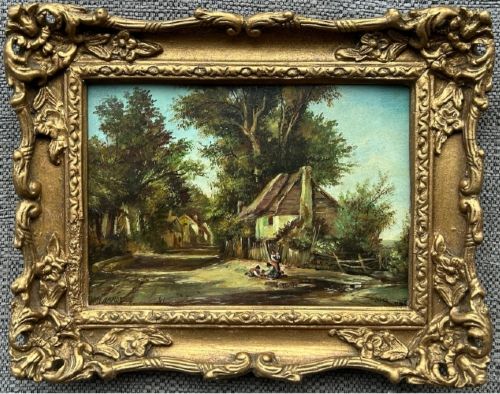
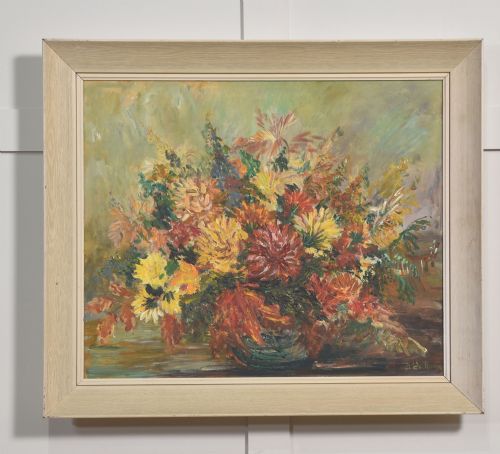

Original Oil on Wood
An original oil on wood brings tactile depth and rich pigment to landscapes, portraits, and still lifes painted across centuries.
Original Oil on Wood
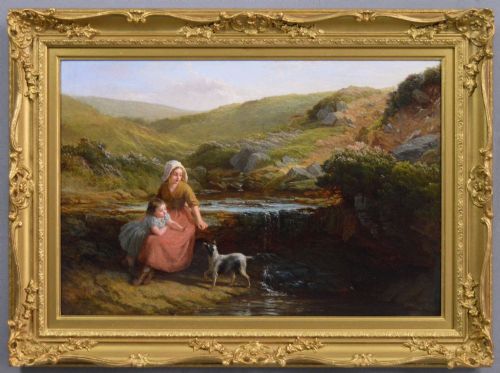
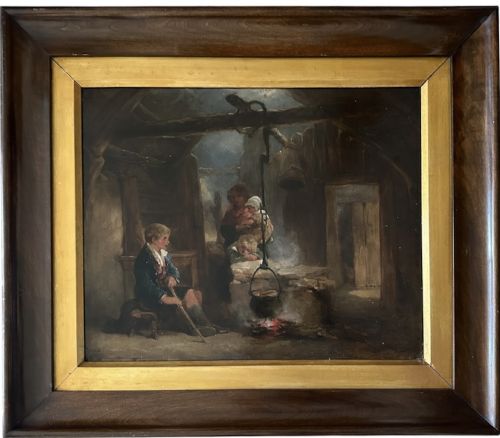
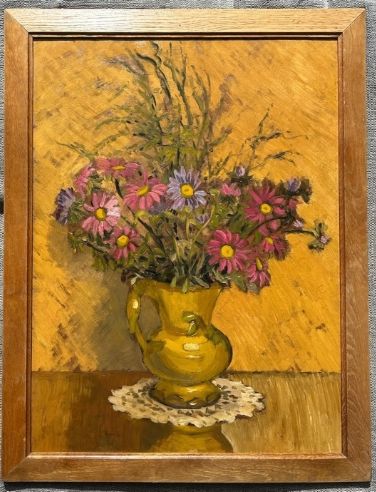
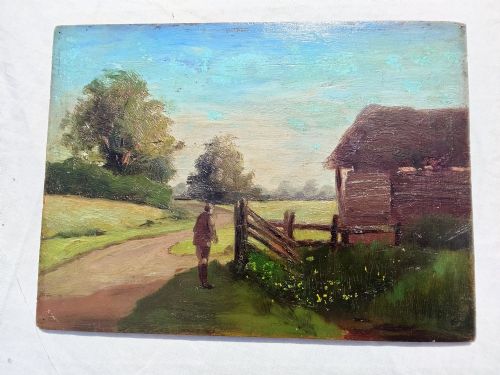
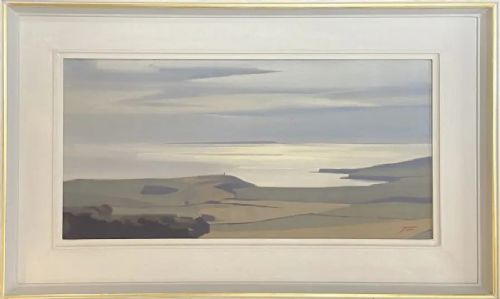
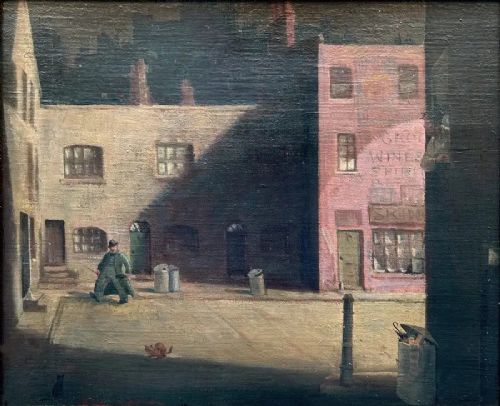
When you search for original oil on wood, you are looking at paintings executed directly onto wooden panels, boards, or mahogany supports rather than stretched fabric. These works span from the nineteenth century through the mid-twentieth century, encompassing British landscapes, French scenes, portraits, and still life studies.
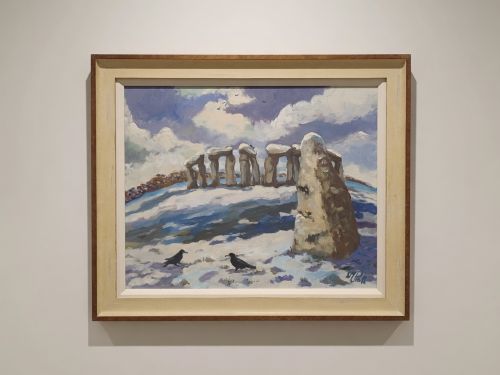
You are most likely to meet nineteenth-century English and Scottish landscape panels or mid-century vintage board paintings on this page. Makers range from named artists like Tom Campbell and Hubert Wellington to continental schools and anonymous regional painters.
The wooden support gives these artworks a rigid foundation that often preserves fine brushwork and rich impasto better than flexible canvas over decades of atmospheric change.
How They Were Made
Artists painted using oil colours applied to prepared wood panels, boards, or mahogany supports, sometimes sealed with a ground to hold the pigment. The dense wooden base allowed painters to apply smooth glazes or thick, textured brushstrokes without the surface giving way.
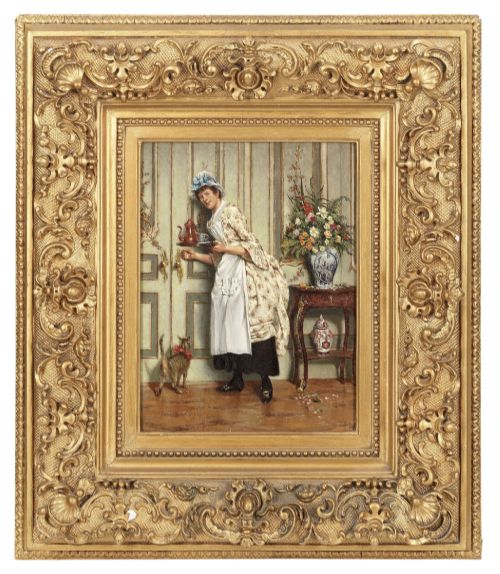
Many of these panels retain their original gilt frames or decorative wooden surrounds, which were selected to complement the dark tones and warm palettes of the compositions.
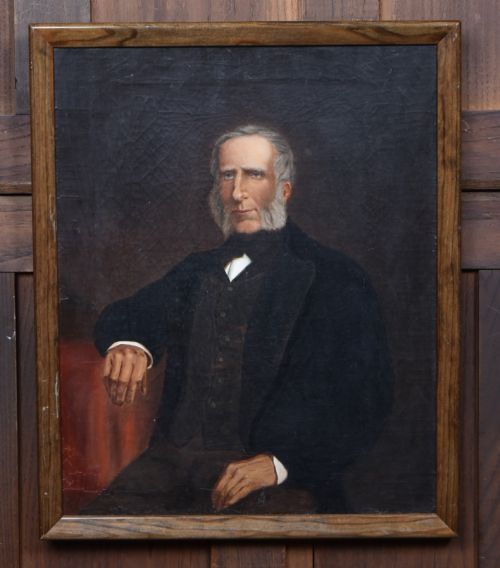
Several panels preserve the quiet gaze of nineteenth-century gentlemen, cats at play, and cows resting by rivers.
What Varies in Quality
Quality rests in the confidence of the brushwork, the subtlety of light handling, and how securely the oil paint adheres to the wooden grain. A superior panel demonstrates considered composition and atmospheric depth, whereas lesser works can feel stiff or heavy-handed in execution.
The preservation of the wooden support itself also matters, as sound panels free from warping or splits maintain the integrity of the paint layer far better than neglected boards.
Tom Campbell·William Howard Hardy·Stephen Samuel Lewin·Albin Mattenheimer·Hubert Wellington·Paul-Jean Anderbouhr·Jean-Baptiste Olive·David Shepherd
The Original Oil on Wood Glossary
- Wood Panel
- A rigid wooden support used by artists as a substitute for canvas. It provides a completely firm foundation that prevents the flexing and cracking sometimes seen in older fabric supports.
- Oil Paint
- Pigment mixed with a drying oil, typically linseed, that dries slowly to a durable finish. This medium allows artists to blend colours smoothly and build up rich layers of texture.
- Impasto
- Paint applied thickly to a surface, standing out in relief from the board. This technique leaves visible brush marks that catch the light and add physical dimension to the scene.
- Chiaroscuro
- The strong contrast between light and dark areas within a painting. Artists utilise this method to create dramatic focus and a sense of three-dimensional volume on a flat wooden panel.
- Provenance
- The documented history of ownership surrounding an artwork. A recorded trail connects the piece back to its creator or past notable collections.
Original Oil on Wood: Frequently Asked Questions
Why did artists paint on wood instead of canvas?
Wood panels offered a completely rigid ground that required minimal preparation and resisted punctures or tears. Painters favoured them for small, detailed works because the smooth surface held fine brushwork exceptionally well.
Panels were also readily available and durable, making them a practical choice for plein-air sketching and studio painting alike across the nineteenth and twentieth centuries.
How should I frame a wooden panel painting?
Ensure the panel has room to move slightly with changes in humidity, as wood naturally expands and contracts. A well-fitted rebate in the frame holds the work securely without pinching the edges.
Keep the painting away from direct sunlight, radiators, and damp walls to protect both the wood support and the oil pigments from environmental stress.
How can I tell the age of a wooden panel?
Examine the reverse of the board for tool marks, saw patterns, stamps, or old handwritten labels that indicate the manufacturer or framing shop. The type of wood, such as mahogany or deal, often points to specific manufacturing eras.
Stil styles of clothing, architecture, or landscape subjects depicted on the front provide additional clues to narrow down the decade of creation.