

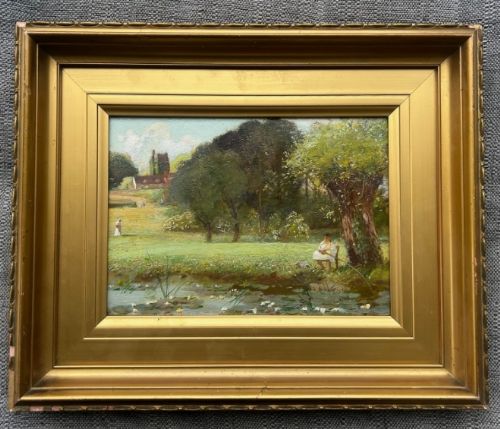


Original Oil Landscape Study
An original oil landscape study captures a fleeting moment outdoors with direct brushwork, offering a direct window into the artist's hand.
Original Oil Landscape Study
An original oil landscape study represents a direct, spontaneous observation of scenery, typically created outdoors to capture immediate light and atmosphere. When you search for an original oil landscape study, you encounter works spanning from the nineteenth century through the mid twentieth century, reflecting diverse regional approaches.
The pieces listed here include works executed on canvas, wood panel, and board. They range from intimate river scenes and rural views to coastal studies, often showing the loose brushwork characteristic of impressionist and post-impressionist movements.
Most examples originate from British and French traditions, encompassing both signed works by known regional painters and unsigned atmospheric compositions. These studies serve as immediate records of light, colour, and topography.
How they were made
Artists applied oil paint directly onto supports such as primed canvas, wood panel, or board, sometimes utilising gesso grounds to prepare the surface. The handling of the medium ranges from smooth, blended passages to thick, visible impasto that records the movement of the brush.
These works rely on the intrinsic qualities of oil paint to build depth through layered tones and hues. Supports like wood panel and canvas provide different textures that interact with the pigment to shape the final surface appearance.
The listings feature works spanning the nineteenth and twentieth centuries, employing oil paint on canvas, wood panel, and board.
What varies in quality
Quality in these studies rests upon the confidence of the brushwork and the precision with which light and space are rendered. A successful study conveys atmosphere and immediacy through economical marks rather than laboured detail.
The choice and preparation of the support, alongside the stability of the pigment layer, also distinguish finer examples. Superior works demonstrate a harmonious balance of colour and composition that holds the viewer's attention across the entire surface.
Sir David Murray·Ernest Higgins Rigg·Kershaw Schofield·Peter Jackson·Frank Moss Bennett·Angus Rands
The Original Oil Landscape Study Glossary
- Impasto
- Paint applied thickly to a canvas or panel, standing out in relief from the surface. This technique adds tactile dimension and captures light dynamically.
- Wood Panel
- A rigid flat wooden support used as a base for painting instead of stretched canvas. It offers a firm ground that often preserves fine brushwork well.
- Gesso
- A primer mixture consisting of a binder mixed with chalk, gypsum, or pigment. It prepares the wooden panel or canvas to receive oil paint.
- British Impressionism
- A painting style developed in Britain influenced by French plein air practices, focusing on natural light and everyday scenes. Artists used broken brushstrokes to capture transitory effects.
- Post-Impressionism
- An art movement extending impressionism while rejecting its limitations, emphasising geometric forms and expressive use of colour. It forms the stylistic bridge for many early twentieth century works.
Original Oil Landscape Study: Frequently Asked Questions
What is an oil landscape study?
An oil landscape study is a preliminary or direct painting executed outdoors or in the studio to capture natural scenery and light effects using oil paint. These works often show a directness of execution that differs from highly finished exhibition pieces.
They serve as intimate records of topography and atmospheric conditions, prized for their spontaneity and connection to the artist's immediate experience.
How do I care for an oil painting on wood panel?
Oil paintings on wood panels require stable indoor humidity and temperature to prevent the wood from warping or cracking over time. Avoid placing them in direct sunlight or near sudden heat sources.
Dust the surface gently with a soft, dry brush and refrain from using liquid cleaners or household solvents on the paint layer.
How can I tell the period of a landscape study?
The period can often be identified through stylistic markers such as impressionist brushwork, framing choices, and the specific material of the support, like board or stretched canvas. Signatures and inscriptions on the reverse also provide direct historical context.
Comparing the handling of light and pigment to dated examples from similar regional schools helps narrow down the decade of creation.
Where were these landscape studies created?
Many of these studies were painted on location, known as plein air painting, across rural and coastal settings in Britain and France. Artists travelled to rivers, fields, and coastal ports to record the landscape directly.
Studio finishing sometimes followed, but the core observation remained tied to specific geographic locations noted in titles or historical records.